Add: NYaqian Road No128 Yaqian Town Xiaoshan Hangzhou Zhe Jiang China.
Tel: 0086-0571-82602080
Fax: 0086-0571- 82758132
E-mail: [email protected]
Article Directory
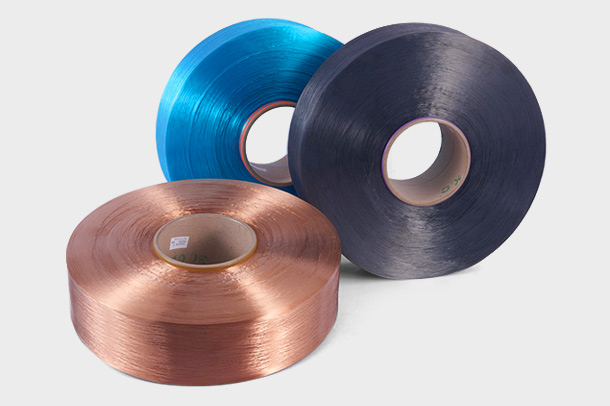
Fast, stable sportswear production starts with the yarn specification, not the sewing line. For most performance garments — running tops, cycling jerseys, compression baselayers, and training shorts — polyester fully drawn yarn (FDY) offers the best blend of strength, dimensional stability, and process predictability.
FDY is spun from polyester chips and drawn in-line to near-final molecular orientation, which gives it a straight, uniform filament structure. That structure translates directly into fabric performance: high tensile strength, low shrink, and even dye uptake. Three measurable values matter most when sourcing FDY yarn for sportswear production: tenacity, boiling-water shrinkage, and shade consistency between lots. Each maps to a specific fabric defect when ignored — broken filaments during knitting, puckered seams after the first wash, or mismatched panels in a finished garment.
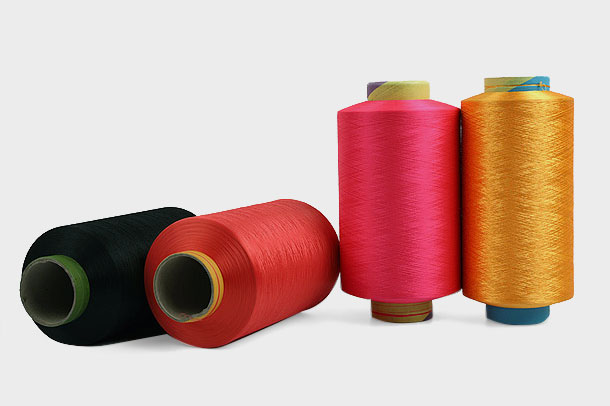
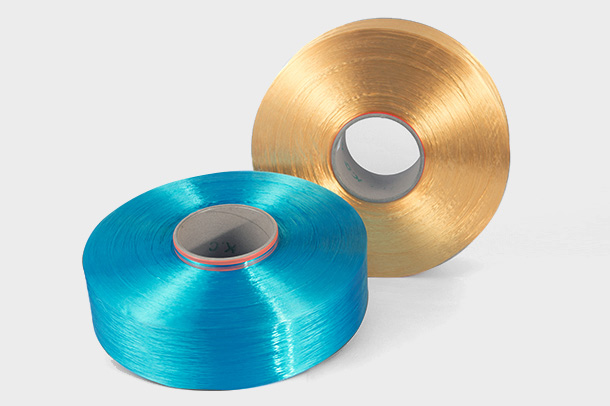
Zhejiang Hengyuan Chemical Fiber Group Co., Ltd., a polyester filament yarn manufacturer rooted in the Xiaoshan polyester yarn industry cluster in Hangzhou, produces a polyester FDY series that covers multiple deniers, lusters, and dyeing options for apparel and technical textile customers.
FDY filaments are drawn to a high degree of molecular orientation, producing a dense, straight structure. Apparel-grade FDY typically delivers tenacity around 3.5–4.5 cN/dtex, depending on denier and process settings. In practical terms, the yarn survives high-speed warp knitting with few filament breaks, and the resulting fabric resists pilling and surface fuzzing through many wear-and-laundering cycles. Sportswear is worn against the skin, rubbed against other layers, and washed aggressively, so abrasion resistance matters as much as tensile strength.
Low shrinkage keeps seams straight and panels flat after the first wash. Because FDY is drawn during production, its molecular chains are oriented and stabilized, which limits relaxation later. Boiling-water shrinkage for standard apparel grades is usually controlled in the 5–9% range. When a supplier documents shrinkage lot by lot, you reduce the risk of waistbands puckering or flatlock seams distorting in compression garments.
FDY is not textured or crimped, so its filament surfaces are smooth and regular. Inside a knitted or woven fabric, those smooth filaments form fine capillary channels that move moisture away from the skin and speed evaporation. Quick-dry performance is a structural result of the yarn's low moisture regain and uniform cross-section, not a finishing claim.
Uniform filament structure also means uniform dye uptake. Disperse dyes penetrate FDY filaments evenly across the yarn package, so large production runs stay within the same shade family. For sportswear brands, where a single colorway often defines a collection, even dyeing is the difference between matching a reference swatch on the first pass and absorbing the cost of re-dyeing or shade-sorting.
The three most common polyester filament yarns — POY, FDY, and DTY — serve different roles in sportswear, and the choice affects hand feel, downstream processing cost, and finished performance.
| Property | POY | FDY | DTY |
|---|---|---|---|
| Molecular orientation | Partial | High, fully drawn | Textured |
| Relative tenacity | Lower | High | Medium |
| Elongation at break | Higher | Moderate | Variable |
| Dimensional stability | Lower | High | Medium |
| Surface texture | Smooth | Smooth | Crimped, bulky |
| Typical sportswear use | Feedstock for draw-texturing and FDY drawing | Woven shells, warp-knit shorts, baselayers | Stretch knit tops, collars, cuffs |
For woven sportswear panels, FDY is the primary choice because it produces a clean, stable fabric with a crisp hand. For knitted garments that need stretch and a softer feel, polyester DTY yarn is more common; the texturing process gives the yarn bulk and elasticity, so the fabric behaves differently on the machine and on the body. POY, by contrast, is mostly an intermediate product: it is either draw-textured into DTY or drawn into FDY. If your range includes both woven and knitted styles, you likely need both FDY and DTY grades. A manufacturer that produces the full family — including the polyester DTY series — simplifies qualification and lets you consolidate orders under one quality system.
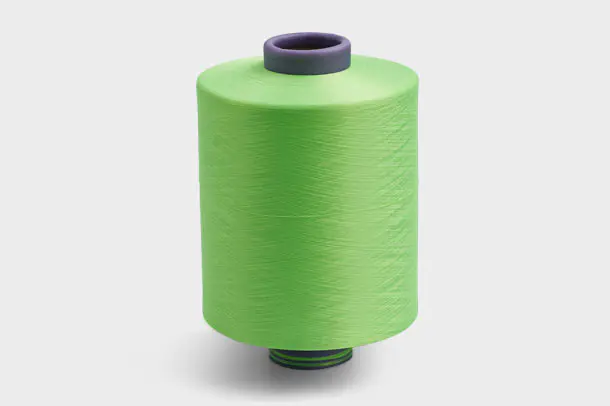 Wholesale Polyester DTY Yarns Suppliers, China DTY CompanyZhejiang Hengyuan Chemical Fiber Group Co.,Ltd is China polyester DTY yarns suppliers and polyester DTY company, you can find wholesale p...View Product →
A specification sheet tells you whether a yarn can do the job. When comparing FDY offers for sportswear production, the following parameters deserve attention — and the more precisely a supplier can state them, the more predictable your production will be.
| Parameter | Typical range to verify | Why it matters |
|---|---|---|
| Denier (dtex) | 50D, 75D, 100D, or 150D; confirm actual dtex | Determines fabric weight, cover, and drape |
| Filament count | 24f to 96f, depending on application | Higher counts give a finer, softer hand |
| Tenacity | 3.5–4.5 cN/dtex | Sets the strength ceiling for the final fabric |
| Elongation at break | 25–40% | Excessive elongation distorts; too little reduces toughness |
| Boiling-water shrinkage | 5–9% for apparel grades | Predicts seam puckering and post-wash shrinkage |
| Yarn evenness (CV%) | Lower values mean fewer thick and thin spots | High variation shows up as streaks and dye patches |
| Oil content | Within supplier-specified limits | Protects performance on knitting and warping machines |
These figures should come from the manufacturer's test records, not from a generic brochure. A dependable polyester filament yarn maker publishes them in a technical data sheet and can trace each value to a production batch — a level of detail we discuss further in our overview of industrial procurement technical parameters for FDY yarns. If a product change is required, such as a lower-shrinkage grade for warp-knit shells or a higher filament count for next-to-skin comfort, the polyester FDY series is designed to be evaluated against your fabric specification before you commit to a volume order.
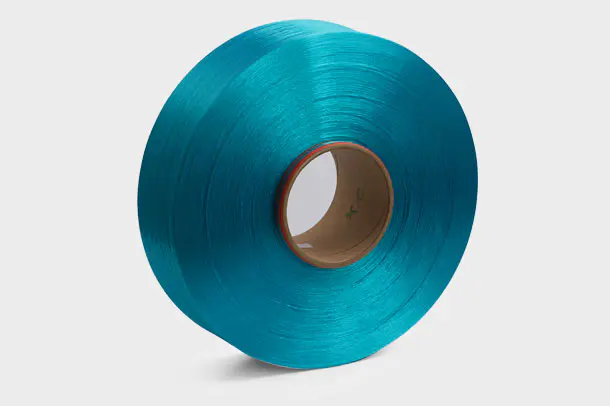 China Wholesale Polyester FDY Yarns Manufacturers, FactoryAs a China polyester FDY Yarns manufacturers and polyester FDY factory, Zhejiang Hengyuan Chemical Fiber Group Co.,Ltd. provide wholesale...View Product →
FDY performance is largely fixed on the spinning floor. Take-up speed, draw ratio, godet temperature, and winding tension determine the final orientation, shrinkage, and package build. A small shift in any one of these variables yields yarn that looks the same on the label but performs differently on a warp-knitting machine.
Quality control matters at three moments: incoming raw material, where PET chips must have stable intrinsic viscosity; in-process conditions, where strand tension and temperature need continuous monitoring; and final testing, where tenacity, elongation, shrinkage, and dye consistency are checked on every lot. A manufacturer that runs its own laboratory and documents results for each delivery gives sportswear brands the traceability they need for large runs. At Zhejiang Hengyuan, the manufacturing structure includes a dedicated R&D center, so yarn adjustments — lower shrinkage, higher tenacity, custom luster — are developed in-house rather than outsourced. That keeps the development cycle short when you need a special sportswear grade.
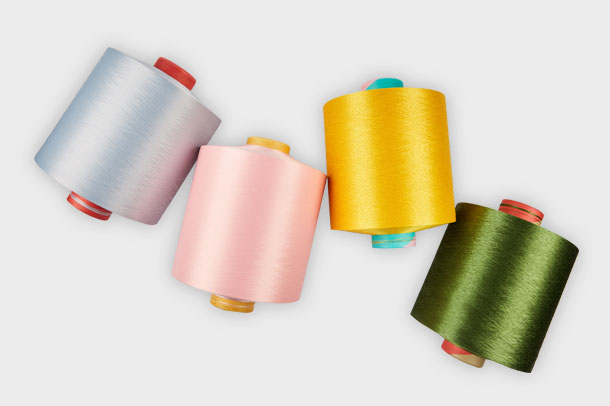
Sportswear is one of the most color-driven categories in apparel, and conventional dyeing is one of its largest sources of water use. Dope-dyed FDY changes the equation: color pigment is added to the polymer melt before spinning, so the dyeing step disappears. The benefits are measurable — lower water and energy consumption, shorter lead times, and color fastness that survives aggressive washing better than most post-dyed yarns, because the pigment is locked inside the filament.
If your sports collection repeats standardized colors across seasons — black, navy, or brand-specific shades — dope-dyed FDY is both the economical and the environmental choice. For additional requirements such as UV resistance or moisture management, the same FDY platform can be extended with performance additives. The functional yarn series at Zhejiang Hengyuan covers such performance-oriented options and can be adapted to sportswear specifications.
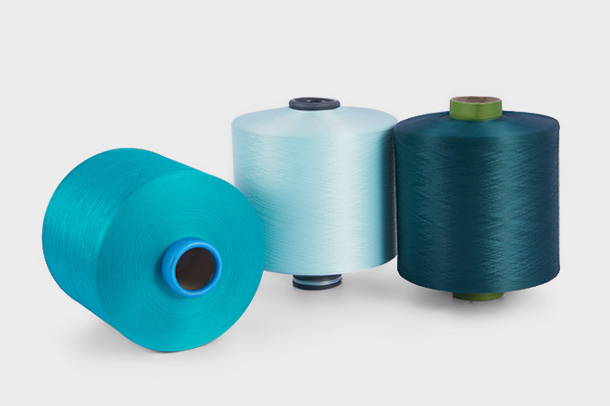 China Wholesale Functional Yarns Manufactuers, SuppliersZhejiang Hengyuan Chemical Fiber Group Co.,Ltd is China Functional Yarns Manufactuers and Functional Yarn suppliers, our factory offer wh...View Product →
When you approach a new FDY supplier, the first request should not be a price quote. Ask, in this order, for a specification sheet that lists tenacity, elongation, shrinkage, and evenness with the test method for each; for test records from the specific lot you are evaluating, not a generic product card; for shade samples of the colors you intend to run; and for a production schedule that matches your ordering cycle.
The answers reveal the supplier's control level quickly. A response of "low shrinkage" without a number, or "good quality" without a test report, means quality is not being measured. A supplier that states a concrete shrinkage value and confirms it on delivered lots is a supplier you can base a production plan on.
Compare total cost, not yarn price per kilogram. A slightly more expensive FDY that knits without stops, dyes to the right shade on the first attempt, and keeps seams flat after repeated washing saves far more than the price difference when weighed against rejected fabric, rework, and customer claims. For a step-by-step walkthrough of how to match yarn specifications to knitting and weaving processes, see our guide on choosing FDY yarn for textile manufacturing, knitting, and weaving applications.
FDY yarn is the starting point of sportswear quality, and the choice is too important to leave to habit. Define your shrinkage limits, match the filament count to the intended fabric hand, verify tenacity and evenness against documented lot data, and work with a manufacturer whose production records support the numbers on paper. Do that, and the finished garment will justify the effort.

Zhejiang Hengyuan Chemical Fiber Group Co.,Ltd. is a professional China polyester filament yarns manufacturers and polyester color yarn suppliers, Established in 2006 ,located in YaQianTown Xiaoshan Hangzhou – One of the Center of polyester yarn Industry in China.

Products
Contact info
Copyright © Zhejiang Hengyuan Chemical Fiber Group Co.,Ltd. All rights reserved