PRODUCT DETAILS
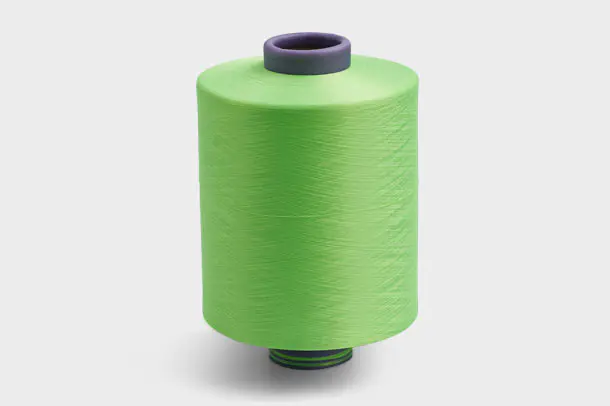
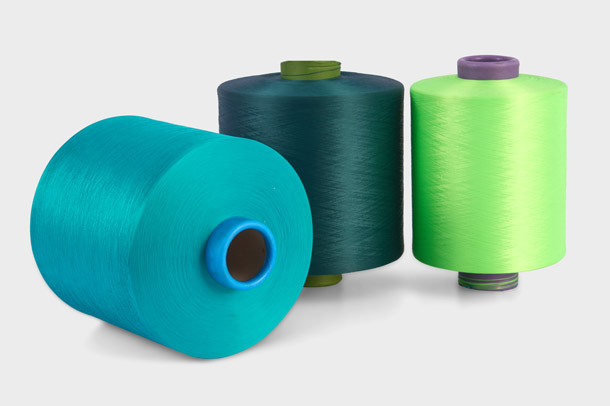
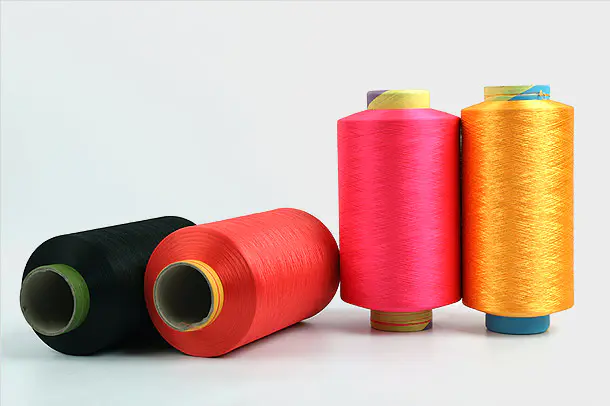
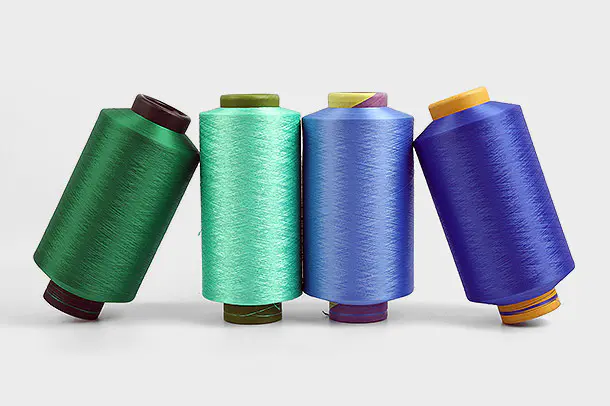
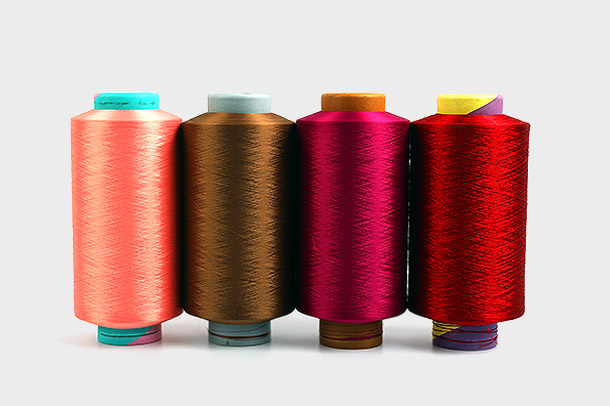
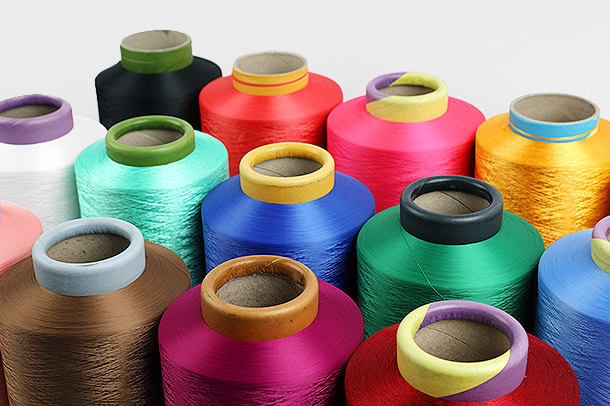
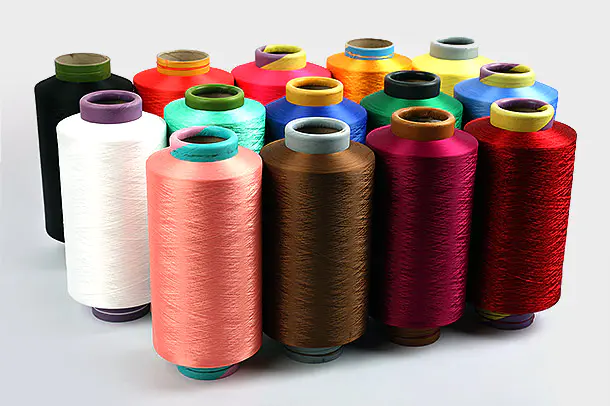
DTY is wound onto precision cross-wound packages, typically in the range of 1.5 kg to 5 kg net weight depending on denier. Package winding geometry (traverse angle, winding ratio) is controlled to ensure stable unwinding from the creel at knitting and weaving machine speeds. Packages are individually bagged or carton-packed to prevent contamination and OPU evaporation during storage and transit.
| ITEM | SPEC | SEMI-DULL | BRIGHT |
|---|---|---|---|
| FDY | 30D/12F/24F | • | • |
| 50D/12F/24F/48F | • | • | |
| 75D/36F/72F | • | • | |
| 90D/36F/48F | • | • | |
| 100D/36F/48F/72F/96F | • | • | |
| 120D/36F/48F/96F | • | • | |
| 150D/36F/48F/72F/96F/144F/288F | • | • | |
| 200D/48F/72F/96F/144F | • | • | |
| 250D/72F/96F/122F/144F | • | • | |
| 300D/72F/96F/144F | • | • | |
| 450D/144F/192F/216F | • | • | |
| 600D/144F/192F | • | • | |
| POY & DTY | 15D/12F | • | • |
| 30D/12F/24F | • | • | |
| 50D/12F/36F/48F | • | • | |
| 75D/36F/48F/72F/144F | • | • | |
| 100D/36F/72F/144F | • | • | |
| 120D/36F/72F/144F | • | • | |
| 150D/36F/48F/72F/96F/144F/192F/288F | • | • | |
| 200D/72F/96F/144F | • | • | |
| 250D/72F/96F/144F | • | • | |
| 300D/72F/96F/144F/192F | • | • | |
| 450D/144F/192F/216F/288F/432F | • | • | |
| 600D/144F/192F | • | • | |
| DTY | 600D/900D/1200D/1500D/1800D | • | • |
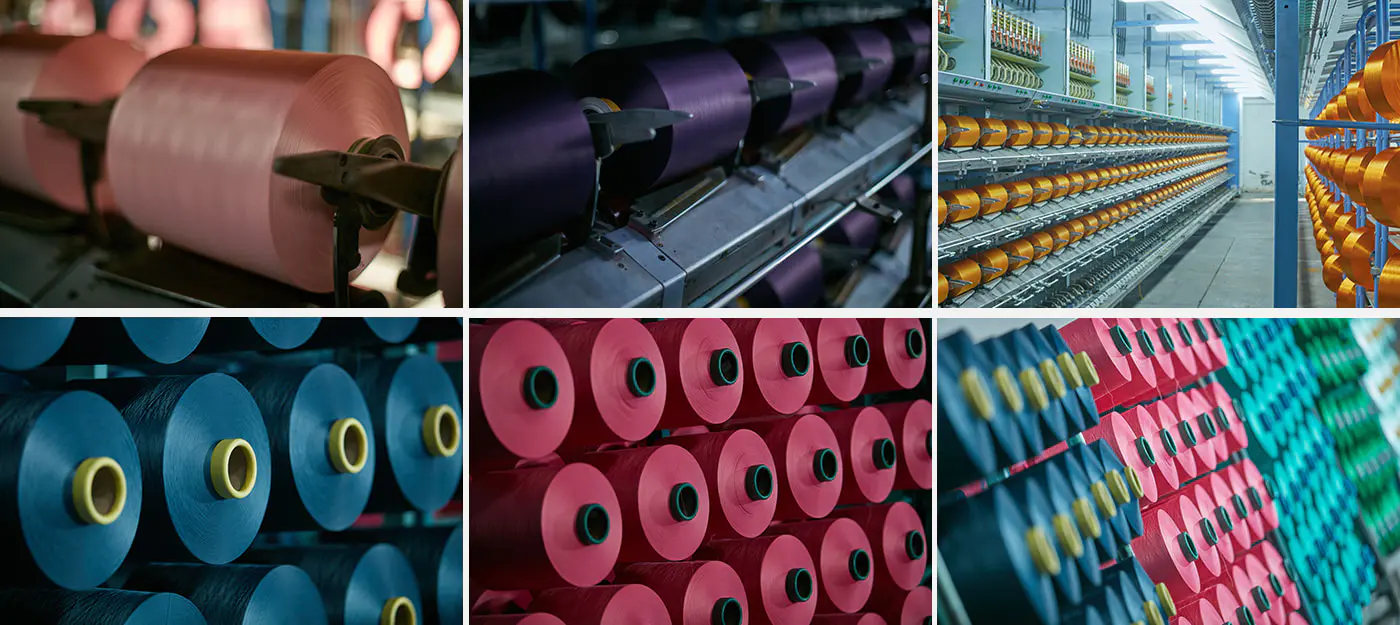
In order to guarantee the quality of products , we actively introduce advanced technology and equipment at home and abroad, ongoing technological transformation and innovation, improve the level of production. Up to now, the group has owned the production equipment which were introduced from the developed countries such as Germany and domestic well-known companies ,and owned a complete set of production line matched with the equipment , leading to annual output of 120,000 tons of spinning and draw texturing . The group has imported ISO9000 quality certification system, and established a mature system of quality management . Excellent quality always comes from sophisticated equipment and excellent management. More than 80% of the key production equipments in the group are introduced from Germany and domestic famous enterprises, reaching the international first-class equipment level.
Single-heater DTY (SH-DTY) uses one heat-set zone during false-twist texturing, retaining higher residual crimp energy, greater stretch, and higher boil-off shrinkage. It is preferred for elastic circular knit fabrics where stretch and bulk are the primary performance requirements. Double-heater DTY (DH-DTY) passes through a second relaxation heater that reduces residual torque and shrinkage, producing a more dimensionally stable yarn suited to woven fabrics and applications where controlled shrinkage in wet processing is required.
Torque in single-jersey fabric is caused by residual twist energy in the DTY filaments. When a single twist direction (all S or all Z) is used across the fabric, the unbalanced torque forces cause the fabric to rotate or skew. This is addressed by using S/Z balanced DTY — either alternating S and Z twist packages on the creel, or using intermingled S/Z DTY — which cancels the opposing torque forces at the fabric level and produces a dimensionally stable, torque-free single jersey.
Dye streaks and barre in DTY knitted fabrics typically originate from crimp contraction ratio (CCR) variation between packages, lot-to-lot birefringence differences in the POY feed yarn, or OPU inconsistency affecting draw uniformity during texturing. These variations produce filaments with different light reflectance and dye uptake after piece dyeing. Controlling POY feed quality and specifying tight CCR tolerances for DTY reduces the incidence of barre defects in production fabric runs.
Double-heater DTY can be used as weft in air-jet weaving for peach-skin, brushed, and soft-handle woven fabric constructions. However, DTY has higher bulk and lower linear stiffness than FDY, which requires adjusted air pressure and weft accumulator tension settings compared to flat yarn weft. Single-heater DTY is generally not recommended for air-jet weft insertion due to its higher residual shrinkage and crimp energy, which can cause filling bar defects in the finished fabric.
For standard activewear single-jersey or interlock fabrics produced on 28-gauge circular knitting machines, 75D/72f or 100D/144f semi-dull DTY are commonly specified. Higher filament counts (144f or above) produce a finer, smoother fabric surface with better moisture wicking distribution across the filament bundle. For heavier-weight performance fabrics such as double jerseys or fleece grounds, 150D/96f or 150D/144f DTY provides the required cover and bulk in the knit structure.
rDTY produced from GRS-certified recycled PET feed yarn is engineered to match the key processing parameters of virgin DTY, including tenacity, elongation, CCR, OPU, and interlace node count. In most circular knitting and weaving applications, rDTY can be substituted for virgin DTY without machine setting changes. Minor lot-to-lot color consistency differences may be more variable in rDTY due to the variability of recycled PET chip color; this is typically managed through pre-production dye trials for color-critical fabric programs.
Related Products
FEEDBACK

Zhejiang Hengyuan Chemical Fiber Group Co.,Ltd. is a professional China polyester DTY yarns suppliers and polyester DTY yarns company, Established in 2006 ,located in YaQianTown Xiaoshan Hangzhou – One of the Center of polyester yarn Industry in China.

Products
Contact info
Copyright © Zhejiang Hengyuan Chemical Fiber Group Co.,Ltd. All rights reserved