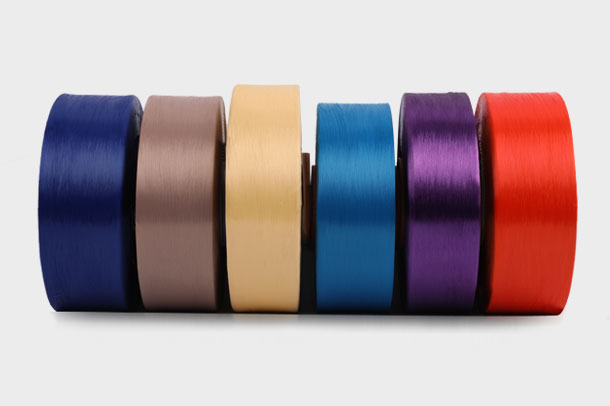
PRODUCT DETAILS
| Parameter | Typical Range | Unit |
|---|---|---|
| Denier Range | 50 – 600 | D |
| Filament Count | 24 – 288 | f |
| Elongation at Break | 110 – 160 | % |
| Tenacity | 2.0 – 2.8 | g/d |
| Birefringence (Δn) | 0.040 – 0.070 | — |
| Oil Pick-Up (OPU) | 0.4 – 0.7 | % |
| Boil-Off Shrinkage | ≤ 1.5 | % |
| Moisture Regain | 0.4 | % |
Standard optical brightness, suitable for vivid color applications after dyeing.
Moderate luster reduction, widely used for general apparel and home textiles.
Low luster finish, preferred for matte-appearance fabrics and certain technical end uses.
Modified polymer formulation enabling cationic dye uptake for bicolor or differential dyeing effects.
Produced from post-consumer PET recycled chips, supporting sustainability-oriented supply chains (GRS certification available).
POY is produced via high-speed spinning at winding speeds typically between 2,800 and 3,600 m/min. This speed range results in partial molecular chain orientation — higher than undrawn yarn (UDY) but lower than FDY. The semi-crystalline structure of POY gives it residual draw potential, which is exploited during the subsequent false-twist texturing (DTY) or drawing (FDY) stages. Cross-sectional shape is round by default; trilobal and other modified cross-sections are available for specific optical and tactile effects.
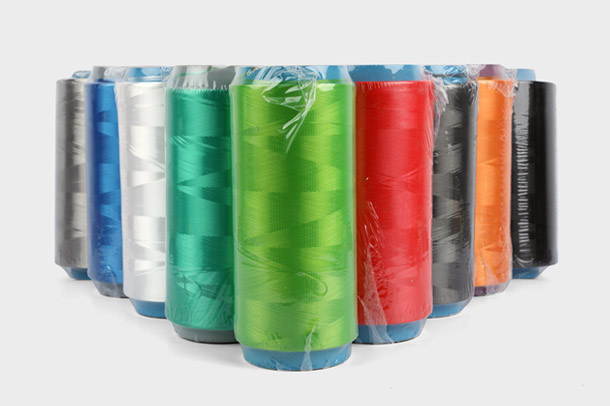
POY is wound onto precision cones or packages designed to ensure tension consistency during unwinding on draw-texturing machines. Standard package weights range from 8 kg to 16 kg depending on denier and customer requirements. Package density and traverse settings are controlled to prevent ribbon formation and ensure stable unwinding at high texturing speeds.
| ITEM | SPEC | SEMI-DULL | BRIGHT |
|---|---|---|---|
| FDY | 30D/12F/24F | • | • |
| 50D/12F/24F/48F | • | • | |
| 75D/36F/72F | • | • | |
| 90D/36F/48F | • | • | |
| 100D/36F/48F/72F/96F | • | • | |
| 120D/36F/48F/96F | • | • | |
| 150D/36F/48F/72F/96F/144F/288F | • | • | |
| 200D/48F/72F/96F/144F | • | • | |
| 250D/72F/96F/122F/144F | • | • | |
| 300D/72F/96F/144F | • | • | |
| 450D/144F/192F/216F | • | • | |
| 600D/144F/192F | • | • | |
| POY & DTY | 15D/12F | • | • |
| 30D/12F/24F | • | • | |
| 50D/12F/36F/48F | • | • | |
| 75D/36F/48F/72F/144F | • | • | |
| 100D/36F/72F/144F | • | • | |
| 120D/36F/72F/144F | • | • | |
| 150D/36F/48F/72F/96F/144F/192F/288F | • | • | |
| 200D/72F/96F/144F | • | • | |
| 250D/72F/96F/144F | • | • | |
| 300D/72F/96F/144F/192F | • | • | |
| 450D/144F/192F/216F/288F/432F | • | • | |
| 600D/144F/192F | • | • | |
| DTY | 600D/900D/1200D/1500D/1800D | • | • |
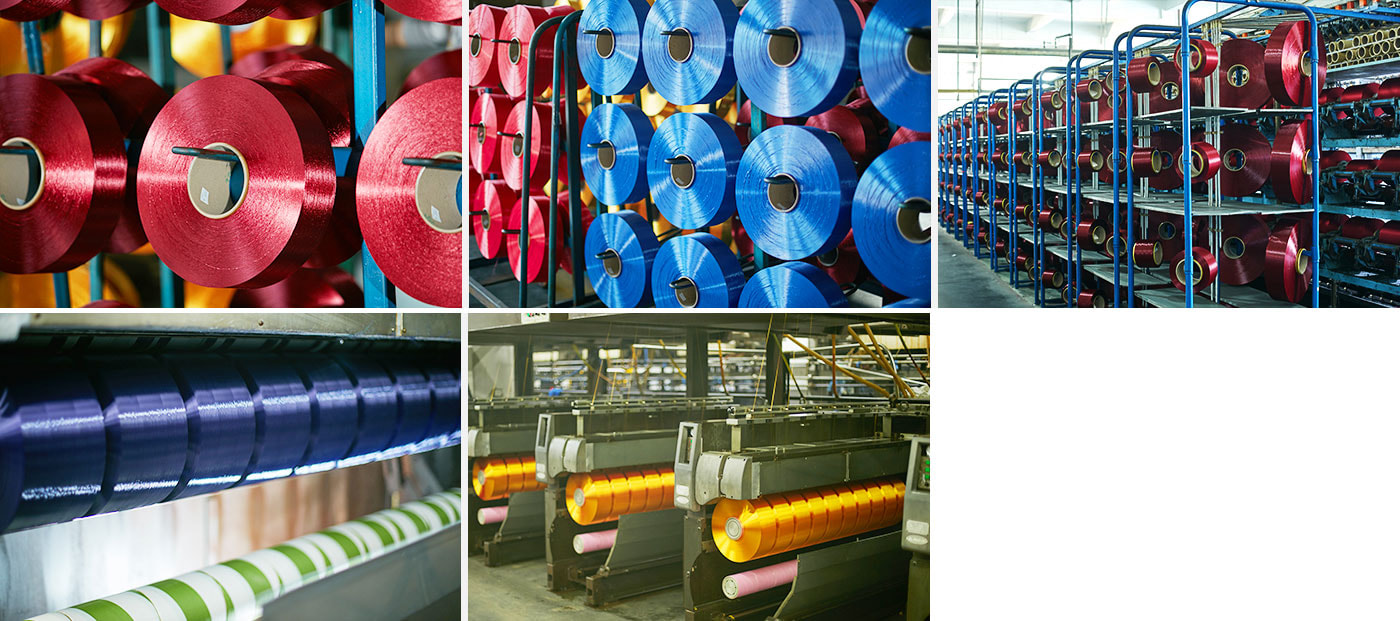
In order to guarantee the quality of products, we actively introduce advanced technology and equipment at home and abroad, ongoing technological transformation and innovation, improve the level of production. Up to now, the group has owned the production equipment which were introduced from the developed countries such as Germany and domestic well-known companies ,and owned a complete set of production line matched with the equipment , leading to annual output of 120,000 tons of spinning and draw texturing . The group has imported the ISO9000 quality certification system, and established a mature system of quality management . Excellent quality always comes from sophisticated equipment and excellent management. More than 80% of the key production equipments in the group are introduced from Germany and domestic famous enterprises, reaching the international first-class equipment level.
POY (Partially Oriented Yarn) has lower molecular orientation and higher residual elongation compared to FDY (Fully Drawn Yarn). POY requires further drawing or draw-texturing before use in fabric production, whereas FDY is fully drawn during spinning and can be used directly in weaving or warp-knitting. POY offers greater flexibility for downstream processing into textured yarns.
POY is not recommended for direct fabric production. Its high elongation and low tenacity make it unsuitable for direct weaving or knitting. It is designed as an intermediate product to be converted into DTY or FDY through downstream processing operations before fabric manufacturing.
Dyeing streaks in DTY fabrics often trace back to POY quality issues, including elongation variation between packages, OPU inconsistency, or birefringence variation. These variations cause uneven draw ratios during texturing, resulting in filaments with different dye uptake rates. Sourcing POY with tight parameter tolerances reduces the incidence of dyeing defects in finished fabrics.
rPOY is Recycled POY, produced from post-consumer or post-industrial recycled PET (rPET) chips rather than virgin polymer. It carries the same processability characteristics as conventional POY and is available with GRS (Global Recycled Standard) certification to support customers' sustainability claims and eco-label requirements.
Packages should be transported in upright position or as specified on the carton to prevent deformation of the winding. Impact and compression during transit can cause hard edges, ribbon formation, or cone damage, all of which affect unwinding tension on texturing machines. Pallets should be stretch-wrapped and corner-protected to prevent package-to-package abrasion.
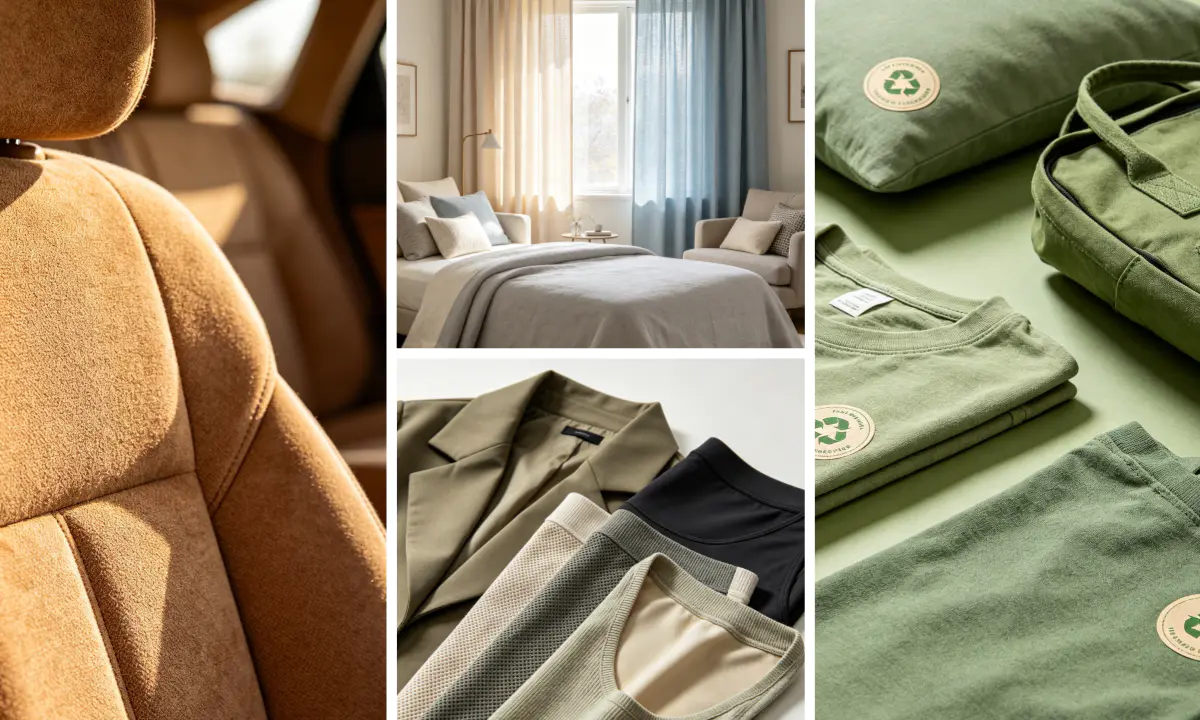
The primary downstream application for POY is conversion into DTY via false-twist draw-texturing machines. The residual draw potential in POY is utilized during this process to simultaneously draw and texturize the filament, producing a crimped, bulked yarn suitable for knitted and woven fabric production. POY feed quality directly impacts DTY uniformity, dye levelness, and fabric appearance.
POY can also be used as feed yarn for spin-draw processes to produce FDY, where the draw stage is performed separately. FDY produced from POY is used in warp-knitting, weaving, and high-tenacity fabric applications.
Related Products
FEEDBACK

Zhejiang Hengyuan Chemical Fiber Group Co.,Ltd. is a professional China polyester POY yarns manufacturers and polyester POY yarns suppliers, Established in 2006 ,located in YaQianTown Xiaoshan Hangzhou – One of the Center of polyester yarn Industry in China.

Products
Contact info
Copyright © Zhejiang Hengyuan Chemical Fiber Group Co.,Ltd. All rights reserved