Add: NYaqian Road No128 Yaqian Town Xiaoshan Hangzhou Zhe Jiang China.
Tel: 0086-0571-82602080
Fax: 0086-0571- 82758132
E-mail: [email protected]
Article Directory
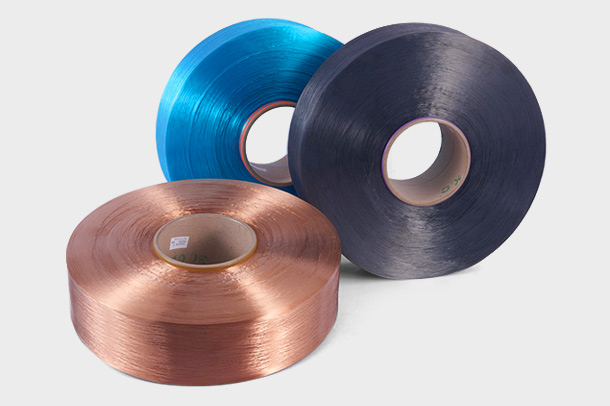
In the high-speed textile manufacturing and industrial reinforcement sectors, the procurement of FDY yarns (Fully Drawn Yarn) requires a rigorous evaluation of linear density and mechanical strength. Unlike POY, FDY is produced through a continuous drawing and heat-setting process that aligns the polymer chains to achieve high crystallinity. To ensure structural integrity in end-products such as upholstery cloth or industrial filters, engineers must prioritize high tenacity polyester yarn vs regular FDY performance metrics during the selection phase.
The denier of FDY yarns for industrial use—ranging from 30D to 600D—is the primary measure of mass per unit length. For technical applications, the denier variation (DV) must be minimized to ensure uniform fabric weight and thickness. A critical check is the denier uniformity in bulk FDY shipments; typically, a variance of less than 1.5% is required for high-precision weaving. Zhejiang Hengyuan Chemical Fiber Group Co., Ltd., established in 2006 and located in the polyester hub of YaQian Town, operates a massive 120,000 square meter facility with a production capacity of 150,000 tons of polyester yarn annually. Through our Group Brand "Hengyun," we specialize in both raw-white and dope-dyed FDY yarns, ensuring that the FDY yarns we provide meet the strict linear density requirements of global industrial clients.
As a "TOP 100 INDUSTRY COMPANY IN XIAOSHAN" and "HIGH TECH OF HANGZHOU," Hengyuan maintains six branch companies with total assets of 150 million USD. Our expertise in manufacturing 300D to 600D polyester FDY allows us to support large-scale industrial projects, providing stable quality polyester yarn that prevents machine downtime caused by yarn breakage or inconsistent thickness. Our fabrics, reaching 50 million meters per year, serve as a testament to the reliability of our internal yarn supply.
| Denier Range (D) | Industrial Application | Critical Tolerance (DV%) |
| 30D - 75D | Lightweight linings / precision filters | Plus/Minus 1.0% |
| 150D - 300D | Home textiles / Upholstery cloth | Plus/Minus 1.2% |
| 450D - 600D | Heavy-duty blankets / Carpets | Plus/Minus 1.5% |
The breaking tenacity of industrial FDY yarns, measured in grams per denier (g/d) or cN/dtex, determines the yarn's resistance to tensile stress. For industrial-grade polyester, a tenacity of 7.0 g/d to 8.5 g/d is often targeted to withstand high-tension looms. Furthermore, the elongation at break for polyester FDY should be precisely controlled; industrial variants typically require an elongation of 12% to 20%. If the elongation is too high, the resulting fabric will lack dimensional stability; if too low, the yarn becomes brittle. By utilizing advanced texturing and drawing machinery, Hengyuan ensures that the tensile strength of heavy-denier FDY remains consistent throughout the entire 150,000-ton yearly output.
The benefits of intermingled FDY yarns include reduced friction and improved cohesion during high-speed warping and weaving processes. The intermingling points (measured in nodes per meter) act as "mechanical locks" that hold the filaments together, preventing fraying. When bulk purchasing industrial polyester yarn, engineers must specify the required intermingling density to match their specific loom technology, whether it is for upholstery, blankets, or technical textiles.
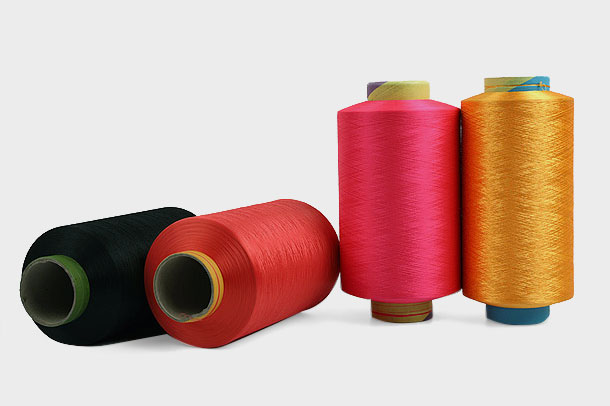
The thermal properties of FDY yarns are vital for downstream processes such as coating or laminating. High crystallinity, achieved through controlled cooling and drawing, ensures that the FDY yarns do not undergo significant creep under thermal load. Zhejiang Hengyuan Chemical Fiber Group Co., Ltd. adheres to "GREEN ENVIRONMENTAL AND TRUST COMPANY OF CHINA" standards, ensuring that our polyester yarn FDY POY DTY production minimizes waste while maximizing polymer purity. This dedication to technology ensures that residual oil content on FDY yarns is kept within 0.5% to 1.0%, facilitating better adhesion in multi-layered industrial composites.
| Physical Property | Test Standard | Technical Requirement |
| Tenacity (Breaking Force) | ASTM D2256 | Greater than 7.0 g/d |
| Elongation at Break | ISO 2062 | 15% Plus/Minus 3% |
| Uster Evenness (U%) | ISO 1133 (Uster Tester) | Less than 1.5% |
In a dope-dyed vs piece-dyed FDY comparison, dope-dyeing is technically superior for outdoor or high-sunlight industrial applications. Because the color is added to the liquid polymer before extrusion, it offers the highest color fastness for polyester yarn. This eliminates the need for large-scale dyeing baths, significantly reducing water consumption and ensuring that the FDY yarns maintain their mechanical tenacity without the degradation sometimes caused by high-temperature chemical dyeing processes.
FDY is a smooth, high-strength yarn produced by drawing at high speeds. DTY (Drawn Textured Yarn) undergoes an additional texturing process to add bulk and stretch. FDY is preferred when high tensile strength and a sleek finish are required.
Generally, finer deniers (e.g., 30D-50D) have higher production costs per kilogram due to the complexity of spinning fine filaments, whereas heavier deniers (300D-600D) are more cost-efficient for bulk manufacturing.
Intermingled yarn uses air jets to create periodic "tangles" or nodes among the filaments. This prevents filament separation during weaving without the need for sizing or twisting.
Yes. Dope-dyed FDY is extensively used in automotive interiors because of its excellent UV stability and resistance to abrasion, provided it meets the specific fire-retardant standards.
High-quality polyester uses specialized heat stabilizers and optical brighteners during the polymerization stage to prevent oxidative yellowing during the heat-setting process.
Hot Products

Zhejiang Hengyuan Chemical Fiber Group Co.,Ltd. is a professional China polyester filament yarns manufacturers and polyester color yarn suppliers, Established in 2006 ,located in YaQianTown Xiaoshan Hangzhou – One of the Center of polyester yarn Industry in China.

Products
Contact info
Copyright © Zhejiang Hengyuan Chemical Fiber Group Co.,Ltd. All rights reserved