Add: NYaqian Road No128 Yaqian Town Xiaoshan Hangzhou Zhe Jiang China.
Tel: 0086-0571-82602080
Fax: 0086-0571- 82758132
E-mail: [email protected]
Article Directory
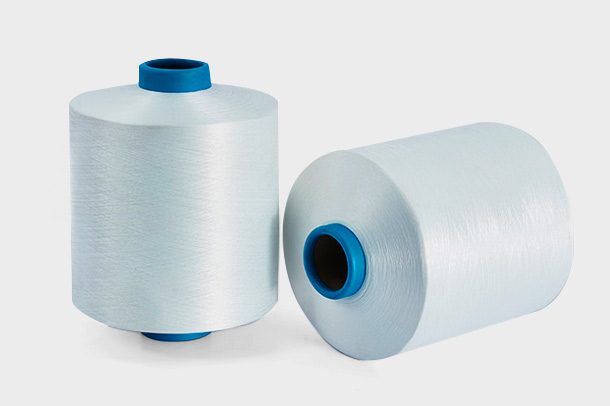
Filament yarn selection shapes nearly every downstream property of a finished fabric, from strength and drape to how evenly it takes dye. FDY yarn, short for fully drawn yarn, is produced through a spinning and drawing process completed in a single continuous step, which gives it a stable molecular structure and consistent filament properties compared to undrawn or partially oriented yarns. Because of this stability, FDY yarn is widely used across weaving, knitting, and industrial textile production where dimensional consistency matters. This guide covers the main types of FDY yarn, where each performs best, the technical properties worth comparing, and the production considerations that affect how the yarn behaves once it reaches the loom or knitting machine.
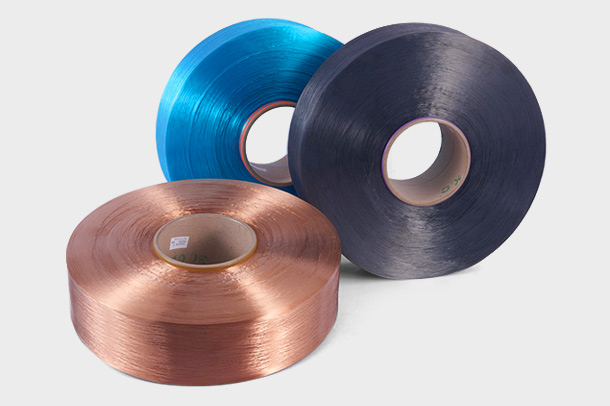
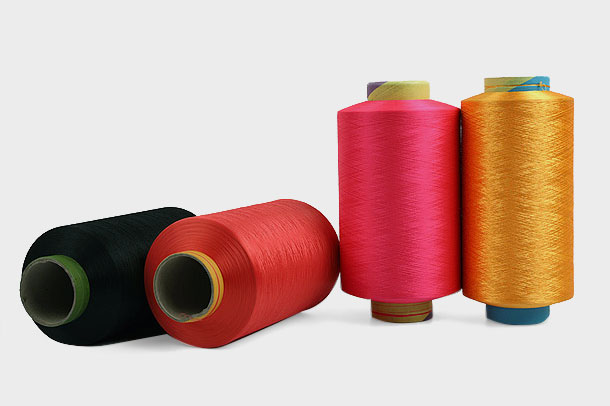
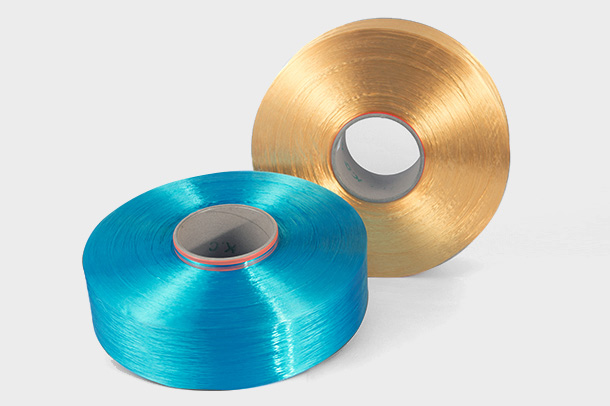
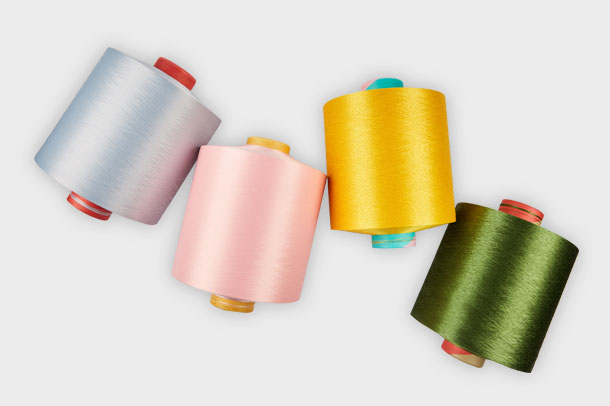
FDY yarn is not a single uniform product. Fiber type, luster finish, and coloring method all create distinct categories suited to different fabric outcomes, and understanding the types of FDY yarn in textiles helps buyers match the right variant to their production goals.
The most widely used FDY variant, valued for consistent strength, good dimensional stability, and compatibility with a broad range of dyeing and finishing processes across polyester FDY yarn applications.
Offers greater elasticity and abrasion resistance than polyester FDY, making nylon FDY yarn characteristics well suited to fabrics that need stretch recovery alongside smoothness and strength.
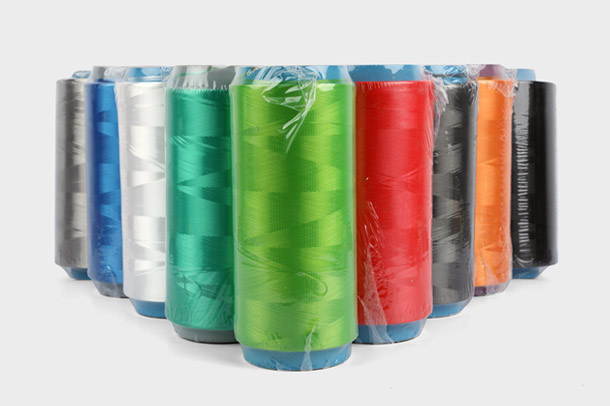
Colored during the extrusion stage rather than after weaving or knitting, which typically improves colorfastness and reduces water use in downstream processing, a key reason buyers cite dope dyed FDY yarn benefits.
Produced without a delustering additive, giving the filament a naturally high sheen suited to fabrics where surface luster is a design priority.
Contains a titanium dioxide delustering agent that reduces surface shine, and is generally the default choice when a more matte, natural fabric appearance is preferred in a bright vs semi dull FDY yarn comparison.
The consistent molecular orientation of FDY yarn makes it a dependable input across a wide range of fabric production methods, though the ideal type still depends on the specific end use.
FDY yarn for weaving fabric benefits from the yarn's dimensional stability, which reduces breakage and tension variation on the loom, supporting more consistent fabric width and fewer stoppages during production of woven weaving yarn constructions.
FDY yarn for knitting garments performs well where a smooth, consistent filament surface is needed to maintain even stitch formation, particularly in circular and warp knitting yarn processes that run at higher production speeds.
Polyester FDY yarn for home textiles is commonly selected for curtains, upholstery backing, and similar applications where the fabric needs to hold its shape and resist stretching out of form over repeated use.
FDY yarn for industrial fabrics takes advantage of the yarn's strength and consistency in applications such as reinforcement layers, filtration substrates, and other industrial textile yarn uses where predictable mechanical performance matters more than aesthetic finish.
FDY yarn for sportswear fabric, particularly nylon or blended constructions, is chosen for its combination of strength and smooth hand feel, which supports both durability and comfort in activewear fabric.
Selecting FDY yarn for a given end use generally starts with the fabric's structural requirement, such as strength or stretch recovery, before narrowing down to luster and dyeing method preferences.
Beyond fiber type and finish, buyers should compare a set of technical properties that determine how the yarn performs both in production and in the finished fabric.
FDY yarn tensile strength specification reflects how much force the filament withstands before breaking, and is a key factor in fabrics subject to repeated mechanical stress during weaving or end use.
Polyester FDY yarn elongation rate describes how much the filament stretches under load before breaking, which affects fabric drape and recovery characteristics after repeated stress.
FDY yarn evenness quality control refers to the consistency of filament diameter along its length, which directly influences fabric surface uniformity and dye uptake consistency.
Low shrinkage FDY yarn performance is particularly important in fabrics that undergo heat setting or dyeing at elevated temperatures, since excessive shrinkage can distort finished fabric dimensions.
High strength filament yarn properties should always be evaluated against the specific fabric construction and processing conditions rather than compared in isolation, since a property that is beneficial for one application, such as higher elongation for stretch fabrics, can be a drawback in applications that require dimensional rigidity.
How FDY yarn moves through downstream processing affects both production efficiency and final fabric quality.
FDY yarn production process explanation begins with continuous spinning and drawing, orienting the polymer molecules and setting the yarn's final strength and elongation properties in a single pass.
Some FDY yarn is further processed through a texturizing process to add bulk or stretch, though a significant portion is used directly in its flat, untextured form for weaving.
The warping process aligns multiple yarn ends onto a beam under controlled tension, a step where FDY yarn's evenness and low shrinkage directly reduce breakage risk.
Weaving efficiency benefits from the yarn's dimensional consistency, reducing stoppages, while warp knitting FDY yarn applications rely on smooth filament surfaces to maintain stitch consistency at speed.
Dyeing compatibility yarn considerations depend on whether the yarn is dope dyed or intended for conventional dyeing, since each method requires different process controls to achieve consistent color results.
FDY yarn, or fully drawn yarn, is a filament yarn produced through a continuous spinning and drawing process that orients the polymer molecules and stabilizes the yarn's mechanical properties in a single production step.
It is used across weaving, knitting, home textiles, industrial fabrics, and sportswear applications, wherever consistent strength, evenness, and dimensional stability are required from the base yarn.
FDY yarn is smooth and flat with molecular orientation completed during spinning, while DTY, or draw textured yarn, undergoes an additional texturizing step that adds bulk, crimp, and stretch to the filament.
FDY yarn is commonly used in weaving because its dimensional stability and consistent strength reduce breakage and tension variation during the warping and weaving stages of fabric production.
It is produced by melting polymer chips, extruding the melt through a spinneret, and then drawing the resulting filaments in-line to align the polymer molecules before winding the finished yarn onto packages.
It is FDY yarn made from polyester polymer, valued for its balance of strength, dimensional stability, and compatibility with a wide range of dyeing and fabric finishing processes.
Choosing the right FDY yarn comes down to matching fiber type, luster finish, and dyeing method to the fabric's end use, then verifying that tenacity, elongation, evenness, and shrinkage properties align with the intended weaving or knitting process. No single FDY yarn type performs best across every application, so buyers should evaluate these factors against their specific production requirements rather than selecting by fiber type alone. Reviewing these considerations closely is the most reliable way to select FDY yarn that performs consistently through processing and into the finished fabric.

Zhejiang Hengyuan Chemical Fiber Group Co.,Ltd. is a professional China polyester filament yarns manufacturers and polyester color yarn suppliers, Established in 2006 ,located in YaQianTown Xiaoshan Hangzhou – One of the Center of polyester yarn Industry in China.

Products
Contact info
Copyright © Zhejiang Hengyuan Chemical Fiber Group Co.,Ltd. All rights reserved