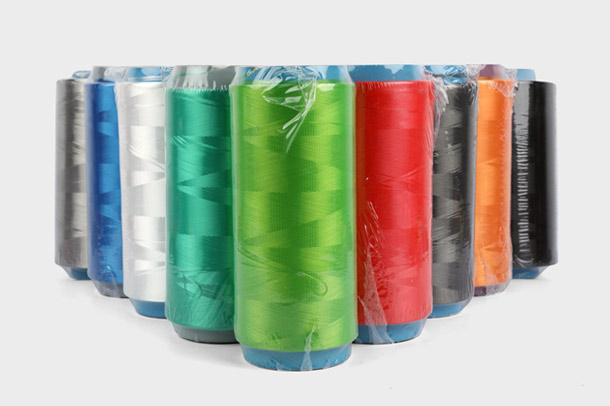
Add: NYaqian Road No128 Yaqian Town Xiaoshan Hangzhou Zhe Jiang China.
Tel: 0086-0571-82602080
Fax: 0086-0571- 82758132
E-mail: [email protected]
Article Directory
Bulk purchases of polyester filament yarn usually begin with a price comparison and end with a production trial. Between those two points sits a set of specifications, contract terms and supplier checks that decides whether a 20-ton order flows through your plant or becomes a warehouse problem.
Comparing quotes per kilogram is necessary but not sufficient. POY, FDY and DTY are not interchangeable, grade tolerances differ between factories, and MOQ conditions can change the real unit cost. This guide covers the key factors for bulk purchasing from polyester filament yarn suppliers, with special attention to manufacturers based in China's polyester production clusters.
A reliable supplier keeps specifications stable, commercial terms transparent, and process quality consistent across every repeat order.
At sample scale, most factories can assemble a flawless set of bobbins. At bulk scale, the same factory must fill a full shipment where thousands of bobbins match the same denier, tenacity, oil content and shade, then repeat that performance on the next order. That consistency, not the price on the quote, is the real test of a supplier.
Bulk contract grade: a grade that locks the same physical parameters and tolerance windows for every shipment inside a purchase order, so the yarn delivered in the third lot matches the first.
Polyester filament yarn covers three distinct product stages, and each one is matched to a different downstream process.
POY (partially oriented yarn) is the melt-spun intermediate sold to draw-texturers and other processors. The buying metrics that matter are oil content, evenness and winding quality, because downstream texturing exposes every fault. Buyers setting up a POY contract will find a wider technical breakdown in this guide to POY yarn specifications.
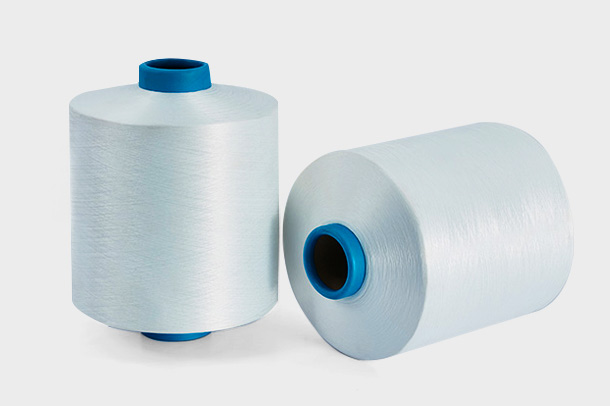
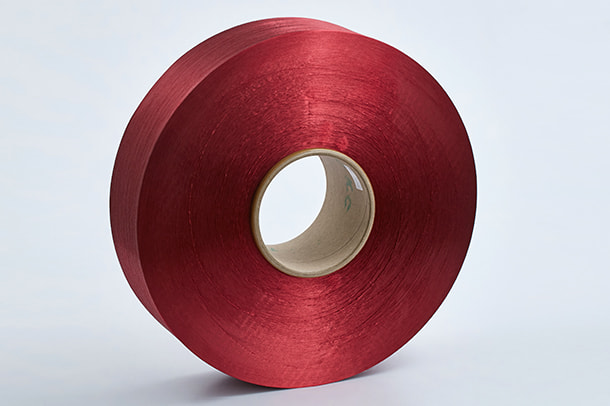 Polyester POY Yarns from Manufacturer with Technical SpecificationsThis page details POY yarn properties such as orientation uniformity, elongation variation, dyeability, denier range, and thermal compatibility, useful for buyers negotiating contracts for draw-texturing.View Product →
FDY (fully drawn yarn) is drawn at the spinning stage and is ready for direct weaving or warp knitting. Tenacity and elongation define weaving efficiency and final fabric strength, making them the primary negotiation points.
DTY (drawn textured yarn) is texturized from POY to create bulk and elasticity. It serves circular knitting, certain weaving programs and apparel applications where softness matters; crimp stability and shrinkage are the decisive values.
| Yarn type | Processing stage | Typical denier range | Primary application | Priority specifications |
| POY | As-spun, partially oriented | 75-300 D | Draw-texturing, conversion to DTY | Oil content, evenness (CV%) |
| FDY | Fully drawn | 30-300 D | Weaving, warp knitting | Tenacity, elongation |
| DTY | Textured from POY | 75-600 D | Knitting, apparel weaving | Crimp, shrinkage |
Do not substitute without a trial: swapping DTY into a weaving order changes hand feel, width and shrinkage values, and the finished fabric may fail product approval entirely.
Tenacity, elongation at break, USTER evenness and oil content are the four lab results that predict whether a yarn lot will run without stops.
Each value maps to a floor-level consequence. Low tenacity raises weft breakage in weaving. Uneven elongation creates tension differences across the beam. A high CV% produces barre and shade bands after dyeing. Oil content outside the normal range causes static, winding defects and poor fiber cohesion in downstream processing.
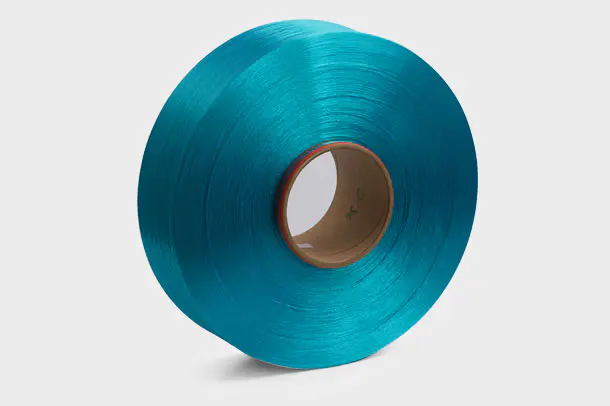 Polyester FDY Yarns with Processing and Handling GuidelinesThis listing covers FDY yarn technical parameters and handling instructions, including storage conditions and package inspection, relevant for weavers assessing tenacity and elongation for efficiency.View Product →
One bad bobbin costs more than replacement: a warping stop takes machine time, operator attention and can scar an entire beam, so per-lot test reports are worth more than a low price.
Bulk pricing follows the polymer feedstock curve, so the real procurement levers are MOQ, lead time and price validity rather than the unit price printed on the quote.
Suppliers in China's polyester clusters commonly require MOQs between 5 and 20 tons per denier and per color. Dope-dyed and colored yarns carry higher MOQs because the line must be cleaned between color changes. Lead time typically runs 7-30 days after deposit, and DTY usually takes longer than POY because texturing capacity is separate from spinning capacity.
| Term | Typical range | Procurement action |
| MOQ | 5-20 tons per denier and color | Define the MOQ per specification |
| Lead time | 7-30 days after deposit | Place orders before your peak season |
| Price validity | 7-15 days | Use fixed-price windows for budget planning |
| Payment terms | 30% deposit, 70% against B/L | Agree an L/C for very large contracts |
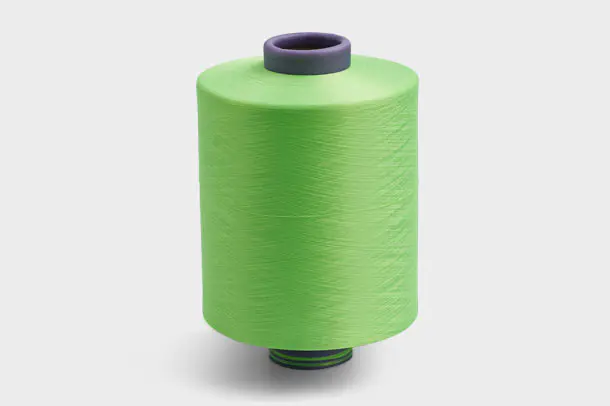 Polyester DTY Yarns Suppliers with Production Capacity OverviewThis supplier page presents DTY yarn package details, comparisons with FDY and ATY, and highlights advanced equipment and annual output, helpful for buyers evaluating MOQ and lead times.View Product →
Inventory data moves the market: in a recent weekly cycle, POY inventory fell to 17.1 days, FDY to 22.8 days and DTY to 30.4 days while upstream cost pressure pushed prices upward. Buyers who tracked weekly inventory figures were able to fix prices before the market moved.
Factory location decides how fast replacement lots arrive, how much freight costs and how directly the buyer absorbs raw material price swings.
The main Chinese polyester filament yarn suppliers sit in integrated textile regions where feedstock, spinning and export logistics are close together. Zhejiang Hengyuan Chemical Fiber Group Co., Ltd., based in Hangzhou, publishes this guide; the company operates as a polyester yarn manufacturer inside one of China's concentrated production zones, with access to polymer feedstock and container ports in the Yangtze River Delta. When feedstock prices change, a cluster-based producer reacts faster than an isolated plant.
Before signing a large contract, verify that the supplier can show production evidence: an overview of the company's manufacturing facilities tells you whether you are dealing with a producer or a middleman.
Cluster advantage: a producer inside a polyester cluster sources polymer chips locally, solves process problems faster and loads containers close to the port, which shortens lead time and reduces logistics risk.
A structured audit covering sample consistency, production evidence and contract clarity separates real manufacturers from trading intermediaries.
Runs its own spinning, drawing or texturing lines.
Accepts factory visits and shows process records.
Provides per-lot test reports from its own lab.
Handles quality claims at the source.
Sells invoices, logistics and consolidation services.
Avoids detailed factory evidence.
Presents re-labeled certificates from unknown lots.
Routes claims back to the actual producer.
Production sample: a sample taken directly from the actual manufacturing line that represents the lot you will receive, in contrast to a lab sample prepared specifically to look good.
Most manufacturers require 5-20 tons per denier and color. Dope-dyed or colored yarn usually carries a higher MOQ because changing colors requires cleaning the production line. Confirm whether the MOQ applies per specification or per delivery.
Request a 5 kg production sample, run it on your own machines, and compare the supplier's certificate with an independent test report. Focus on tenacity, elongation, USTER CV% and oil content against the agreed specification sheet.
POY is an intermediate yarn used for draw-texturing, FDY is a fully drawn yarn ready for direct weaving, and DTY is a textured yarn for knitting and soft fabrics. They cannot be used interchangeably without changing machine setup and fabric properties.
Yes. Polyester prices track crude oil through PTA and MEG feedstocks. Most suppliers fix prices for 7-15 days or link the contract to a raw material index. A written price adjustment clause protects both sides when the market moves.
Procurement risk in polyester filament yarn is manageable: lock the specification, audit the supplier, define the contract terms, then test a production lot before scaling up.

Zhejiang Hengyuan Chemical Fiber Group Co.,Ltd. is a professional China polyester filament yarns manufacturers and polyester color yarn suppliers, Established in 2006 ,located in YaQianTown Xiaoshan Hangzhou – One of the Center of polyester yarn Industry in China.

Products
Contact info
Copyright © Zhejiang Hengyuan Chemical Fiber Group Co.,Ltd. All rights reserved