Add: NYaqian Road No128 Yaqian Town Xiaoshan Hangzhou Zhe Jiang China.
Tel: 0086-0571-82602080
Fax: 0086-0571- 82758132
E-mail: [email protected]
Article Directory
Read a fully drawn yarn (FDY) specification sheet and you will see a short list of numbers: nominal denier, filament count, tenacity, elongation at break, and maybe a shrinkage value. Between those numbers and a reliable production run sits the entire manufacturing process. That process is what separates a yarn that runs cleanly on your looms from a yarn that keeps operators busy chasing end breaks and shade variations. This OEM manufacturing guide explains how polyester FDY is made, which quality parameters matter when you source from a fiber supplier, and what to verify before you scale up an order.
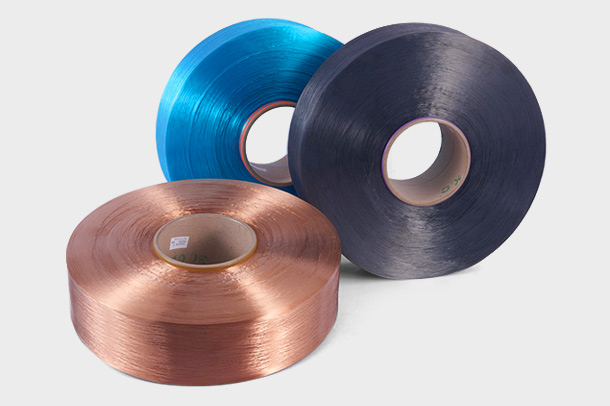
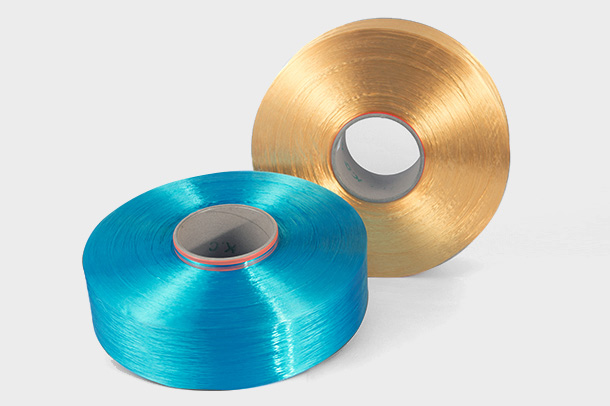
Fully drawn yarn is a polyester multifilament yarn that is extruded, quenched, and mechanically drawn in one continuous line. Because drawing is completed before winding, FDY leaves the plant with near-final molecular orientation. It is a ready-to-use flat filament for weaving, warp knitting, and other processes that need stable, low-elongation yarn.
The distinction matters in day-to-day purchasing. Partially oriented yarn (POY) is a semi-finished feed stock, wound at lower speed with residual orientation, and still needs drawing or texturing before use. Draw-textured yarn (DTY) is POY that has been textured to create bulk and crimp. FDY is neither; it is the fully oriented, flat filament that goes directly into gray fabric. Substituting one for the other is a common sourcing mistake, because the three yarn types create completely different fabric hand, dyeing behavior, and machine efficiency.
FDY production can be divided into four stages: melt preparation, extrusion and quenching, drawing and heat setting, and winding.
The process begins with polymer chips or with melt direct from a polymerization unit. Chips are dried to a very low moisture level, melted in an extruder, filtered, and pumped at controlled pressure through a spinneret. A spinneret is a metal plate with dozens of very fine capillaries, and the number of capillaries determines the filament count. A 150-denier yarn with 48 filaments, for instance, is extruded through a 48-hole spinneret.
Immediately after extrusion, the filaments pass through a quench duct where conditioned air cools them at a controlled rate. Uniform airflow is critical. Uneven cooling produces filaments with different internal structure, which later appears as streaks in dyed fabric. A spin finish is then applied to reduce friction and static.
The core of the process is the drawing stage. The yarn runs over pairs of godet rolls that rotate at different speeds. Because each subsequent godet runs faster than the previous one, the yarn is stretched while the polymer is still mobile, aligning the molecular chains along the yarn axis. Polyester is normally drawn at a ratio close to 3:1. Heated godets set the structure, and the draw temperature plus the godet speed ratio control final tenacity, elongation, and boiling-water shrinkage.
The drawn yarn is wound onto bobbins at speeds that commonly reach 4,000 to 5,000 meters per minute. Winding tension and package hardness are monitored continuously; a poorly wound package causes filament damage, edge collapse, and end breaks weeks later in the customer's warping room. For a more detailed step-by-step description of the production line, see this guide to making fully drawn yarn.
Some plants draw purchased POY into FDY on separate lines, while integrated producers run from melt or chips in a single pass. Buyers who need the semi-finished feed stock for their own texturing or drawing processes should review the polyester POY series first.
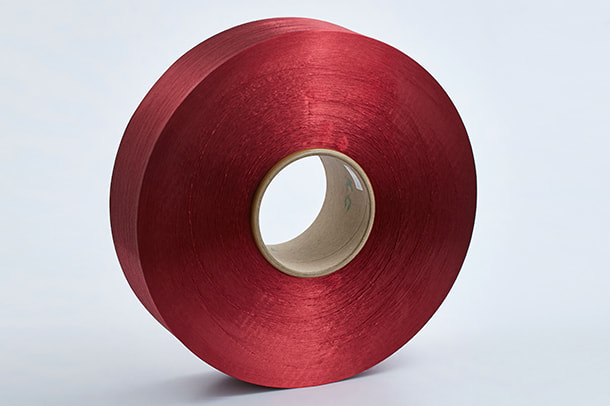 China Wholesale Polyester POY Yarns Manufacturers, SuppliersZhejiang Hengyuan Chemical Fiber Group Co.,Ltd is China polyester POY Yarns manufacturers and polyester POY Yarn suppliers, factory offer...View Product →
An OEM FDY order is only as strong as the specification agreement behind it. The table below lists the parameters that belong in any serious quotation or technical datasheet, with typical ranges for standard polyester FDY.
| Parameter | Typical Range for Polyester FDY | Why It Matters |
|---|---|---|
| Nominal denier (dtex) | 75D/36f, 150D/48f, 300D/96f and similar | Sets fabric weight, coverage, and machine settings |
| Filament count | 24 to 288 | Lower counts give a crisper hand; higher counts give softness at higher cost |
| Tenacity | 3.5 to 4.5 cN/dtex | Determines fabric strength and resistance to weaving stress |
| Elongation at break | 20 to 35% | Too low hurts processability; too high causes fabric distortion |
| Boiling-water shrinkage | 4 to 10% depending on grade | Controls dimensional stability of finished goods |
| Denier CV% | 1.5% or less | High variation causes streaks and uneven dye uptake |
Two parameters deserve extra attention in an OEM context. Denier uniformity tells you whether the yarn has the same thickness along its whole length; a batch can meet the average target and still contain thick and thin spots that cause barre and breaks. Shrinkage uniformity, meanwhile, decides whether two lots of the same denier produce the same fabric dimensions after finishing. Many buyers set a maximum difference between lots instead of relying on a single certificate value.
A practical FDY product selection guide can help you match your application to the right denier, luster, and shrinkage grade before you begin negotiating tolerances.
Any manufacturer can deliver one excellent batch. The value of an OEM supplier lies in repeating that result at scale, month after month. That is why process control matters more than an isolated certificate of analysis. Qualification should include the following checks:
These checks become the basis of the quality agreement. A contract that references a specific testing method, a denier tolerance, or a shrinkage limit is much easier to enforce than a promise based on vague wording.
Sourcing FDY is not simply comparing prices per kilogram. Evaluating a manufacturer means assessing equipment, laboratory capability, and communication discipline at the same time.
A review of the supplier's manufacturing facilities gives the clearest picture of whether process control is real or cosmetic. Suppliers with in-house research and development capability are generally better positioned to adjust a grade to your fabric engineering requirements.
FDY is not one product but a family of grades defined by denier, luster, filament cross-section, and shrinkage level. The right grade depends on the downstream process and the end product.
For woven apparel and lining fabrics, semi-dull round FDY in the 75 to 150 denier range is a typical starting point. Low-shrinkage grades are common for rainwear and outerwear, where puckering after finishing is unacceptable.
Warp knitting demands high denier uniformity and stable unwinding tension. Trilobal bright FDY is often selected for luster effects in satin and decorative fabrics, because the triangular cross-section reflects more light than a round filament.
High-tenacity FDY grades are used for webbings, bag fabrics, conveyor fabrics, and other technical textiles where dimensional stability under load is critical. For these applications, tenacity and shrinkage tolerances should be tightened beyond what an apparel grade requires.
The polyester FDY series page gives an overview of typical FDY categories for these specification discussions.
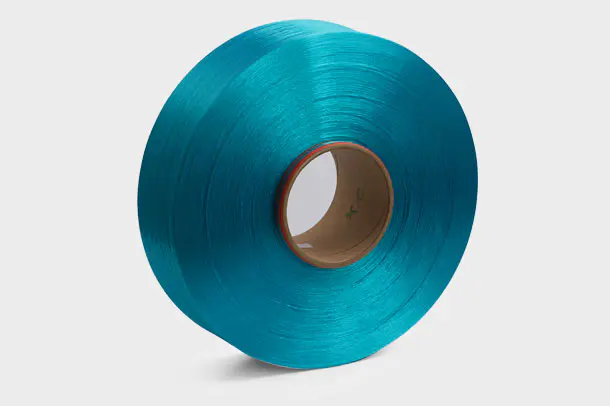 China Wholesale Polyester FDY Yarns Manufacturers, FactoryAs a China polyester FDY Yarns manufacturers and polyester FDY factory, Zhejiang Hengyuan Chemical Fiber Group Co.,Ltd. provide wholesale...View Product →
The way you start an FDY sourcing relationship matters as much as the initial price. Begin with a written specification that includes denier, filament count, tenacity, elongation, shrinkage, and CV% tolerances. Request batch data rather than a certificate alone. Run a trial lot under your own production conditions, and retain a reference sample of the yarn that passed for later comparison.
A manufacturer with years of polyester filament production experience, integrated drawing lines, and an established R&D center can normally answer these questions with real data instead of promises. At Zhejiang Hengyuan Chemical Fiber Group, our FDY production runs from melt to finished package on integrated lines, with quality tests performed in-house for every lot. That combination of production expertise and product knowledge is what an OEM buyer should look for when the goal is stable fabric quality over many orders, not a single low quotation.

Zhejiang Hengyuan Chemical Fiber Group Co.,Ltd. is a professional China polyester filament yarns manufacturers and polyester color yarn suppliers, Established in 2006 ,located in YaQianTown Xiaoshan Hangzhou – One of the Center of polyester yarn Industry in China.

Products
Contact info
Copyright © Zhejiang Hengyuan Chemical Fiber Group Co.,Ltd. All rights reserved