Add: NYaqian Road No128 Yaqian Town Xiaoshan Hangzhou Zhe Jiang China.
Tel: 0086-0571-82602080
Fax: 0086-0571- 82758132
E-mail: [email protected]
Article Directory
A 1,000 kg shade lot of 150D/48F coloured polyester can absorb two to three weeks of calendar time before it ships. Chip drying, melt spinning, winding, package dyeing, soaping, drying and rewinding are separate operations, and every one of them is a chance for the shade to move.
Dope-dyed polyester yarn deletes the wet dyeing step from that sequence. The colourant is compounded into the polymer before the filament is extruded, so the yarn leaves the spinneret already carrying its final shade and never enters a dye vessel. What changes is not only the look of the yarn but the way a colour programme is scheduled, costed and audited.
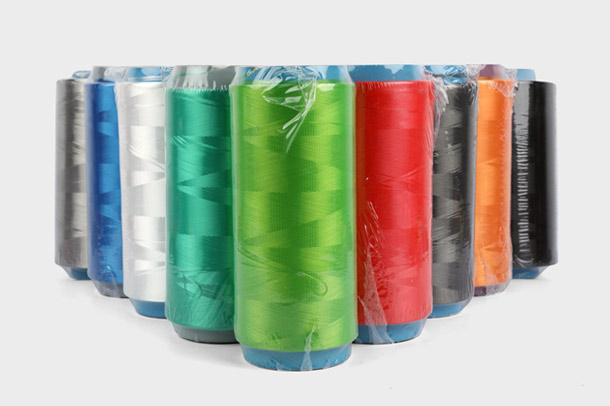
Dope-dyed polyester yarn is polyester filament in which pigment is dispersed into the polymer melt before extrusion, so the colour sits inside the filament instead of being applied to its surface.
With no dye bath to exhaust, colour accuracy depends on metering rather than on wet chemistry. Masterbatch let-down ratios in commercial polyester colour programmes typically sit between 2 and 5 percent by weight, and the concentrate is fed into the melt by a gravimetric feeder or a metering pump. Once that ratio is locked and recorded, the shade is a property of the recipe rather than of how a vessel behaved that morning.
Conventional package dyeing depends on disperse dye exhausting evenly into thousands of wound packages inside a pressurised vessel at roughly 130 degrees Celsius. Four variables decide whether it does.
Each one has to land inside the same window on every lot. Dope dyeing removes all four, because the colour is fixed in the chip before spinning begins.
Colour consistency improves because the shade is set by pigment dosing at the spinning line rather than by dye bath chemistry, which removes liquor ratio, exhaustion rate and drying profile as sources of batch-to-batch variation.
The difference shows up in how the programme is controlled. In a conventional route the reference is a dyed package and the tolerance is checked after dyeing, when the only corrective action is to re-dye or strip the lot. In a dope-dyed route the reference is a masterbatch lot, the tolerance is checked at the feeder, and corrections happen before the filament exists.
| Control point | Conventional package dyeing | Dope-dyed polyester yarn |
| Where colour enters | Disperse dye applied to wound packages | Pigment compounded into the melt |
| Wet process stages | Dyeing, soaping, rinsing, drying | None |
| Main drift sources | Liquor ratio, exhaustion rate, drying profile | Masterbatch dosing, chip lot consistency |
| Colour approval point | On dyed packages | On the masterbatch and first spun lot |
| Corrective action | Re-dye or strip the package lot | Adjust feeder rate on the next lot |
| Package handling | Multiple rewinds | Single winding pass |
| Water load at yarn stage | Significant | Eliminated |
Efficiency gains come from deleting the dyeing and drying loop: a dope-dyed line removes the dye queue, the drying cycle and the re-dye decision, which shortens the interval between colour approval and a packed lot.
The cost argument runs in the same direction, because the dyeing stage is deleted rather than optimised. The site's comparison of dope dyeing and conventional dyeing sets out where that saving lands.
Colour performance only pays back when the yarn family matches the downstream machine, and the practical split runs between textured yarn, flat filament and yarns built for one specific end product.
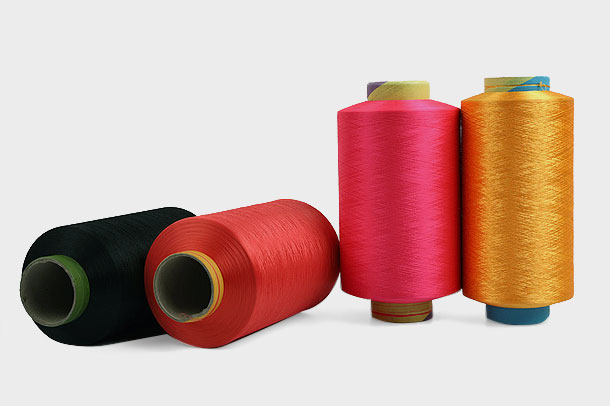
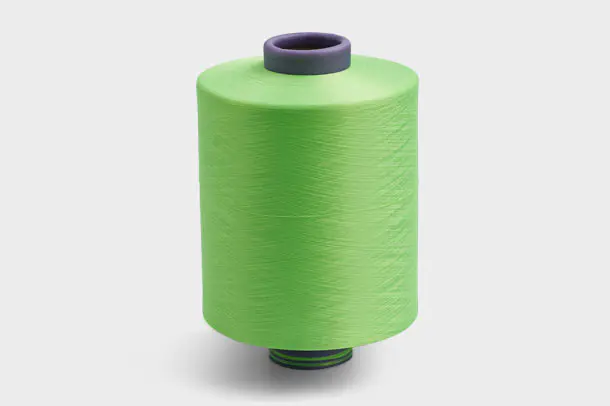 Polyester DTY Yarns SuppliersProduct Specifications Technical ParametersView Product →
Flooring and home textiles are the applications where dope-dyed colour pays back fastest, because a carpet or a blanket presents a large continuous surface on which a batch-to-batch shade shift is visible from across a room.
Carpet and rug mat yarns are usually specified with a colour tolerance checked on the finished pile rather than on the cone. That is the hardest place to correct a miss: a tufted carpet cannot be re-dyed economically once the pile is set, and a shade band between two production runs reads as a seam under showroom lighting.
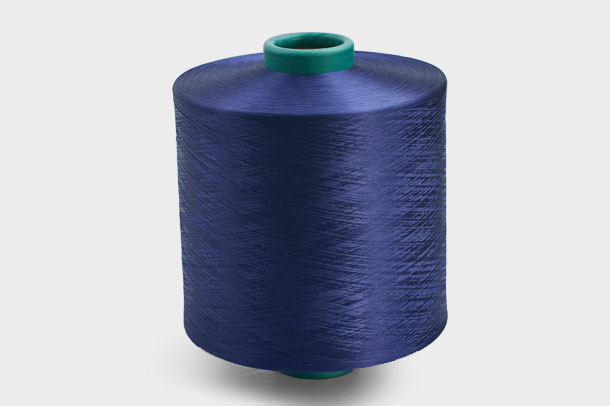 Polyester Carpet and Rug yarns Manufacturerscarpet yarns and rug yarnsView Product →
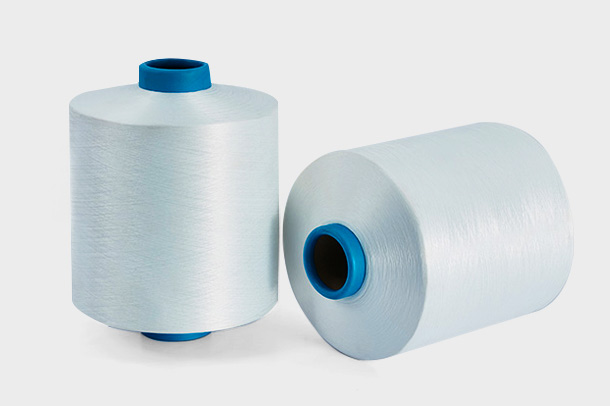 Blanket Yarns ManufacturersProduct Specifications Technical ParametersView Product →
A switch to dope-dyed yarn is a specification change rather than a colour change, so the purchase order should carry five items before bulk production is released.
No in principle, but the practical limit is masterbatch availability rather than dye chemistry. Any shade can be compounded, and the constraint is the minimum masterbatch quantity a supplier will produce. Shades drawn from an existing masterbatch library carry no setup charge, while a custom shade adds a compounding step that has to be amortised across the order.
No. Pigment compounded into the filament cannot be stripped, so dope-dyed yarn cannot be re-dyed to a different shade. Corrections have to happen at the feeder ratio or at the fabric stage, which is why the masterbatch ratio is signed off before bulk spinning starts.
Request instrumental data rather than visual judgement. A workable specification asks for CIELAB colour difference values measured at D65 with a 10 degree observer on three consecutive lots, calculated to ISO 105-J03, together with the masterbatch lot number for each delivery.
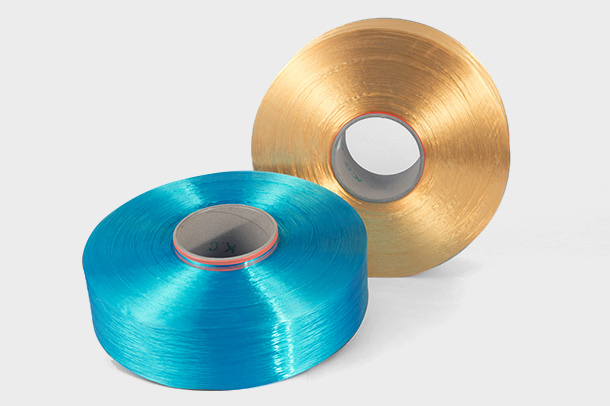
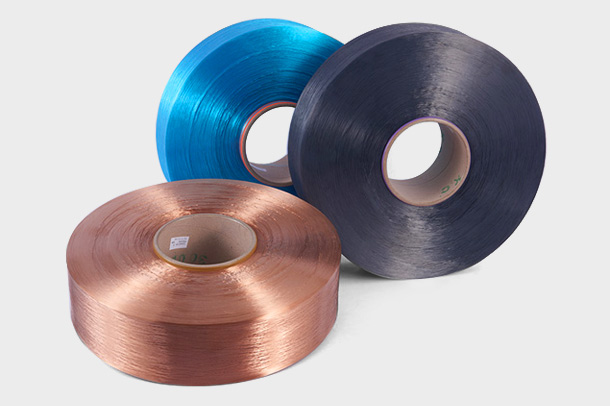
Coloured polyester is supplied across the filament range, from partially oriented yarn through fully drawn and draw-textured yarn, and in yarns built for specific end products such as carpet, rug mat and blanket yarns. The let-down ratio differs by denier, so each specification is reconfirmed on a pilot lot before bulk release.

Zhejiang Hengyuan Chemical Fiber Group Co.,Ltd. is a professional China polyester filament yarns manufacturers and polyester color yarn suppliers, Established in 2006 ,located in YaQianTown Xiaoshan Hangzhou – One of the Center of polyester yarn Industry in China.

Products
Contact info
Copyright © Zhejiang Hengyuan Chemical Fiber Group Co.,Ltd. All rights reserved