Add: NYaqian Road No128 Yaqian Town Xiaoshan Hangzhou Zhe Jiang China.
Tel: 0086-0571-82602080
Fax: 0086-0571- 82758132
E-mail: [email protected]
Article Directory
A weaving mill in Istanbul rejected 2.8 tons of 150D/48F bright FDY last season. The tenacity values on the certificate were acceptable, and the denier counted correctly in the lab, but the last forty packages behaved differently from the first forty: more filament breaks at the creel, slightly tighter beam winding, visible weft bars after finishing. The lot carried a grade. It did not carry a production standard.
Buyers who work with polyester filament yarns quickly realize that FDY quality is not one number on a certificate. It is a set of production standards — process parameters, test methods, tolerance limits and lot-release rules — that together decide whether a yarn runs predictably across thousands of meters. This article explains what those standards cover, how they are set in the spinning and drawing process, and what to verify before placing an FDY order.
Fully drawn yarn, as the name implies, is a multifilament polyester yarn whose polymer chains are oriented and partially crystallized during high-speed spinning and drawing. Unlike POY, which is still waiting for a downstream draw step, FDY can go directly to warping, weaving or knitting. That direct use is precisely why production standards matter: any variation in the yarn arrives unchanged on the fabric.
Commercial FDY specifications cover five groups: geometry (denier and filament count), mechanical performance (tenacity and elongation), dimensional behavior (hot-air shrinkage), surface characteristics (oil content) and appearance (luster, color, broken filaments, interlace nodes).
| Parameter | Typical Range for Textile FDY | Why It Is Controlled |
|---|---|---|
| Denier | 33–330 dtex (30–300 denier) | Sets fabric weight, coverage and machine settings in weaving and knitting. |
| Filament count | 24, 36, 48, 72 or 96 filaments | Determines softness and drape; cross-section geometry affects luster. |
| Tenacity | 3.5–4.6 cN/dtex standard; 6.0 and above for high-tenacity grades | Provides fabric strength and governs yarn breaks during high-speed processing. |
| Elongation at break | 25–40% | Low elongation causes process breaks; high elongation destabilizes fabric dimensions. |
| Elongation CV within lot | Within 5–6% | Uneven elongation between packages is the leading cause of barre and streak defects. |
| Hot-air shrinkage (180°C) | 6–10% | Mismatched shrinkage creates wavy seams, bubbling and poor dimensional stability. |
| Oil content | 0.6–1.3% depending on end use | Controls static electricity, guide abrasion and downstream scouring load. |
| Interlace nodes | 30–80 per meter | Prevents filament separation and tangling at high process speeds. |
| Shade difference (dE) within lot | Within 0.5 for colored FDY | Limits visible color variation in dope-dyed, bright or semi-dull yarns. |
These values are not universal constants. A warp-knitting plant may require lower shrinkage, while a weaver of industrial fabrics will accept a different elongation window. The point of a production standard is not an exact figure; it is the consistency within the lot and between lots. A standard that allows elongation CV to drift from 3% in March to 9% in July is not a standard.
FDY process standards matter far more than the final certificate, because testing only confirms what the process has already decided. Melt quality, spinning conditions and drawing parameters determine most of the finished yarn's performance.
Production begins with polyester chips or melt with an intrinsic viscosity of about 0.64–0.67 dL/g. The melt is extruded through spinnerets at 285–295°C, then quenched by filtered air as it falls. Uneven quench airflow creates local differences in molecular orientation that later appear as dye uptake variations. The filaments then pass an oil applicator that controls friction, static charge and downstream handling. Each of these set points belongs on the process standard sheet.
The draw zone decides the final mechanical profile. In a one-step spin-draw line, filaments are drawn between a slow-speed and a fast-speed godet pair at ratios of roughly 3.0–3.5. Draw-roll temperatures around 90–120°C promote orientation, and a heat-setting godet at 180–220°C stabilizes the structure and fixes shrinkage behavior. Take-up speeds on modern lines range from about 4,500 to 6,000 m/min.
For a buyer, the relevant question is not the exact draw ratio on someone else's line. It is whether the line runs at stable tension, whether the quench air filters are clean, whether the godets are in tolerance and whether every shift starts from the same set points. Our guide to the full sequence of polyester FDY manufacturing walks through each station in the order it appears on the mill floor.
Process discipline also matters for the yarn that enters downstream drawing and texturing. If your operation converts partially oriented yarn into drawn or textured products, variations in the feedstock reappear in your own process. A supplier that controls its polyester POY series with the same care gives you a predictable starting point.
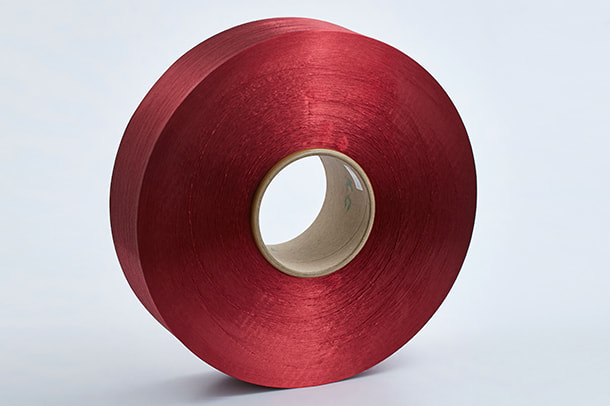 China Wholesale Polyester POY Yarns Manufacturers, SuppliersZhejiang Hengyuan Chemical Fiber Group Co.,Ltd is China polyester POY Yarns manufacturers and polyester POY Yarn suppliers, factory offer...View Product →
A standard factory release test for FDY includes linear density and its CV, tenacity and elongation on a tensile tester, hot-air shrinkage, oil content and evenness readings. Visual checks cover package density, layer formation and broken filaments. For colored FDY, spectrophotometer measurement verifies the shade against the agreed reference, and a delta-E limit is written into the order contract.
Most mills grade output as AA, A or B. AA is reserved for fine deniers, knitting and high-speed weaving. The real difference between grades is not nominal strength; it is tolerance spread — the maximum elongation CV, the shrinkage deviation limit and the acceptable number of broken filaments per package. Sampling is equally important. A credible standard tests the head, middle and tail of each sampled bobbin and pulls packages from multiple spinning positions so a bad run cannot hide inside an averaged certificate.
Ask for the grade definition in writing. A certificate labeled "AA" without a test basis is a label. A production standard names the test method, the sample size and the rejection threshold.
FDY sits alongside POY and DTY in the polyester filament family, and its standards make more sense when compared with the other two.
| Control Focus | POY | FDY | DTY |
|---|---|---|---|
| Orientation | Low, kept for later drawing | High and fixed after drawing | Medium, modified by texturing |
| Typical tenacity | 2.2–3.0 cN/dtex | 3.5–4.6 cN/dtex | 3.0–4.0 cN/dtex |
| Elongation at break | 90–140% | 25–40% | 20–30% |
| Main failure mode | Unstable draw response | Shrinkage and barre | Crimp and bulk variation |
| Typical end use | Feedstock for FDY and DTY lines | Flat woven and knitted fabrics | Stretch knits, mattress ticking, upholstery |
FDY standards prioritize dimensional stability and uniform tension, while DTY standards prioritize crimp regularity. For a detailed explanation of what changes between a partially oriented and a fully drawn yarn, see our practical comparison of FDY and POY behavior. When the application needs bulk, cover and comfort stretch — sports knits, mattress ticking or upholstery — the supplier's polyester DTY series becomes the reference standard instead.
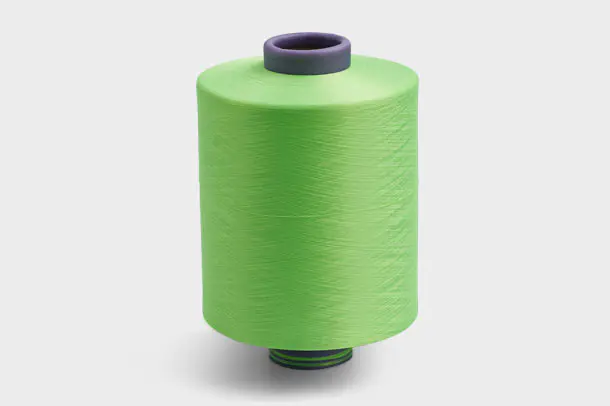 Wholesale Polyester DTY Yarns Suppliers, China DTY CompanyZhejiang Hengyuan Chemical Fiber Group Co.,Ltd is China polyester DTY yarns suppliers and polyester DTY company, you can find wholesale p...View Product →
An FDY order carries more supplier risk than other filament orders because the yarn is used as-is. No draw-twisting or texturing step sits between the seller and your loom. Run through this checklist before committing.
The technical parameters that matter in industrial FDY procurement are not exotic — they are the same values a careful weaver verifies on every roll, provided the supplier records them. Start the evaluation with the supplier's polyester FDY series page, then ask for sample bobbins cut from the head, middle and tail of the production run.
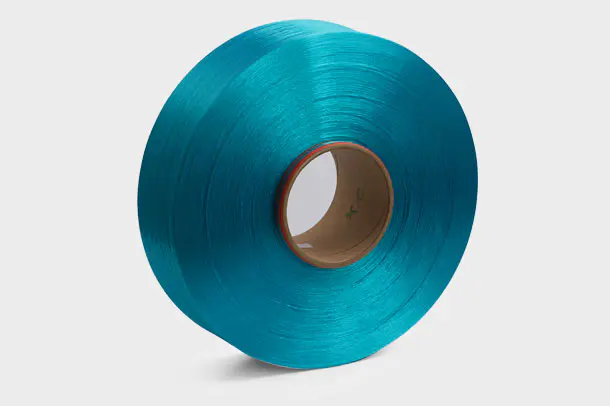 China Wholesale Polyester FDY Yarns Manufacturers, FactoryAs a China polyester FDY Yarns manufacturers and polyester FDY factory, Zhejiang Hengyuan Chemical Fiber Group Co.,Ltd. provide wholesale...View Product →
Manufacturers in the Xiaoshan district of Hangzhou, one of China's most mature polyester yarn clusters, have spent two decades tightening these process windows. Producers running their own melt-spinning, high-speed drawing and colored-yarn facilities — with continuous monitoring across polymer quality, spinning, drawing, testing and packaging — release FDY with a consistency that batch-based plants struggle to match. A difference of a few tenths of a cN/dtex in tenacity or 0.2% in shrinkage will never show on a certificate. It shows on the beam, in the dye bath and in the finished fabric.
FDY production standards exist to make quality predictable. When a supplier shares its test methods, states its grade definitions and provides lot-level data, it treats you as an engineering partner rather than a ticket number. In a market where a single off-standard bobbin can stop a warping creel, that partnership is worth putting on the approved supplier list.

Zhejiang Hengyuan Chemical Fiber Group Co.,Ltd. is a professional China polyester filament yarns manufacturers and polyester color yarn suppliers, Established in 2006 ,located in YaQianTown Xiaoshan Hangzhou – One of the Center of polyester yarn Industry in China.

Products
Contact info
Copyright © Zhejiang Hengyuan Chemical Fiber Group Co.,Ltd. All rights reserved