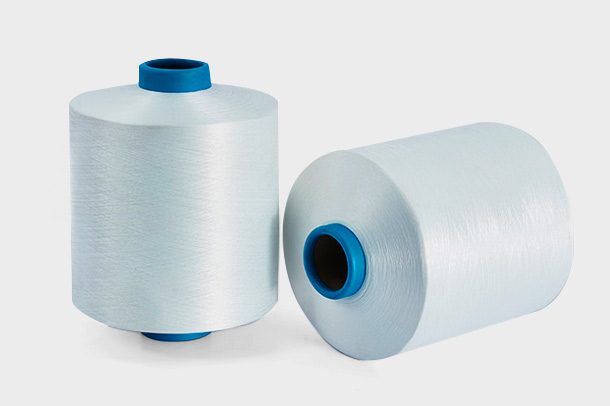
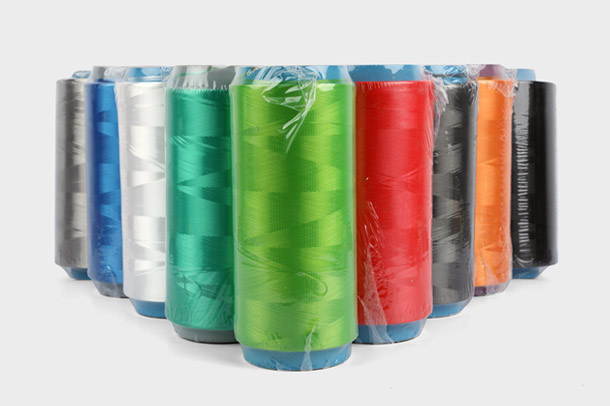
Add: NYaqian Road No128 Yaqian Town Xiaoshan Hangzhou Zhe Jiang China.
Tel: 0086-0571-82602080
Fax: 0086-0571- 82758132
E-mail: [email protected]
Article Directory
A batch of polyester FDY arrives at your warehouse. By lunchtime, the warping machine has stopped three times with broken ends. One week later, the same batch produces a knit with faint horizontal stripes after dyeing. The cones look identical on the outside, yet the fabric tells a different story. In nearly every case of FDY-related production failure, the root cause is not a single dramatic defect but a measurable drift in one of six parameters: tenacity and elongation consistency, denier uniformity, dye uptake, fuzz level, shrinkage, or oil finish pick-up. Name the parameter, measure it against a specification, and the solution becomes a process decision instead of a guessing game.
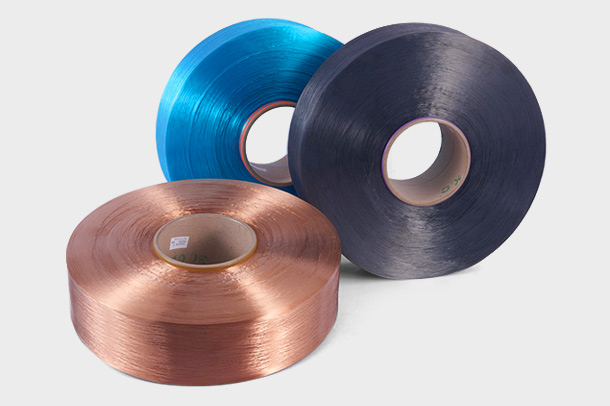
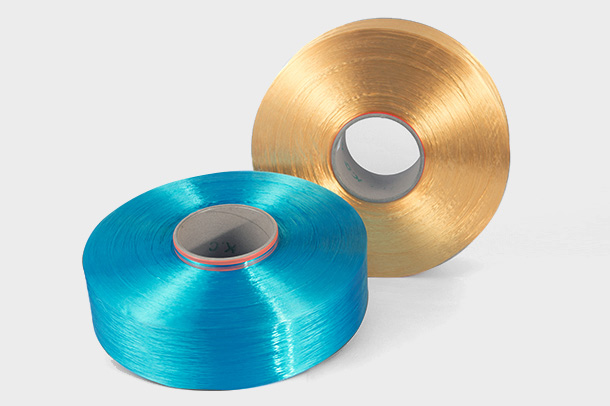
FDY, or fully drawn yarn, is made by melt spinning, drawing, and heat-setting polyester in one continuous operation. The draw zone orients the molecular chains; heat setting fixes that orientation. Because the structure is locked in at the production stage, small deviations in melt temperature, draw roll speed, quench air flow, or winding tension show up directly in the yarn that reaches your plant.
The first step in diagnosing a defect is knowing which yarn family you are actually working with. FDY is fully drawn and dimensionally stable; POY is partially oriented and still needs drawing or texturing at the buyer's mill. That difference changes the whole failure pattern. A texturizer's problems start with POY storage and aging, while a weaver's problems start with FDY drawing uniformity. If your process begins with partially oriented material, the polyester POY series you order must hold consistent viscosity and crystallinity, because those two values determine everything downstream.
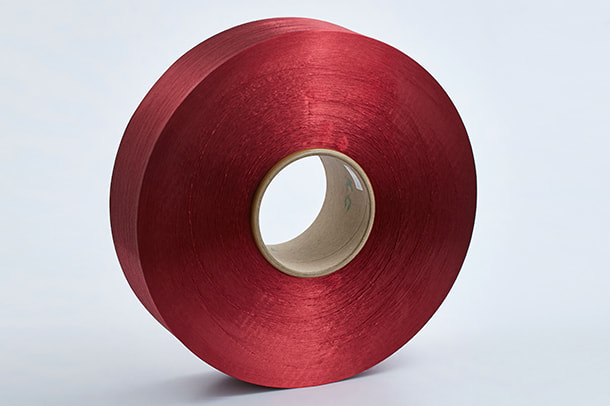 China Wholesale Polyester POY Yarns Manufacturers, SuppliersZhejiang Hengyuan Chemical Fiber Group Co.,Ltd is China polyester POY Yarns manufacturers and polyester POY Yarn suppliers, factory offer...View Product →
The technical link between polymer structure and yarn behavior is well documented; PET aggregate structure and its influence on polyester fully drawn yarn properties explains how crystallinity differences translate into mechanical variation. A mill that understands this connection does not accept a defect at face value. It asks which production stage caused the drift.
The failure modes below appear most often in weaving, warp knitting, and warping operations. Each one has a specific measurement and a specific fix.
The first symptom is breakage: ends snap at ceramic guides, at the let-off zone, or at high-speed winding. The usual cause is an uneven draw ratio across the yarn line. If one position draws slightly faster or at a different temperature than its neighboring positions, the resulting yarn has mixed tenacity values inside the same bobbin.
Typical commercial FDY offers tenacity above 3.5 cN/dtex and elongation at break in the 25–35% range. What matters more is consistency. When the coefficient of variation for tenacity within a batch climbs above roughly 2.5%, end breaks start appearing. Buyers should measure multiple cones per batch and compare the spread, not just the average; the testing protocol and acceptable limits are described in the tenacity and elongation quality-control guide for polyester FDY yarns.
Horizontal stripes after dyeing are the classic FDY defect. The yarn did not absorb color poorly; its filaments were drawn at different temperatures or quenched at different rates, leaving parts of the batch with different crystallinity. The dye then makes that difference visible.
The practical fix is to knit a small tube and dye a pre-production sample together with a reference shade. If the drift exceeds a half-step on the gray scale between cones from the same lot, the heat-setting uniformity at the supplier is insufficient.
When denier fluctuates, fabric weight changes across a roll and luster appears inconsistent. The root cause is usually in the melt delivery system: a worn spin pump, a partially blocked filter, or pressure fluctuation in the melt line. These faults create thick and thin places in filaments that are later invisible until the fabric is weighed or handled.
An incoming check is simple: cut a precise 100-meter length from several cones, weigh each sample on a precision scale, and compare the calculated denier with the supplier's tolerance. Serious suppliers hold denier within ±1.5% of nominal.
Broken filaments appear as hair on the fabric surface, lint on machine surfaces, or tiny loops that catch in guides. The cause can be polymer gels in the melt, a scratched spinneret, over-strong quench air, or abrasion against a rough contact surface.
The quick in-house test is the cut-and-look method: draw a fixed length of yarn through a small abrasive mat, then inspect it against a dark background for separated filaments and protruding ends. If the yarn shows more than a few broken filaments per meter on a regular basis, the line needs maintenance or the supplier's spinning conditions need a review.
FDY is normally sold with a defined dry heat shrinkage value, commonly 5–8% at 180°C for standard grades. If shrinkage varies within a batch, finished fabric puckers, edges curl, and garments change shape after the first wash.
Checking shrinkage takes one afternoon: place a sample in a laboratory oven at 180°C, measure the length change, and compare it with the supplier's spec. Then confirm that the spec matches across batches you receive over time. A one-time measurement does not protect you against the next delivery.
Finish oil has one job: to let the yarn pass through guides and needles at high speed without friction damage. Too little oil causes squealing at guides, static build-up, and filament fraying. Too much oil makes fabric feel greasy and creates defects in dyeing and printing. The correct pick-up range for most FDY is 0.5–1.5% by weight.
It is worth checking plant conditions before blaming the yarn. When processing area humidity drops below 55%, even a perfectly finished yarn develops static and sloughs off the package. Maintain 60–70% relative humidity in the winding and warping area and re-test before changing suppliers.
| Problem | Typical symptom | Primary cause | Prevention |
|---|---|---|---|
| Tenacity variation | End breaks at guides and warping | Uneven draw ratio or draw temperature | Test tenacity CV; confirm draw-zone control with the supplier |
| Uneven dye uptake | Barré streaks after dyeing | Crystallinity differences from heat-setting drift | Pre-dye a sample; verify heat-setting profile |
| Denier variation | Fabric weight drift and luster change | Spin pump wear, filter blockage, melt pressure fluctuation | Weigh cut lengths across the batch; require ±1.5% tolerance |
| Broken filaments / fuzz | Hairy surface, fly, filament loops | Polymer gels, spinneret damage, guide abrasion | Run a cut-and-look test against a dark background |
| High shrinkage | Puckering and shape change after wash | Insufficient heat setting | Oven shrinkage test at 180°C; match batch specs |
| Oil finish defects | Static, sloughing, greasy fabric | Oil pick-up too low or too high | Verify 0.5–1.5% pick-up; keep humidity at 60–70% |
A short incoming inspection protects the production schedule and gives you documented evidence if a dispute arises. The entire routine takes a few hours with basic lab equipment:
A serious supplier includes its own test report with every batch. Your incoming check confirms that report; it does not replace it. If the supplier cannot produce such a report, that is the first warning sign.
Most FDY defects are preventable at the production stage: melt temperature stability, draw roll speed and temperature control, quench air profile, winding tension, and oil application all determine the final yarn. When you evaluate a manufacturer, ask how often the draw temperatures are checked, whether spin packs are changed on a fixed schedule, and whether every bobbin passes through an online denier monitor.
A vertically integrated producer has a structural advantage: polymer chips, spinning, drawing, and winding are controlled under one roof, so quality data can be traced from melt to package. A plant that runs dedicated lines for its polyester FDY series can document the draw ratio and heat-setting window applied to each lot, and the laboratory that tests FDY also validates the adjacent POY and DTY lines.
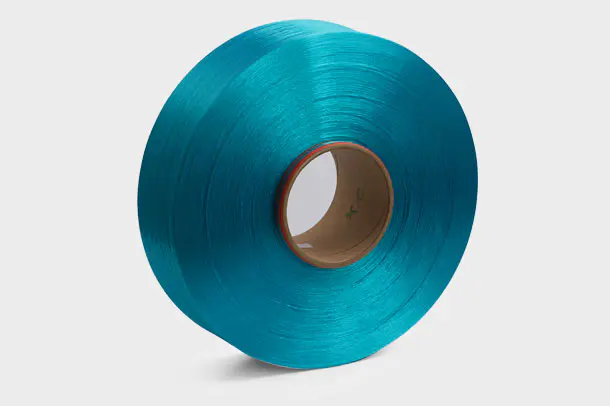 China Wholesale Polyester FDY Yarns Manufacturers, FactoryAs a China polyester FDY Yarns manufacturers and polyester FDY factory, Zhejiang Hengyuan Chemical Fiber Group Co.,Ltd. provide wholesale...View Product →
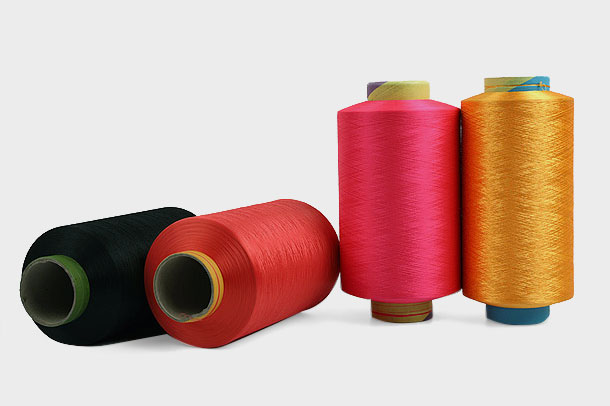
Choosing the right yarn family matters as much as choosing the right supplier. If the fabric needs rigidity, dimensional stability, and a clean surface, FDY is the correct starting point. If the application calls for bulk, stretch, and a soft hand, a textured yarn is the better match; the polyester DTY series already carries the crimp and stretch that FDY cannot provide. Every family has its own defect profile, and one of the fastest ways to reduce defects is to stop expecting one family to do another's job.
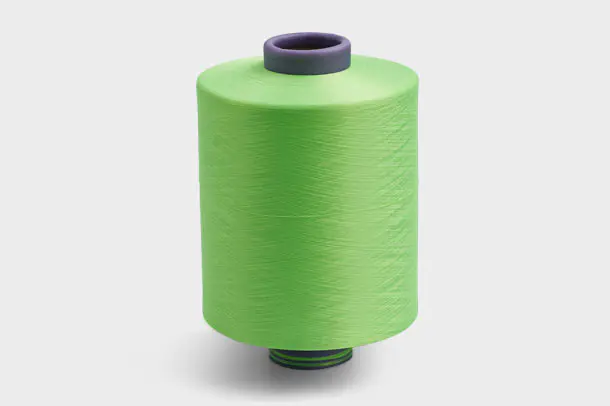 Wholesale Polyester DTY Yarns Suppliers, China DTY CompanyZhejiang Hengyuan Chemical Fiber Group Co.,Ltd is China polyester DTY yarns suppliers and polyester DTY company, you can find wholesale p...View Product →
When comparing offers, review the supplier's production background and test equipment. A manufacturer that publishes technical content about FDY selection — for instance, guidance on matching an FDY grade to a weaving or knitting application — is more likely to answer a technical complaint with evidence instead of a sales justification.
FDY yarn failures share one pattern: a measurable parameter drifts outside its specification. Tenacity and elongation, denier, dye uptake, fuzz, shrinkage, and oil finish can all be tested within hours. Once the measurement identifies the drift, the solution becomes a negotiation between the mill and the supplier around a concrete number, not a dispute about quality. Keep those tests in your routine, and most FDY problems will be solved before they ever reach the production floor.

Zhejiang Hengyuan Chemical Fiber Group Co.,Ltd. is a professional China polyester filament yarns manufacturers and polyester color yarn suppliers, Established in 2006 ,located in YaQianTown Xiaoshan Hangzhou – One of the Center of polyester yarn Industry in China.

Products
Contact info
Copyright © Zhejiang Hengyuan Chemical Fiber Group Co.,Ltd. All rights reserved