Add: NYaqian Road No128 Yaqian Town Xiaoshan Hangzhou Zhe Jiang China.
Tel: 0086-0571-82602080
Fax: 0086-0571- 82758132
E-mail: [email protected]
Article Directory
In the textile engineering sector, the safety profile of raw materials is just as critical as their mechanical properties. When sourcing white blanket yarn for products destined for baby nurseries or individuals with sensitive skin, the focus shifts to chemical purity and structural smoothness. Zhejiang Hengyuan Chemical Fiber Group Co., Ltd., established in 2006 in the heart of China's polyester industry, operates across 120,000 square meters with a capacity of 150,000 tons of polyester yarn annually. As a "Green Environmental and Trust Company of China," we specialize in high-precision FDY, POY, and DTY yarns. For manufacturers, understanding how to choose hypoallergenic yarn for blankets is the first step in creating a product that is both luxurious and safe. This guide analyzes why OEKO-TEX certification is the gold standard for polyester yarn for baby blankets and how fiber engineering prevents skin irritation.
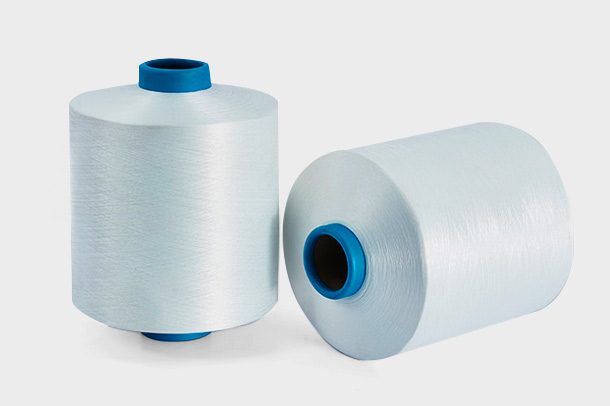
A hypoallergenic white blanket yarn is defined by its resistance to allergens and its lack of chemical irritants. Polyester, specifically in its raw white polyester yarn for blankets form, is inherently resistant to biological allergens such as dust mites and mold, which thrive in organic fibers like wool. When comparing polyester vs wool for baby blankets, high-denier polyester (ranging from 30D to 600D) provides a smoother filament surface that does not cause the mechanical "itch" associated with coarse natural fibers. For those seeking soft white yarn for sensitive skin, the use of DTY (Drawn Textured Yarn) provides a bulky, soft hand-feel while maintaining the inert chemical properties of synthetic polymers. Utilizing low shedding white blanket yarn is also vital in a nursery environment to prevent fibers from becoming respiratory irritants for infants.
| Fiber Property | Natural Fibers (Wool/Cotton) | Hypoallergenic White Blanket Yarn (Polyester) |
| Allergen Retention | High (Porous) | Very Low (Inert) |
| Surface Smoothness | Scaly/Irregular | Uniform/Smooth |
| Moisture Management | Absorbent (Can hold bacteria) | Wicking (Stays dry) |
The OEKO-TEX certified white blanket yarn designation indicates that the product has been tested for over 300 harmful substances, including formaldehyde and heavy metals. For a bulk white yarn for baby nurseries, passing these tests is mandatory to ensure safety during direct skin contact. Engineering non-toxic white yarn for home textiles involves strict control over the "dope-dyeing" or "raw-white" production stages. At Zhejiang Hengyuan, our integrated production ensures that our chunky white yarn for crochet blankets meets these global standards. When comparing OEKO-TEX vs organic yarn certifications, OEKO-TEX focuses specifically on the chemical safety of the end-product, making it highly relevant for synthetic white blanket yarn used in high-traffic upholstery and bedding.
| Safety Criterion | Standard Industrial Yarn | OEKO-TEX Certified White Blanket Yarn |
| Formaldehyde Content | Not strictly regulated | Below detectable limits |
| pH Value | Variable | Skin-neutral (4.0 - 7.5) |
| Azo Dyes | Potential presence | Strictly Prohibited |
The choice between white polyester DTY for blankets and FDY (Fully Drawn Yarn) affects the final product's "loft" and thermal insulation. DTY is preferred for white blanket yarn because the texturizing process introduces "crimp," which traps air and creates a warm, breathable barrier. For commercial manufacturers, white blanket yarn wholesale prices are often influenced by the denier count; however, investing in higher-spec durable white yarn for heavy blankets ensures the product does not pill or lose its 3D structure after repeated washing. As a "Top 100 Industry Company in Xiaoshan," our Hengyun brand ensures that our 150 million USD in assets translates into state-of-the-art machinery capable of producing the most consistent yarn in the industry.
The choice of white blanket yarn is a balance of tactile comfort and chemical integrity. By opting for a hypoallergenic white blanket yarn that carries OEKO-TEX certification, manufacturers can provide peace of mind to parents and sensitive users alike. Zhejiang Hengyuan Chemical Fiber Group Co., Ltd. remains dedicated to the "intelligence creation" of polyester textiles, ensuring that our products continue to set the benchmark for quality, safety, and environmental trust on the global stage.
Polyester is a synthetic filament that does not have the organic dust or short fibers (lint) that cotton produces, which can trigger respiratory issues or skin irritation in highly sensitive babies.
High-quality "raw white" yarn is produced with high-purity polymers that achieve a bright white color without the need for harsh chlorine bleaches, making it a non-toxic white yarn for home textiles.
Look for OEKO-TEX Standard 100 Class I certification, which is the strictest category specifically designed for products used by infants and toddlers up to 3 years old.
Yes. Durable white yarn for heavy blankets needs high tensile strength to hold the weight of glass beads or pellets, and polyester DTY provides the necessary durability and soft cushioning.
Low shedding ensures that the blanket maintains its appearance over time and prevents the inhalation of micro-fibers, which is critical for maintaining a clean and safe nursery environment.

Zhejiang Hengyuan Chemical Fiber Group Co.,Ltd. is a professional China polyester filament yarns manufacturers and polyester color yarn suppliers, Established in 2006 ,located in YaQianTown Xiaoshan Hangzhou – One of the Center of polyester yarn Industry in China.

Products
Contact info
Copyright © Zhejiang Hengyuan Chemical Fiber Group Co.,Ltd. All rights reserved