Add: NYaqian Road No128 Yaqian Town Xiaoshan Hangzhou Zhe Jiang China.
Tel: 0086-0571-82602080
Fax: 0086-0571- 82758132
E-mail: [email protected]
Article Directory
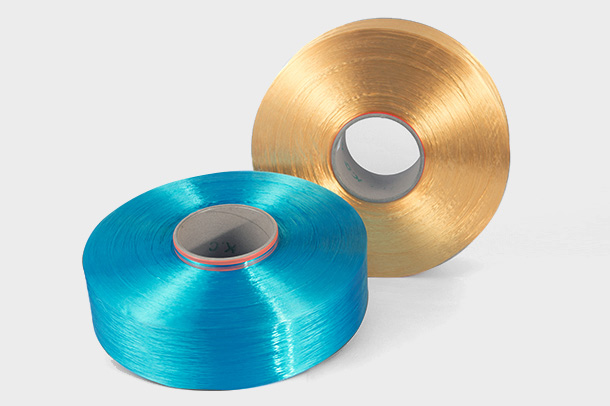
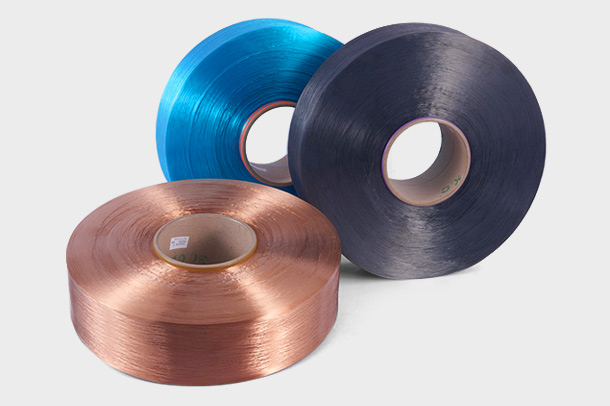
Fully drawn yarn has become the backbone of modern polyester fabric production because it arrives at the loom or knitting machine already stabilized — no further drawing step required. That single difference in the spinning process is why fully drawn yarn dominates categories from sportswear to automotive interior fabrics, where dimensional consistency cannot be left to chance.
Fully drawn yarn, commonly abbreviated FDY, is a polyester filament yarn produced by combining melt spinning and drawing into a single continuous process. As the molten polymer is extruded through spinnerets, it is immediately drawn and oriented at high speed, which aligns the polymer chains and locks in strength before winding. This is what separates FDY from partially oriented yarn, which still requires a separate drawing stage before it can be woven or knitted.
Oriented filament structure resists stretching and shrinkage during fabric processing.
Consistent filament diameter produces even fabric appearance with fewer visible defects.
Uniform polymer orientation improves dye uptake and color fastness across batches.
Withstands repeated mechanical stress in high-wear applications like luggage fabric.
Because it combines strength with a clean, consistent filament surface, fully drawn yarn is specified across a wide span of woven and knitted product categories rather than one narrow niche.
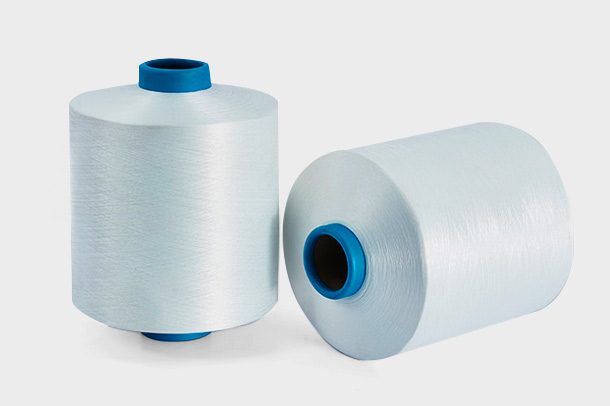
Fully drawn yarn is best understood as the "ready to weave" polyester filament — already oriented, stabilized, and dimensionally consistent, unlike POY which still needs texturizing or additional drawing before fabric production.
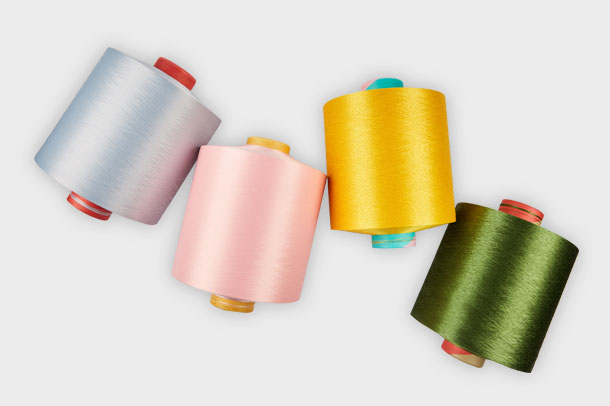
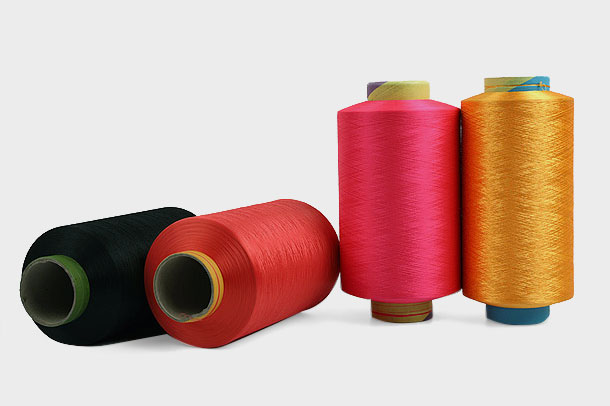
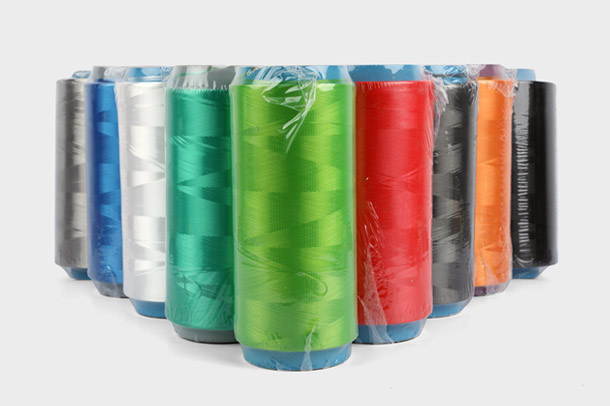
Mills typically choose between bright FDY for high-gloss fashion fabrics, semi-dull FDY as the general-purpose default, full dull FDY for a matte, cotton-like hand feel, and dope-dyed colored FDY, which locks pigment into the filament during spinning rather than relying on piece dyeing later.
| Yarn Type | Processing Stage | Stretch | Typical Use |
| FDY | Ready to weave/knit | Low | Woven fabrics, home textiles |
| POY | Needs further drawing | High | Feedstock for DTY production |
| DTY | Textured after drawing | Moderate | Stretch fabrics, activewear |
Buyers should first confirm denier and filament count against the target fabric weight, then check tensile strength and elongation requirements for the intended weaving or knitting process. Dyeing method, whether piece-dyed or dope-dyed, and processing compatibility with existing looms or knitting machines round out a sourcing checklist before committing to bulk production.
FDY is fully oriented and ready for fabric production, while POY requires an additional drawing or texturizing step before use.
Yes, particularly when blended or combined with textured yarns to add stretch while retaining FDY's strength and dimensional stability.
Yes, both piece-dyeing after weaving and dope-dyeing during spinning are common, with dope-dyed FDY offering superior color fastness.
Denier varies widely by application, from fine deniers for apparel fabrics to heavier deniers for industrial and luggage textiles.

Zhejiang Hengyuan Chemical Fiber Group Co.,Ltd. is a professional China polyester filament yarns manufacturers and polyester color yarn suppliers, Established in 2006 ,located in YaQianTown Xiaoshan Hangzhou – One of the Center of polyester yarn Industry in China.

Products
Contact info
Copyright © Zhejiang Hengyuan Chemical Fiber Group Co.,Ltd. All rights reserved