Ultra high molecular weight polyethylene (UHMWPE) is a linear polyolefin with a molecular weight typically ranging from 3.5 to 7.5 million g/mol — roughly 10 to 20 times greater than standard high-density polyethylene (HDPE). This extraordinary chain length produces a material with an unmatched combination of abrasion resistance, impact toughness, and chemical inertness, making it the engineering polymer of choice for defence, medical, and heavy industrial applications. UHMWPE cannot be conventionally 3D printed by FDM due to extreme viscosity, but specialised ram extrusion and sintering-based additive methods are emerging. It is not synthesised in a laboratory — it is polymerised industrially from ethylene monomer under precise catalyst-controlled conditions.
What Is Ultra High Molecular Weight Polyethylene (UHMWPE)?
UHMWPE is a subset of polyethylene defined not by its chemistry — which is identical to all other polyethylenes — but by the extraordinary length of its polymer chains. Where commodity HDPE has a molecular weight of 200,000 to 500,000 g/mol, UHMWPE begins at 3.5 million g/mol. This difference in chain length transforms a common thermoplastic into one of the most demanding engineering materials available.
The long chains interlock and entangle at a molecular level, creating a physical network that resists both crack propagation and surface wear with remarkable effectiveness. A 10mm UHMWPE plate can absorb projectile impacts that would shatter polycarbonate of equivalent thickness, and a UHMWPE-lined chute in a mining operation will outlast steel lining by a factor of 3 to 7 in high-abrasion particle flow applications.
UHMWPE Key Physical Properties
| Property |
UHMWPE Value |
Comparison Material |
Comparison Value |
| Molecular weight |
3.5 – 7.5 million g/mol |
HDPE |
200,000 – 500,000 g/mol |
| Density |
0.930 – 0.945 g/cm³ |
Steel |
7.85 g/cm³ |
| Tensile strength (fibre form) |
Up to 3,500 MPa |
High-carbon steel wire |
~2,000 MPa |
| Abrasion resistance (sand slurry) |
6 – 7x better than carbon steel |
Nylon 66 |
~2x better than steel |
| Coefficient of friction (dry) |
0.05 – 0.10 |
PTFE (Teflon) |
0.04 – 0.10 |
| Impact strength (Charpy, notched) |
No break (exceeds test range) |
Polycarbonate |
~60 kJ/m² |
| Continuous service temperature |
Up to 80–100°C |
PEEK |
Up to 250°C |
| Chemical resistance |
Excellent (most acids, alkalis, solvents) |
Aluminium |
Moderate |
The one significant limitation of UHMWPE is its upper service temperature. At sustained temperatures above 100°C, the material begins to creep under load, and above 130°C it approaches its melting range. For high-temperature applications, engineering polymers such as PEEK or PPS are more appropriate. Below 80°C, however, UHMWPE is difficult to surpass on a combined performance-per-dollar basis.
How Is UHMWPE Made? The Industrial Process
UHMWPE is produced by coordination polymerisation of ethylene monomer using Ziegler-Natta catalysts or, in more modern plants, metallocene catalysts. The process is fundamentally the same as standard polyethylene production but is controlled with much greater precision to achieve the ultra-long chain architecture that defines the material.
The Polymerisation Process Step by Step
- Ethylene feedstock preparation: High-purity ethylene gas (99.9%+ purity) is the sole monomer. Impurities — particularly moisture, oxygen, and sulphur compounds — poison the catalyst and must be removed by molecular sieve drying and activated alumina scrubbing before the gas enters the reactor. Even parts-per-million levels of water deactivate Ziegler-Natta catalysts and produce low-molecular-weight oligomers rather than the target ultra-long chains.
- Catalyst preparation: Ziegler-Natta catalysts for UHMWPE are typically titanium tetrachloride (TiCl₄) supported on magnesium chloride (MgCl₂), activated with an organoaluminium co-catalyst. The catalyst particle size directly controls the UHMWPE powder particle morphology — a critical factor because UHMWPE must be processed as a powder (it cannot be melt-processed like conventional thermoplastics due to its extreme melt viscosity of 10⁶ to 10⁸ Pa·s at processing temperatures).
- Slurry or gas-phase polymerisation: In slurry polymerisation, ethylene is bubbled through a hydrocarbon diluent (typically hexane or heptane) containing the suspended catalyst. Polymerisation occurs at the catalyst surface at temperatures between 60°C and 80°C and pressures of 0.5 to 1.5 MPa. Each catalyst particle becomes a growing UHMWPE granule. Reaction time and catalyst concentration are controlled to achieve the target molecular weight range — longer reaction times and lower catalyst loading produce higher molecular weight product.
- Polymer isolation and drying: The UHMWPE slurry is separated from the diluent by centrifugation, then dried in a fluidised bed dryer at 80°C to remove residual solvent. The output is a fine white powder with a particle size of 100 to 200 micrometres — the form in which UHMWPE is sold to processors.
- Powder consolidation into usable forms: Because UHMWPE cannot flow as a melt, it must be consolidated from powder by compression moulding, ram extrusion, or gel spinning (for fibre production). In compression moulding, powder is placed in a heated die at 180 to 200°C under pressures of 5 to 15 MPa, held for a calculated dwell time based on part thickness (typically 5 to 10 minutes per cm of thickness), then cooled under pressure to produce sheets, rods, or near-net-shape parts.
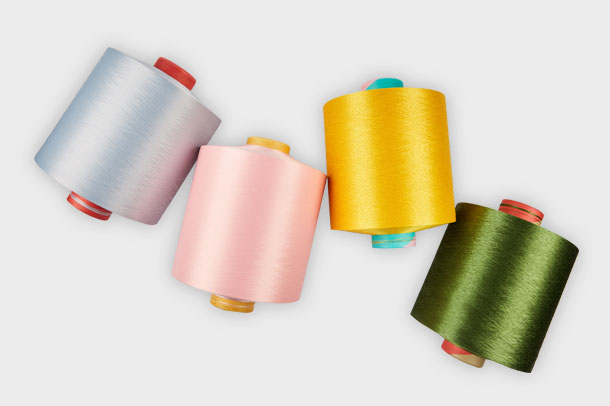
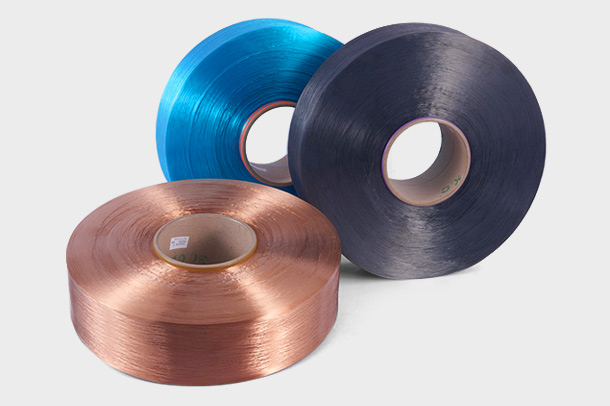
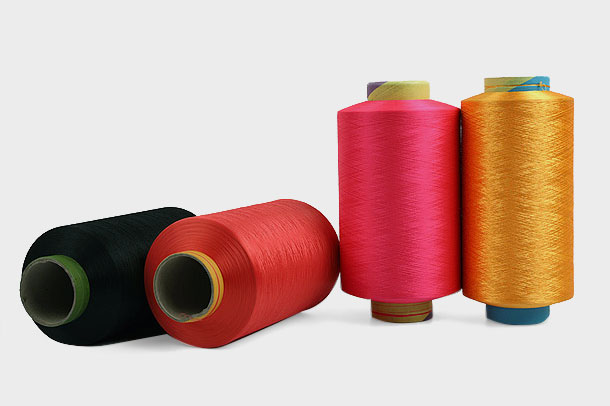
- Gel spinning for fibre production (Dyneema / Spectra process): High-performance UHMWPE fibre — sold under the Dyneema (DSM) and Spectra (Honeywell) trade names — is produced by dissolving UHMWPE powder in a solvent (typically decalin) at high temperature to form a gel, extruding the gel through a spinneret, then drawing the solidified filaments at high draw ratios (up to 100:1). This extreme drawing aligns the polymer chains along the fibre axis, producing tensile strengths up to 3,500 MPa and specific strength (strength-to-weight ratio) higher than any steel or aramid fibre.
UHMWPE Production Methods and Output Forms
| Processing Method |
Output Form |
Typical Application |
Key Limitation |
| Compression moulding |
Sheet, rod, tube, custom shapes |
Wear liners, bearing pads, cutting boards |
Slow cycle times; limited geometry complexity |
| Ram extrusion |
Rod, tube, continuous profiles |
Machined components, bushings, guide rails |
Simple cross-sections only |
| Gel spinning |
High-tenacity fibre |
Ballistic armour, ropes, cut-resistant gloves |
Solvent recovery cost; capital-intensive |
| Sintering (isostatic pressing) |
Large blocks, near-net shapes |
Medical implants, large industrial liners |
Porosity control critical; long cycle times |
| UHMWPE fibre laminates |
Composite panels, UD tape |
Ballistic plates, helmets, marine hulls |
Poor compressive strength perpendicular to fibre |
Can UHMWPE Be 3D Printed?
This is the most technically nuanced question in UHMWPE processing. The direct answer is: not by standard FDM (fused deposition modelling) methods, but targeted additive manufacturing approaches are being developed and in limited cases commercialised.
The fundamental problem is melt viscosity. At its processing temperature of 180 to 200°C, UHMWPE has a melt viscosity of approximately 10⁸ Pa·s — roughly 10 billion times more viscous than water and orders of magnitude higher than ABS or PLA, which flow freely through FDM nozzles. No conventional extrusion-based printer can generate the pressure required to push UHMWPE melt through a nozzle smaller than several millimetres in diameter.
Current and Emerging Additive Approaches for UHMWPE
- Selective sintering of UHMWPE powder (SLS-adjacent): Research groups at institutions including MIT and ETH Zurich have demonstrated partial sintering of UHMWPE powder beds using infrared radiation and laser energy. The challenge is that UHMWPE requires both heat and pressure to achieve full consolidation — heat alone produces a porous, weak compact rather than fully dense material. Hybrid sintering-pressing approaches show promise for medical implant geometries but are not yet commercially available as standard additive manufacturing systems.
- Ram extrusion-based additive deposition: Industrial-scale systems using ram (piston) extrusion rather than screw extrusion can generate the pressures needed to deposit UHMWPE. Belotti and similar European machinery manufacturers have demonstrated ram-based deposition of UHMWPE profiles. The resolution is coarse by desktop 3D printing standards — bead widths of 5 to 15mm — making it suitable for large wear-resistant components rather than detailed geometries.
- UHMWPE fibre-reinforced composite printing: An alternative approach embeds UHMWPE fibres (such as Dyneema) into a printable matrix such as TPU or epoxy resin using continuous fibre deposition methods pioneered by Markforged. This produces a composite that inherits the high specific strength of UHMWPE fibre without requiring the bulk polymer to flow through a nozzle. Tensile properties of such composites can reach 600 to 900 MPa — substantially below pure gel-spun fibre but far above any neat-polymer FDM print.
- Solvent-based deposition (experimental): Dissolving UHMWPE in a hot solvent (decalin or xylene) and depositing the gel through a heated nozzle, with the solvent evaporating during deposition, has been demonstrated in academic settings. The approach is analogous to the gel-spinning process adapted for layer-by-layer deposition. Properties are inferior to compression-moulded stock due to incomplete chain disentanglement during solvent removal, and solvent safety requirements make the process impractical outside specialised laboratory environments.
- Practical recommendation for engineers: If your application requires UHMWPE's tribological or impact properties and complex geometry, the most cost-effective current approach is to machine the part from compression-moulded UHMWPE stock. UHMWPE machines readily with carbide tooling, and CNC machining from rod or sheet stock can achieve tolerances of ±0.05mm — adequate for most bearing and wear-liner geometries. True 3D printing of UHMWPE at production quality remains a research target rather than a commercial reality as of 2025.
Primary Industrial Applications of UHMWPE
UHMWPE's combination of properties — abrasion resistance, low friction, impact toughness, and chemical inertness at low density — makes it the material of choice across a wider range of industries than any other single engineering polymer.
Application Sectors and Performance Benchmarks
- Ballistic and personal protection: UHMWPE fibre (Dyneema, Spectra) is the primary material in NIJ Level III and Level IV soft body armour and composite hard plates. Its specific strength of up to 3.6 GPa·cm³/g exceeds aramid fibres (Kevlar at ~2.6 GPa·cm³/g) and all metallic alternatives. A UHMWPE composite plate protecting against 7.62x51mm NATO rounds weighs approximately 1.8 kg/m² — 40% lighter than equivalent steel protection.
- Medical implants (orthopaedics): Highly cross-linked UHMWPE is the gold standard bearing surface in total hip and knee replacement implants. Vitamin E-stabilised, radiation cross-linked UHMWPE (marketed as Longevity, Marathon, and similar trade names) demonstrates wear rates of less than 0.01mm per year in hip simulator testing — a 10-fold improvement over conventional UHMWPE from the 1970s. Over 1 million UHMWPE-bearing joint implants are performed annually worldwide.
- Mining and bulk materials handling: UHMWPE wear liners in chutes, hoppers, cyclones, and conveyor skirt boards deliver service lives of 3 to 8 years in iron ore and coal handling applications where mild steel liners last 3 to 9 months. The material's low coefficient of friction (0.05–0.10) also reduces material hang-up and blockage — a secondary operational benefit beyond simple wear life extension.
- Marine and offshore rope and mooring: Braided UHMWPE ropes (Dyneema) have replaced steel wire in numerous offshore mooring and lifting applications. A 64mm Dyneema rope rated at 400 tonnes breaking load weighs approximately 4 kg/m, versus 16 kg/m for an equivalent steel wire rope. The weight reduction simplifies handling and reduces fatigue on offshore structures under dynamic loading.
- Food processing equipment: UHMWPE's FDA compliance (it meets 21 CFR 177.1520 for food contact), non-porous surface, and resistance to cleaning chemicals make it the standard material for star wheels, guide rails, cutting boards, and conveyor components in meat processing, dairy, and beverage filling lines. It can withstand repeated caustic wash cycles (2–3% NaOH at 60–70°C) without degradation.
UHMWPE vs. Competing Engineering Materials
| Material |
Abrasion Resistance |
Impact Strength |
Max Service Temp |
Relative Cost |
| UHMWPE |
Excellent |
Excellent (no break) |
80 – 100°C |
Medium |
| Nylon 66 (PA66) |
Good |
Good |
120°C continuous |
Medium |
| Acetal (POM) |
Good |
Moderate |
90°C continuous |
Medium |
| PTFE |
Poor |
Low |
260°C continuous |
High |
| PEEK |
Very good |
Good |
250°C continuous |
Very high |
| Carbon steel |
Moderate |
Good |
400°C+ |
Low |
| Aluminium (6061) |
Low |
Moderate |
150°C |
Low–medium |