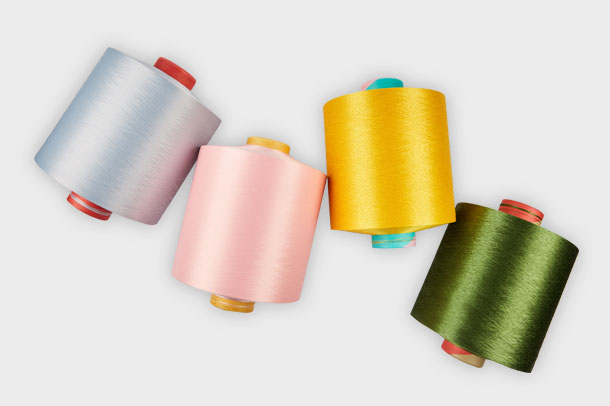
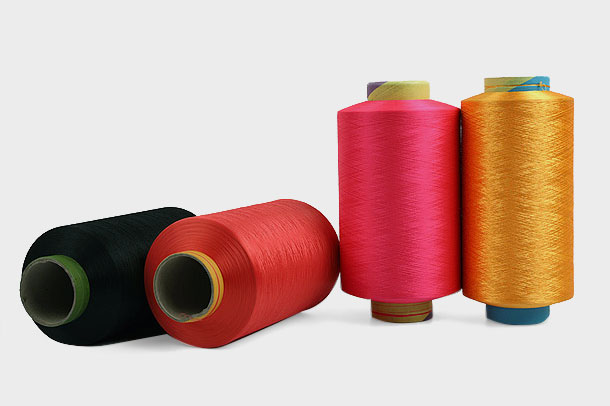
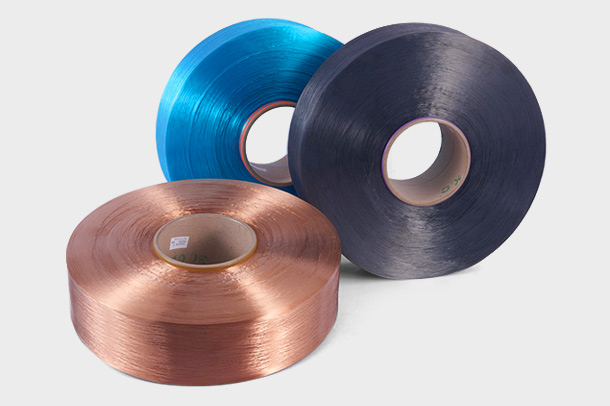
Zhejiang Hengyuan Chemical Fiber Group Co., Ltd., established in 2006, is a cornerstone of the polyester industry located in YaQian Town, Xiaoshan, Hangzhou. Occupying 120,000 square meters with total assets exceeding 150 million USD, our group operates through specialized branches including Winnertex Group Limited and Hangzhou Henghang Import & Export Co., Ltd. Under our flagship brand, Hengyun, we maintain an annual production capacity of 150,000 tons of polyester yarn dty, FDY, and POY. Our expertise spans from 30D to 600D in both raw-white and dope-dyed variants, catering to global markets in upholstery, blankets, and carpets. As a "Top 100 Industry Company in Xiaoshan," we prioritize mechanical consistency and molecular stability to eliminate common downstream defects in textile manufacturing.
Molecular Crystallinity and Thermal Influence on Dyeing Uniformity
- 1. Crimp Contraction Control: A primary cause of uneven dyeing in 75D polyester DTY is inconsistent crimp contraction (CC%) during the draw-texturing process. If the heater temperature fluctuates by more than 1°C, the molecular crystallinity varies, leading to "barré" effects in the finished fabric.
- 2. Heater Temperature Management: Why does 150D DTY show color streaks after dyeing? This is often traced to the primary and secondary heater settings. We utilize closed-loop thermal sensors to ensure that the yarn achieves a uniform glass transition phase, ensuring consistent dye uptake across 150,000 tons of annual output.
- 3. Dope-Dyed Advantage: For critical color matching, dope-dyed vs piece-dyed polyester yarn DTY comparisons show that dope-dyed variants offer superior colorfastness (Grade 4.5+) because the pigment is integrated into the polymer melt prior to extrusion, bypassing common batch-dyeing irregularities.
Mechanical Stress Analysis and Prevention of Yarn Breakage
- 1. Tenacity and Elongation Parameters: The tensile strength of 75D/36F polyester DTY must be maintained at a minimum of 3.2 cN/dtex. Low tenacity often results from improper draw ratios (DR) during texturing, which creates weak points susceptible to breakage during high-speed knitting or weaving.
- 2. Friction and Ceramic Guide Maintenance: Surface damage is a leading reason for 150D polyester DTY breakage during weaving. We implement rigorous replacement cycles for ceramic guides and friction discs to maintain a Ra surface finish that prevents micro-filament abrasion.
- 3. Oil Pick-Up (OPU) Optimization: How to reduce yarn breakage in high-speed knitting involves precise OPU control (typically 3.0% to 5.0%). Proper lubrication reduces the friction coefficient between the yarn and metal contact points, dissipating static electricity that can lead to filament entanglement.
- 4. Intermingling Point Consistency: For polyester yarn dty 75D/72F high-intermingled types, the frequency and stability of nodes (points/meter) must be uniform. Inconsistent air pressure in the intermingling jet causes tension surges, resulting in "end-breaks" during downstream warping.
Technical Data Comparison: 75D vs. 150D DTY Performance
In industrial applications, selecting between 75D and 150D requires an understanding of their distinct mechanical profiles under thermal stress.
| Technical Metric |
75D/36F DTY (Raw White) |
150D/48F DTY (Dope Dyed) |
| Breaking Tenacity (cN/dtex) |
> 3.3 |
> 3.2 |
| Elongation at Break (%) |
22 +/- 3 |
24 +/- 4 |
| Crimp Contraction (CC%) |
25 - 30 |
22 - 28 |
| Oil Pick-up (OPU%) |
3.5 +/- 0.5 |
4.0 +/- 0.5 |
| Crimp Stability (%) |
> 80 |
> 82 |
Advanced Troubleshooting for Downstream Processing
- 1. Anti-Static Treatment: Solving static electricity issues in polyester DTY is critical for upholstery cloth production. We utilize specialized anti-static oils that ensure conductivity, preventing yarn-to-yarn repulsion during the creeling process.
- 2. Package Density Management: What causes "sloughing" in polyester DTY packages? It is usually a result of improper winding tension. Our 150,000-ton capacity lines use precision take-up flyers to maintain a consistent package hardness (Shore C 65-70), ensuring smooth unwinding at 800m/min.
- 3. Molecular Weight Distribution: By selecting high-quality PET chips with an Intrinsic Viscosity (IV) of 0.64-0.66, we minimize the impact of oligomer buildup in dyeing vats, which often causes spotty defects in fine-denier 75D fabrics.
Engineering FAQ
- How does the filament count (F) affect the dyeing of 150D DTY? Higher filament counts (e.g., 150D/144F) increase the surface area, which leads to a faster dye strike rate. This requires tighter control of the dyeing temperature ramp-up (usually 1°C/min) to prevent unlevelness.
- Why is "Knotless" yarn critical for 75D DTY? In fine fabrics, any knot or thick place will cause a visible defect. We use air-splicing technology to ensure continuous filament integrity across our entire polyester yarn dty range.
- Can raw-white DTY be used for automotive interiors? Yes, but it must be tested for UV lightfastness. Generally, dope-dyed yarns are preferred for automotive applications due to their superior resistance to thermal degradation and fading.
- What is the typical shrinkage rate for Hengyun DTY? Our DTY typically exhibits a boiling water shrinkage (BWS%) of 1.5% to 3.0%, ensuring dimensional stability for blankets and carpets.
- Does moisture regain affect the processing of polyester DTY? Polyester has a low moisture regain (approx. 0.4%). However, ambient humidity should be kept at 65% RH in the weaving shed to manage static levels effectively.
Technical References
- ISO 2062: Textiles — Yarns from packages — Determination of single-end breaking force and elongation at break using constant rate of extension (CRE) tester.
- ASTM D2256: Standard Test Method for Tensile Properties of Yarns by the Single-Strand Method.
- GB/T 14460: Technical requirements of polyester drawn textured yarn (DTY).