Why is recycled polyester yarn DTY becoming the top choice for sustainable textile manufacturing in 2026?
Update:13-04-2026
Circular Economy and Carbon Footprint Reduction
- Decarbonizing the Supply Chain: In 2026, the demand for polyester yarn dty derived from post-consumer PET bottles and ocean-bound plastics has surged. Utilizing recycled feedstock reduces energy consumption by approximately 30% to 50% compared to virgin petroleum-based production, significantly lowering the CO2 equivalent per kilogram of yarn.
- Waste Diversion and Resource Recovery: By converting plastic waste into high-quality Draw Textured Yarn (DTY), manufacturers facilitate a closed-loop system. This prevents millions of tons of plastic from entering landfills or aquatic ecosystems, a key factor in the "Green Environmental and Trust Company" initiatives.
- Zhejiang Hengyuan's Commitment: Located in the center of China's polyester industry, Zhejiang Hengyuan Chemical Fiber Group Co., Ltd. leverages its 150,000 square meter facility to produce sustainable fibers that meet the rigorous ecological standards of the modern global market.
Technical Performance of Draw Textured Yarn (DTY)
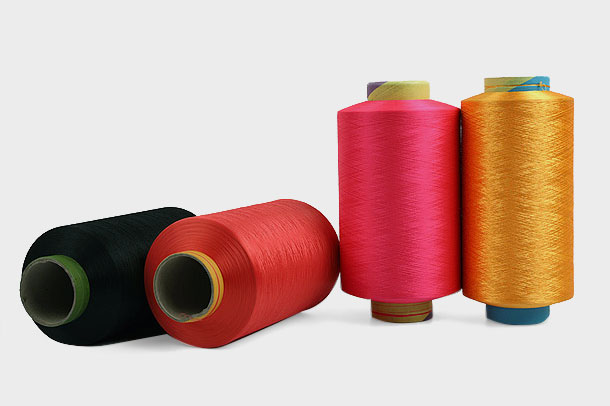
- Texturing and Crimp Stability: Polyester yarn dty is produced by simultaneously twisting and drawing POY (Partially Oriented Yarn). This process creates a "crimp" that gives the yarn a soft, wool-like feel and high bulkiness. In 2026, advanced texturing technology ensures that recycled DTY matches the tenacity and elongation of virgin fibers.
- Versatility in Denier Range: Our production specialized in polyester yarn dty ranging from 30D to 600D. This wide range allows for application in everything from lightweight apparel to heavy-duty upholstery cloth, blankets, and carpets.
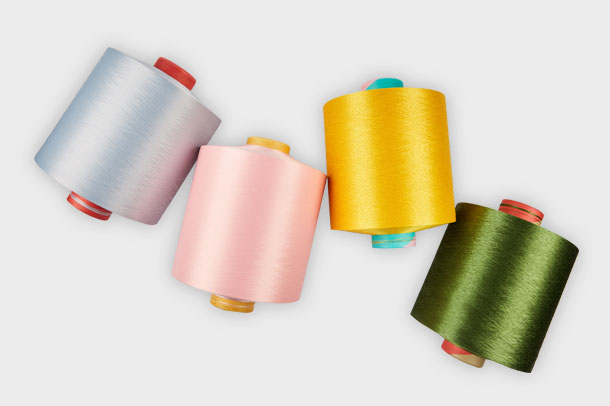
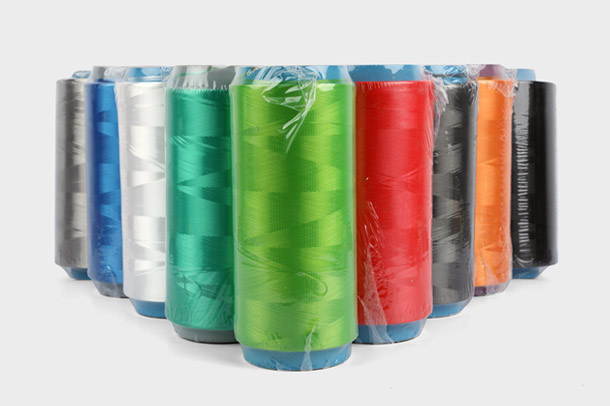
- Dope-Dyed Sustainability: To further enhance environmental benefits, we offer dope-dyed colors. By adding color pigments to the polymer melt before extrusion, we eliminate the need for water-intensive dyeing processes, reducing water pollution and energy use.
Market Demand and Global Traceability Standards
- Consumer Preference for Transparency: In 2026, consumers demand verified sustainability. Our products are integrated into a global supply chain that values the stable quality and GRS (Global Recycled Standard) compliance provided by a "Top 100 Industry Company in Xiaoshan."
- Industrial Scale and Capability: With a capacity of 150,000 tons of polyester yarn and 50 million meters of fabric yearly, the Hengyuan Group Brand (Hengyun) provides the scale necessary to support large-scale sustainable textile manufacturing 2026 requirements.
- High-Tech Innovation: Recognized as a "High Tech of Hangzhou," our R&D teams focus on improving the physical properties of recycled polyester yarn dty, ensuring it maintains excellent dyeing uniformity and high-speed knitting performance.
Technical Specification: Recycled DTY vs. Virgin DTY
| Technical Property |
Recycled Polyester DTY (2026 Std) |
Virgin Polyester DTY |
| Tenacity (cN/dtex) |
3.2 - 3.8 |
3.4 - 4.0 |
| Elongation (%) |
22 - 28 |
20 - 26 |
| Crimp Contraction (%) |
18 - 25 |
18 - 25 |
| Carbon Footprint (kg CO2e) |
~1.2 - 1.5 |
~2.8 - 3.2 |
Global Reach and Reliable Supply Chain
- Strategic Industry Center: Our location in YaQian Town, Xiaoshan, positions us at the heart of the polyester yarn industry, supported by total assets of 150 million USD and a dedicated staff of 1000.
- Integrated Fabric Production: Through our branch companies Winnertex Group and Hangzhou Henghang, we offer a complete solution from polyester yarn dty to finished T/R elastic fabrics, ensuring quality control at every stage.
- Sustainable Legacy: Since 2006, we have balanced constant quality with social donations and environmental stewardship, striving to remain a top choice for brands seeking sustainable material partners in 2026.
Hardcore Technical FAQ
- Does recycled DTY lose strength after multiple recycling cycles?: While thermal degradation can occur, 2026 processing technologies include "solid-state polymerization" (SSP) to restore the molecular weight of recycled polyester yarn dty, maintaining its industrial-grade tenacity.
- How is dope-dyed DTY better for the environment?: Standard dyeing requires massive amounts of water and chemicals. Dope-dying incorporates color into the fiber itself, resulting in superior color fastness to light and washing while saving thousands of liters of water per ton.
- What is the significance of the 30D to 600D range?: This allows for precision engineering. Fine deniers (30D-75D) are used for delicate linings and activewear, while higher deniers (300D-600D) provide the abrasion resistance needed for upholstery cloth and carpets.
- Is recycled DTY compatible with high-speed water jet looms?: Yes. Our DTY is engineered with specific friction coefficients and lubrication to ensure break-free performance on modern, high-speed weaving and knitting machinery.
- What certifications should I look for in 2026?: Ensure your polyester yarn dty is GRS (Global Recycled Standard) or OEKO-TEX Standard 100 certified to guarantee both the recycled content and the absence of harmful substances.
Technical References
- ISO 14021: Environmental labels and declarations — Self-declared environmental claims.
- ASTM D2256: Standard Test Method for Tensile Properties of Yarns by the Single-Strand Method.
- ISO 11443: Plastics — Determination of the fluidity of plastics using capillary and slit-die rheometers.