Add: NYaqian Road No128 Yaqian Town Xiaoshan Hangzhou Zhe Jiang China.
Tel: 0086-0571-82602080
Fax: 0086-0571- 82758132
E-mail: [email protected]
Article Directory
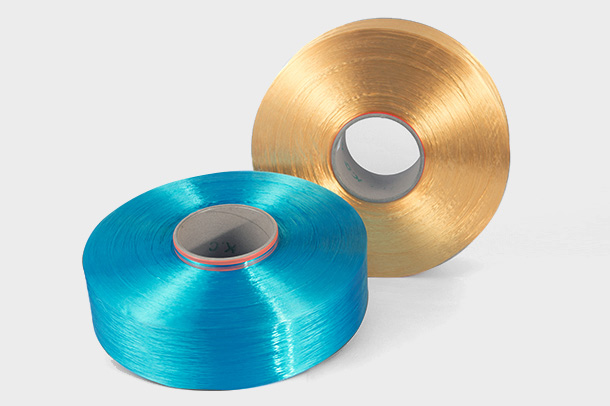
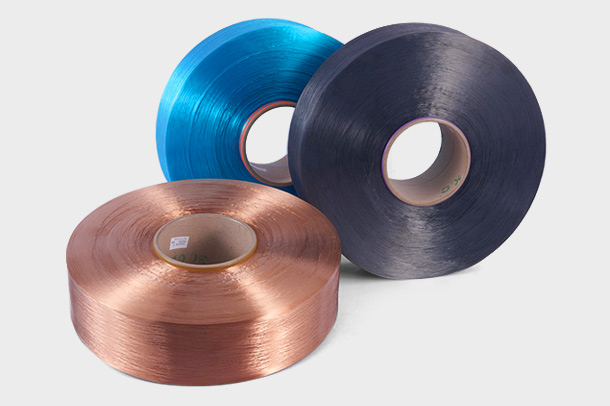
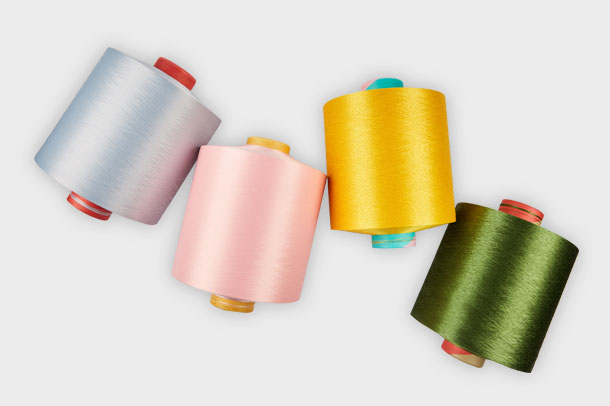
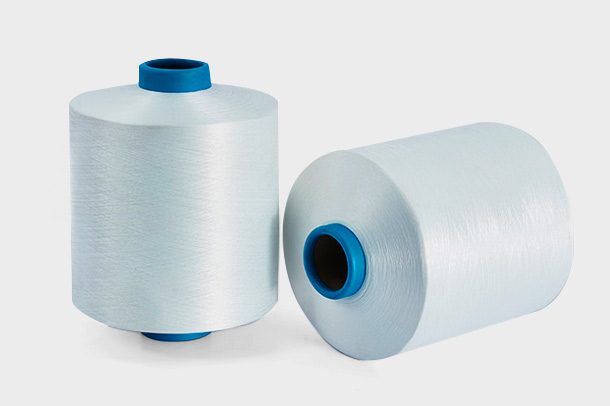
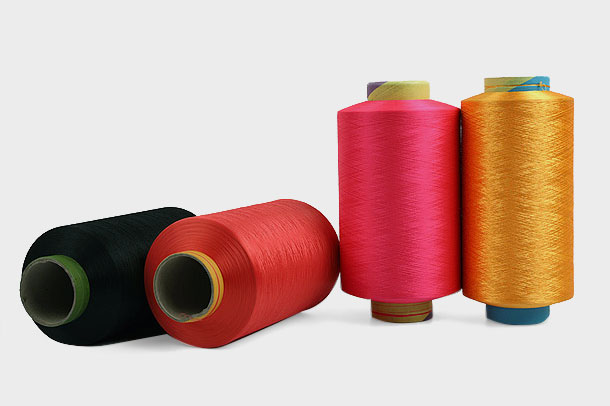
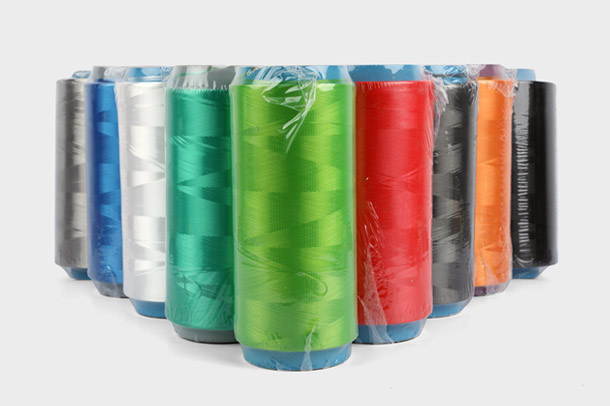
POY yarn — Partially Oriented Yarn — is one of the most versatile polyester filament yarns in modern textile manufacturing, used in everything from high-performance sportswear to upholstery and industrial fabrics. Understanding how to read yarn weight, evaluate safety, identify yarn types, and choose the right ply count directly determines the quality, durability, and suitability of any finished textile product. This guide answers the four questions buyers, designers, and manufacturers ask most when working with POY yarn.
Yarn weight is determined by its linear density — the mass per unit length — and is measured using one of three industry-standard systems: Denier (D), Decitex (dtex), or Metric Count (Nm).
For POY yarn and other polyester filament yarns, Denier is the dominant unit. One Denier equals the weight in grams of 9,000 metres of yarn. A lower Denier number means a finer, lighter yarn; a higher number means heavier and coarser.
| Denier Range | Weight Category | Typical End Use | Feel |
| 20D – 50D | Super Fine | Hosiery, lingerie, sheer fabrics | Silk-like, delicate |
| 50D – 100D | Fine / Light | Sportswear, linings, woven apparel | Smooth, lightweight |
| 100D – 200D | Medium | Outerwear, upholstery, knits | Balanced hand feel |
| 200D – 500D | Heavy | Bags, tarpaulins, industrial textiles | Firm, structured |
| 500D+ | Extra Heavy | Geotextiles, ropes, ballistic fabrics | Coarse, high-tenacity |
The filament count (F) that accompanies the Denier number tells you how many individual filaments are bundled in the yarn. A 75D/72F yarn has 72 filaments giving a silkier handle; a 75D/36F has fewer, coarser filaments and more sheen. Always read both numbers when specifying POY yarn for a production run.
Certified polyester yarn is safe for babies when it meets recognized textile safety standards. The key is not the fibre itself but the chemical additives, dyes, and finishing agents applied during production.
Standard polyester — the base polymer used in POY yarn — is inert, non-allergenic, and does not absorb moisture-borne bacteria. It does not contain the lanolin proteins that trigger wool allergies, nor does it carry the pesticide residues sometimes found in non-organic cotton. For baby products, the relevant certifications to verify are:
Polyester's moisture-wicking properties also make it practical for baby items exposed to spills and wash cycles — it retains shape and colour through 50+ industrial wash cycles without pilling as aggressively as lower-quality alternatives.
Polyester yarn is a synthetic filament or staple fibre spun from polyethylene terephthalate (PET) polymer. Within the polyester yarn family, POY yarn occupies a specific position in the production chain as an intermediate product used to make fully drawn and textured yarns.
Produced by melt-spinning PET at 3,000 – 3,600 m/min. The polymer chains are partially aligned — oriented — giving the yarn residual stretch. It is the primary feedstock for Draw Texturing Yarn (DTY) and Fully Drawn Yarn (FDY) production. Birefringence: 0.04 – 0.09.
Produced at 4,500 – 6,000 m/min with full molecular orientation. Lower extensibility than POY, higher tenacity (3.5 – 5.5 g/den). Used directly in weaving and warp knitting for smooth, lustrous fabrics such as satin and taffeta.
Made by drawing and false-twisting POY in a single step. The texturing process creates a crimped, bulkier yarn with soft hand feel and stretch. DTY is the dominant yarn in stretch knit garments, fleece, and soft furnishings.
Cut filament tow spun into short-staple fibres, then ring- or open-end-spun like cotton. Produces spun polyester yarns with a matte, natural appearance. Often blended with cotton (65/35 polyester-cotton) for T-shirts and workwear.
Ply count refers to the number of single yarns twisted together to form a plied yarn. The right ply for any application is determined by the balance between strength, softness, drape, and production cost.
POY yarn (Partially Oriented Yarn) is a melt-spun polyester filament yarn in an intermediate state of molecular orientation, produced at spinning speeds of 3,000 – 3,600 metres per minute. It serves as the primary feedstock for draw-texturing processes that manufacture DTY and as a direct input for air-jet texturing to produce ATY, making it the foundational product category in the polyester yarn supply chain.
POY yarn is not typically used directly in fabric construction — it is an intermediate product that feeds downstream texturing and drawing processes. FDY (Fully Drawn Yarn) is used directly in weaving and warp knitting, producing smooth, flat fabrics with high lustre and low elongation (typically 25 – 35% at break). DTY, made from POY, produces textured fabrics with higher elongation (30 – 50%), softer hand feel, and better moisture management due to the crimped filament structure creating micro-channels for vapour transport.
The conversion formulas are straightforward. Tex equals Denier divided by 9. Decitex (dtex) equals Denier multiplied by 1.111. Metric Count (Nm) equals 9,000 divided by Denier. For example, a 150D POY yarn equals 16.7 Tex, 166.7 dtex, or Nm 60. Most international yarn trade invoices state both Denier and dtex to avoid conversion errors across markets.
In rare applications, semi-oriented POY is used directly in weft insertion for certain technical fabrics where residual shrinkage during heat-setting is intentionally used to tighten the fabric structure. However, for standard apparel, home textile, and industrial applications, POY yarn must be drawn and/or textured before use. Undrawn POY has insufficient tenacity (1.5 – 2.5 g/den) and high elongation (120 – 150%) for direct fabric production.
Sportswear fabrics typically specify 50D to 100D POY yarn as feedstock for DTY production, with high filament counts (72F to 144F) to maximize fabric softness and moisture-wicking surface area. The most widely used specification is 75D/72F DTY made from 75D POY feedstock, which produces a fabric weight of 130 – 160 gsm in single-jersey construction — the standard weight range for athletic T-shirts and compression shorts worldwide.

Zhejiang Hengyuan Chemical Fiber Group Co.,Ltd. is a professional China polyester filament yarns manufacturers and polyester color yarn suppliers, Established in 2006 ,located in YaQianTown Xiaoshan Hangzhou – One of the Center of polyester yarn Industry in China.
Products
Contact info
Copyright © Zhejiang Hengyuan Chemical Fiber Group Co.,Ltd. All rights reserved