Add: NYaqian Road No128 Yaqian Town Xiaoshan Hangzhou Zhe Jiang China.
Tel: 0086-0571-82602080
Fax: 0086-0571- 82758132
E-mail: [email protected]
Article Directory
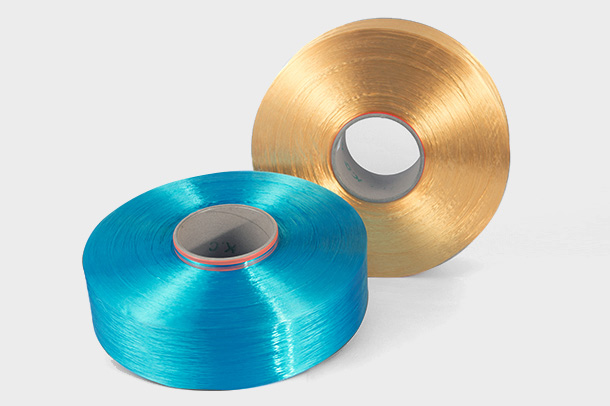
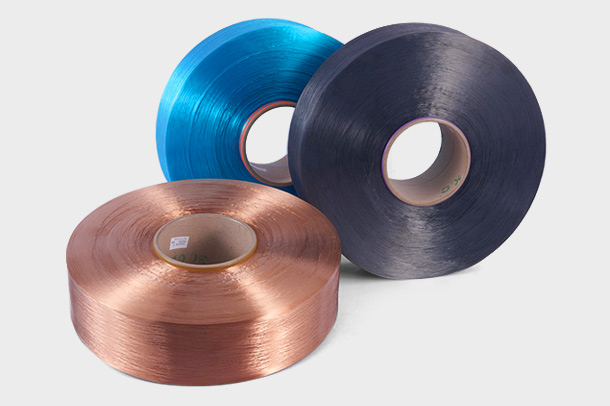
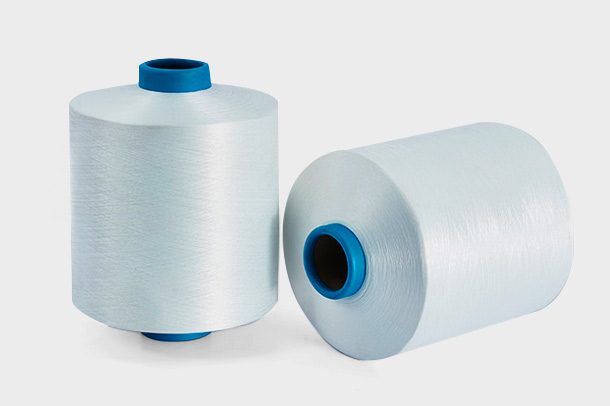
POY yarn is a synthetic multifilament yarn produced by melt-spinning polyethylene terephthalate (PET) polymer at high speed — typically 3,000 to 3,600 metres per minute — and winding the extruded filaments before full molecular orientation is achieved. The "partial" orientation gives POY its defining characteristic: the polymer chains are aligned enough for the yarn to have commercial tensile strength, but retain sufficient molecular mobility to be further processed through draw-texturing (DTY) or draw-winding (FDY) into the final yarn form.
In volume terms, POY yarn accounts for the majority of global polyester filament production. China produced approximately 36 million tonnes of polyester filament in 2023, of which an estimated 60 to 65 percent originated as POY before draw-texturing. The yarn is produced in a range of deniers from 50 to 600, with 75D/72F and 150D/48F being the two most commercially dominant specifications in apparel and home textile applications respectively.
Yarn weight in the polyester filament industry is measured in denier — the mass in grams of 9,000 metres of yarn. This is the definitive measurement system for POY yarn and all synthetic filament products. A higher denier number means a heavier, thicker yarn; a lower denier means finer, lighter yarn.
For handcraft yarn buyers accustomed to the CYCA weight system (lace through jumbo), polyester filament denier converts approximately as follows: lace weight corresponds to 20–50D, fingering to 75–100D, DK to 150–200D, and worsted to 300D+. However, these are loose equivalencies — filament and spun yarn structures behave differently in fabric construction regardless of equivalent weight.
Polyester yarn is generally considered safe for baby products when it meets relevant textile safety standards — but the answer depends on the specific product form, certifications held by the manufacturer, and the intended use of the finished item.
The core safety concern with polyester in infant applications is not the polymer itself — PET is biologically inert and used in food-contact packaging and medical sutures globally — but the auxiliary chemicals applied during yarn production and fabric finishing. Spin finish oils, sizing agents, dye carriers, and optical brighteners are applied during manufacture and must be thoroughly removed in finished fabric washing before a product is classified as safe for direct baby contact.
Ply in polyester filament yarn refers to the number of individual yarn ends twisted together to form a single plied structure. For POY yarn and its draw-textured derivatives, ply selection determines tensile strength, evenness, abrasion resistance, and fabric hand — and the correct choice depends entirely on the end application.
| Ply Structure | Tenacity Increase vs Single | Best Applications | Trade-offs |
| Single (1-ply) | Baseline | Fine knits, sheer fabrics, hosiery | Lower abrasion resistance; more susceptible to snagging |
| 2-ply | +40–60% | Sportswear, woven shirts, sewing thread | Slight increase in stiffness; better pilling resistance |
| 3-ply | +80–110% | Upholstery, embroidery thread, technical weaves | Stiffer handle; increased yarn diameter for same denier count |
| 4-ply and above | +120–160% | Industrial sewing thread, seat belts, tyre cord | Significant stiffness; limited use in soft-hand applications |
For most apparel applications using draw-textured POY yarn, 2-ply construction delivers the optimal balance of strength, softness, and processing efficiency. The 2-ply structure distributes load across two yarn ends under weaving or knitting tension, reducing end-breakage rates on high-speed looms by 25 to 35 percent compared to single-ply at equivalent denier — a significant productivity factor at industrial scale.
For hand-knitting and craft applications, ply terminology differs from industrial usage. Craft "4-ply" refers to a yarn weight category (fingering weight, approximately 28 stitches per 10 cm), not a literal 4-strand structure. When sourcing polyester yarn for craft use, confirm whether the supplier uses industrial denier specifications or craft weight categories to avoid specification mismatches.
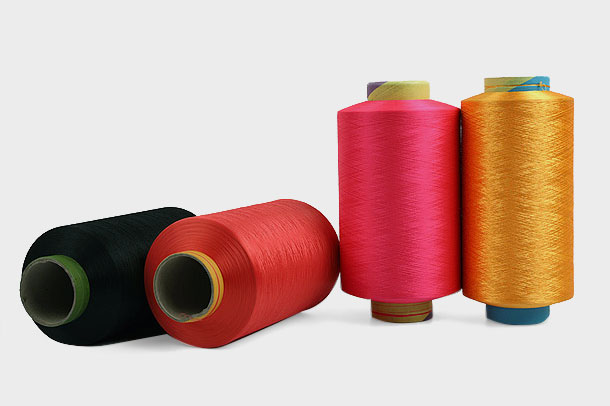
POY (Partially Oriented Yarn) is an intermediate product with incomplete molecular orientation — it requires further processing before use in fabric. DTY (Draw-Textured Yarn) is produced by drawing and false-twist texturing POY, achieving full molecular orientation and a crimped, bulky structure. DTY is the finished yarn used directly in fabric production; POY is the upstream input. Approximately 70 percent of global DTY production originates from POY feedstock.
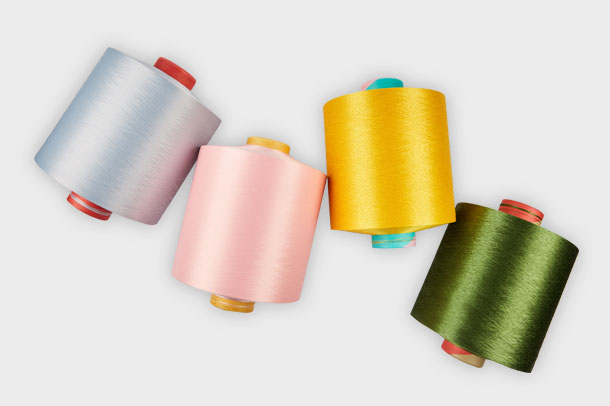
Polyester requires disperse dyes and high-temperature dyeing — typically 130°C under pressure in a commercial autoclave — for the dye molecules to penetrate the dense PET polymer structure. Home acid dyes and fiber-reactive dyes do not bond to polyester. Some low-temperature disperse dye products for home use are available, but they deliver significantly lower colour depth and wash-fastness than commercial dyeing. For consistent, durable colour on polyester, commercial piece dyeing or yarn dyeing is the practical solution.
Filament count — the number of individual monofilaments within a single yarn — directly affects softness. A 150D/288F yarn contains 288 very fine filaments, each approximately 0.5 denier; a 150D/48F yarn contains 48 coarser filaments at 3.1 denier each. The finer the individual filaments, the softer and more drapey the resulting fabric. Micro-denier POY (below 1 denier per filament) produces fabrics with a peach-skin or suede-like surface texture used in premium sportswear and fashion fabrics.
For general textile applications: ISO 2060 (denier/linear density testing), ISO 6939 (breaking force and elongation). For sustainability claims: GRS (Global Recycled Standard) for recycled content verification, OEKO-TEX Standard 100 for chemical safety. For export to EU markets: REACH compliance documentation covering restricted substances. For baby and infant product applications: OEKO-TEX Class I certification is the accepted market standard across European and North American retail supply chains.

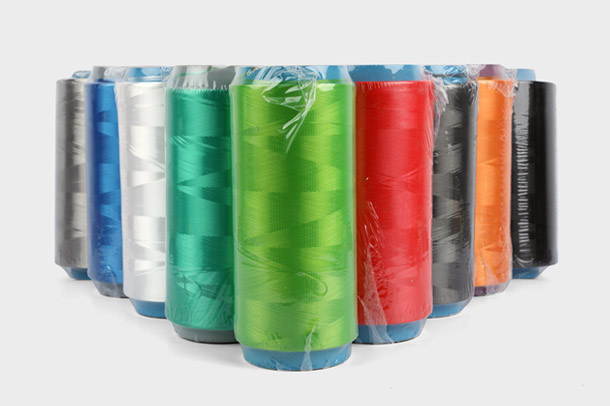
Zhejiang Hengyuan Chemical Fiber Group Co.,Ltd. is a professional China polyester filament yarns manufacturers and polyester color yarn suppliers, Established in 2006 ,located in YaQianTown Xiaoshan Hangzhou – One of the Center of polyester yarn Industry in China.
Products
Contact info
Copyright © Zhejiang Hengyuan Chemical Fiber Group Co.,Ltd. All rights reserved