Add: NYaqian Road No128 Yaqian Town Xiaoshan Hangzhou Zhe Jiang China.
Tel: 0086-0571-82602080
Fax: 0086-0571- 82758132
E-mail: [email protected]
Article Directory
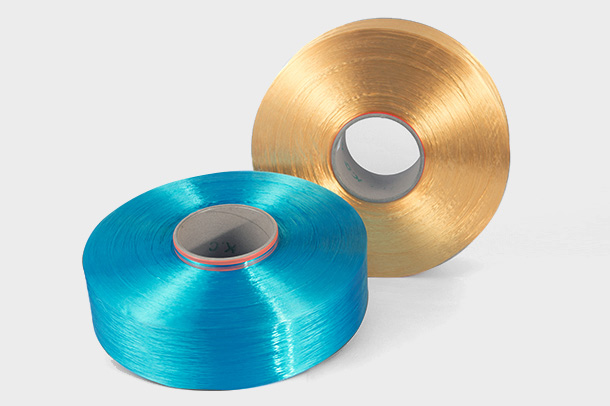
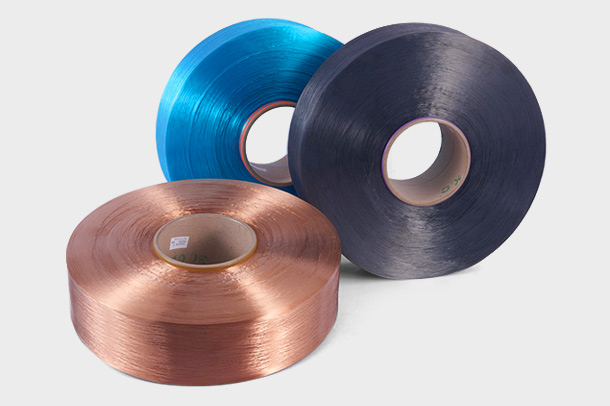
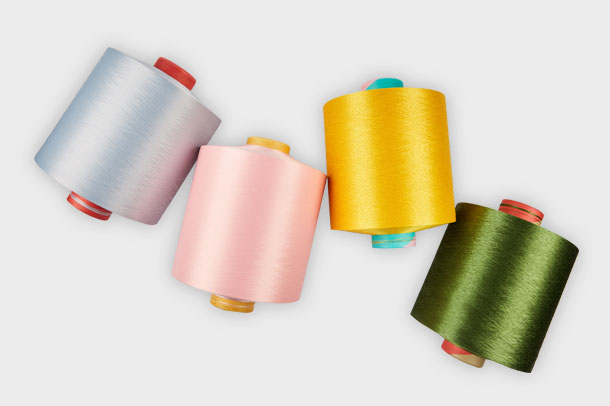
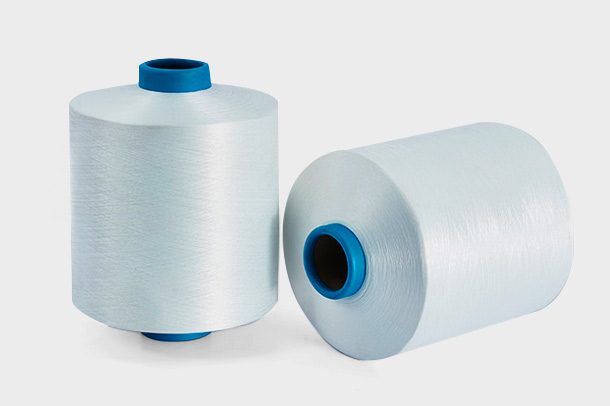
The manufacturing of POLYESTER POY YARNS represents a sophisticated industrial process that transforms raw petrochemical materials into versatile textile intermediates. As a key semi-finished product in the synthetic fiber industry, Partially Oriented Yarn (POY) serves as the foundational material for numerous textile applications. Understanding this production journey is essential for manufacturers, textile engineers, and industry professionals seeking to optimize their operations and product quality.
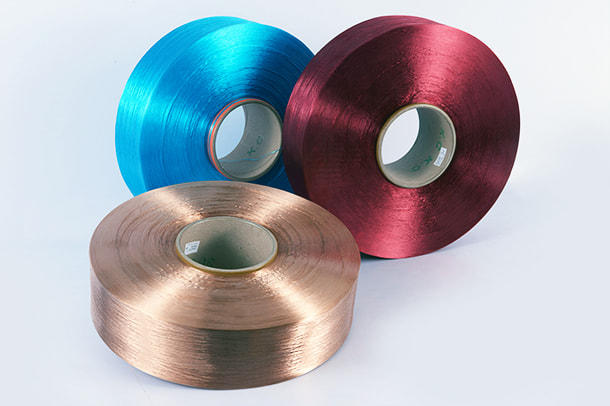
The production journey begins with meticulous raw material selection and preparation. The primary raw material for POLYESTER POY YARNS is purified terephthalic acid (PTA) and monoethylene glycol (MEG), which undergo polycondensation reactions to form polyethylene terephthalate (PET). This stage requires precise chemical control and quality monitoring to ensure the resulting polymer meets specific viscosity and purity standards essential for optimal yarn performance.
The transformation from raw materials to spin-able polymer involves carefully controlled esterification and polycondensation reactions. Understanding the poy yarn manufacturing steps at this molecular level is crucial for achieving consistent yarn properties. The polymerization conditions directly influence the intrinsic viscosity, molecular weight distribution, and thermal stability of the final PET chips.
The heart of POY production lies in the melt spinning process, where solid PET chips are converted into continuous filaments. This critical phase determines the fundamental characteristics of the POLYESTER POY YARNS, including denier uniformity, orientation, and crystallinity. Modern spinning systems incorporate advanced automation and real-time monitoring to maintain process stability and product consistency.
Optimizing the spinning process requires balancing multiple parameters to achieve desired yarn properties while maintaining production efficiency. The advantages of polyester POY yarns become evident when these parameters are precisely controlled, resulting in yarns with excellent processability and consistent performance in downstream operations.
| Process Parameter | Optimal Range | Impact on Yarn Properties |
| Extrusion Temperature | 285-295°C | Affects molecular degradation and viscosity |
| Throughput Rate | 0.8-1.2 g/hole/min | Determines denier per filament and orientation |
| Winding Speed | 3000-3500 m/min | Controls molecular orientation and crystallinity |
| Quenching Air Velocity | 0.4-0.6 m/s | Influences filament structure and evenness |
The unique characteristic of POY lies in its partial orientation, which distinguishes it from fully drawn yarns (FDY) and provides specific advantages for downstream texturing processes. Understanding the difference between POY FDY and DTY begins with comprehending the drawing mechanism employed during POY production. This controlled stretching imparts the necessary molecular orientation while maintaining adequate elongation for subsequent processing.
The development of molecular orientation during the spinning process is what defines POY's unique position in the synthetic yarn family. This partial orientation provides the perfect balance between strength and elongation, making POLYESTER POY YARNS ideal for texturing operations. The controlled crystallization during this phase ensures optimal dyeability and mechanical properties in the final textile products.
The final stage in POY production involves precision winding and packaging operations designed to protect the yarn's delicate structure until it reaches downstream processors. Proper winding technology and packaging methods are essential for maintaining the properties of partially oriented yarn during storage and transportation. Modern automated winding systems incorporate sophisticated tension control and defect detection capabilities.
Comprehensive quality control measures ensure that every batch of POLYESTER POY YARNS meets stringent industry standards. Understanding how to choose polyester POY yarn requires knowledge of the key quality parameters that manufacturers test and control. These testing protocols cover physical, mechanical, and structural properties that predict performance in downstream applications.
| Quality Parameter | Testing Method | Acceptance Criteria |
| Linear Density | Denier Scale | ±2% of nominal value |
| Tenacity | Tensile Tester | 2.0-2.5 g/denier |
| Elongation | Extensometer | 110-140% |
| Uster Evenness | Uster Tester | <1.2% CV |
| Interlacing | Interlace Counter | 15-25 nodes/meter |
The versatility of POLYESTER POY YARNS has established them as fundamental materials across multiple textile sectors. From apparel to technical textiles, POY serves as the primary raw material for texturing operations that produce the bulk of textured yarns worldwide. The global reach of companies like Zhejiang Hengyuan Chemical Fiber Group Co., Ltd., established in 2006 in the heart of China's polyester industry, demonstrates the scale and importance of POY manufacturing in the global textile ecosystem.
The evolution of POY production continues with advancements in automation, sustainability, and product diversification. The applications of POY in textile industry are expanding as manufacturers develop specialized yarn variants with enhanced properties. Sustainable production practices and circular economy principles are increasingly influencing manufacturing protocols and raw material selection.
The fundamental differences lie in their molecular orientation and processing history. POLYESTER POY YARNS are partially oriented with molecular chains arranged in a specific but incomplete alignment, providing optimal elongation for subsequent texturing. FDY (Fully Drawn Yarn) undergoes complete drawing during spinning, resulting in higher orientation and lower elongation. DTY (Draw Textured Yarn) is produced by texturing POY, creating bulk and stretch properties. Understanding the difference between POY FDY and DTY is essential for selecting the appropriate yarn for specific textile applications and processing requirements.
The POY manufacturing process directly influences critical fabric properties including dye uniformity, strength, shrinkage, and hand feel. Precise control throughout the poy yarn manufacturing steps ensures consistent filament geometry, molecular orientation, and thermal history, which collectively determine how the yarn will perform in downstream processes and final applications. Variations in spinning conditions, drawing parameters, or cooling rates can significantly impact the appearance and performance of the finished textiles.
The advantages of polyester POY yarns include excellent processability in texturing operations, consistent quality across large production volumes, cost-effectiveness compared to fully drawn alternatives, and versatility across multiple textile applications. POY's balanced combination of strength and elongation provides optimal characteristics for texturing, while its thermal stability ensures consistent performance in high-speed weaving and knitting operations. These characteristics make POY the preferred choice for manufacturers seeking efficiency and quality in textile production.
Selecting the right POLYESTER POY YARNS requires careful consideration of multiple factors. Understanding how to choose polyester POY yarn involves evaluating denier specifications, filament count, intrinsic viscosity, interlace level, and thermal properties relative to the intended downstream processing and final application requirements. Manufacturers should also consider the yarn's uniformity, package formation, and compatibility with existing texturing or weaving equipment to ensure optimal performance and efficiency.
The most critical properties of partially oriented yarn include linear density uniformity, tensile properties (tenacity and elongation), interlace consistency, Uster evenness values, and thermal shrinkage characteristics. These parameters collectively determine the yarn's processability in texturing operations and the quality of the final textured product. Regular monitoring of these characteristics through standardized testing protocols ensures consistent performance and helps identify potential processing issues before they impact downstream operations.
The applications of POY in textile industry span virtually every sector of textile manufacturing. POY serves as the primary raw material for texturing operations that produce DTY for apparel fabrics, home textiles, and upholstery materials. Its consistent quality and processability make it ideal for high-speed weaving and knitting applications where uniformity and reliability are paramount. Additionally, specialized POY variants find use in technical textiles, automotive interiors, and industrial fabrics where specific performance characteristics are required.

Zhejiang Hengyuan Chemical Fiber Group Co.,Ltd. is a professional China polyester filament yarns manufacturers and polyester color yarn suppliers, Established in 2006 ,located in YaQianTown Xiaoshan Hangzhou – One of the Center of polyester yarn Industry in China.

Products
Contact info
Copyright © Zhejiang Hengyuan Chemical Fiber Group Co.,Ltd. All rights reserved