Add: NYaqian Road No128 Yaqian Town Xiaoshan Hangzhou Zhe Jiang China.
Tel: 0086-0571-82602080
Fax: 0086-0571- 82758132
E-mail: [email protected]
Article Directory
Three quotes arrived from three polyester yarn suppliers. The prices sat within 4 percent of each other, yet the technical sheets disagreed in the ways that matter: one offered 75D/36F FDY, another quoted 75D/72F DTY, and the third proposed a dope-dyed yarn rated 4 to 5 on the AATCC colorfastness scale. For a weaving mill, a knitting plant, or a home textile factory, the right choice depends on specifications, not on price per kilogram.
Polyester yarn is a continuous multifilament strand of polyethylene terephthalate (PET), and it anchors the global textile raw material market because of its strength, low moisture absorption, and favorable cost per ton. Zhejiang Hengyuan Chemical Fiber Group Co., Ltd., a polyester filament yarn manufacturer in Hangzhou, China, produces the full POY, FDY, and DTY family as well as colored, carpet, blanket, functional, and high-strength polyethylene yarns. This article explains the key specifications buyers should compare before they commit to a supplier.
The first decision is yarn type, because POY, FDY, and DTY run on different machines, need different downstream steps, and produce fabrics with different hand-feel.
These three forms cover the majority of polyester filament demand. Their abbreviations describe the drawing stage, and that stage controls most of the other specifications on the sheet.
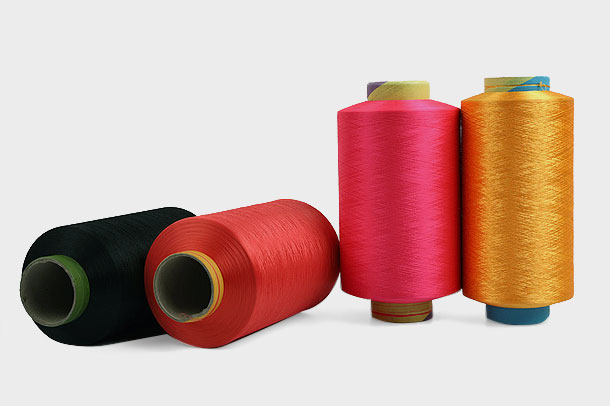
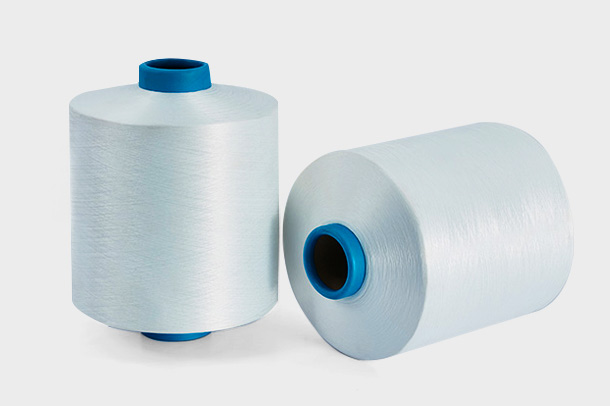
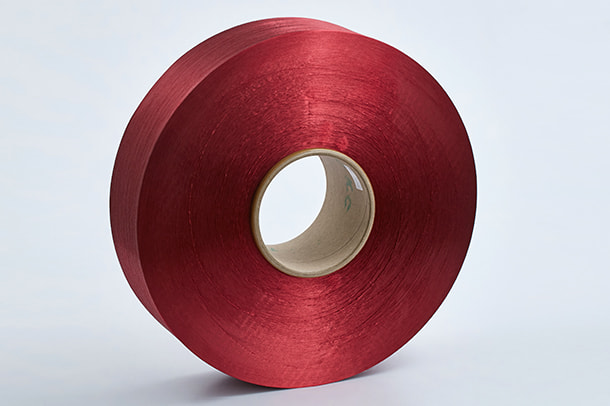 Polyester POY Yarn with Consistent Orientation and DyeabilityThis partially oriented yarn is offered in a wide denier range and features uniform orientation and low elongation variation, making it a reliable choice for downstream draw-texturing and stable fabric production.View Product →
Denier, filament count, tenacity, elongation at break, and shrinkage decide whether a yarn will run cleanly on your production line and meet your fabric's final performance targets.
| Specification | What it measures | Why it matters |
| Denier (D) | Linear density; yarn weight per 9,000 meters | Sets fabric weight, coverage, and cost per meter |
| Filament count (F) | Number of individual filaments in the strand | Lower F gives a firmer hand; higher F gives a softer, silkier fabric |
| Tenacity | Breaking force per linear density unit (cN/dtex) | Determines fabric strength and durability under stress |
| Elongation at break | Percentage of stretch before rupture | Must match the yarn to weaving, knitting, or texturing behavior |
| Shrinkage | Dimensional change under heat or water | Predicts stability in dyeing, finishing, and final garment care |
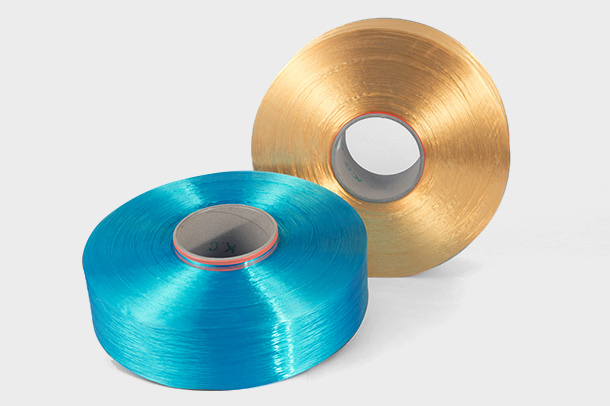
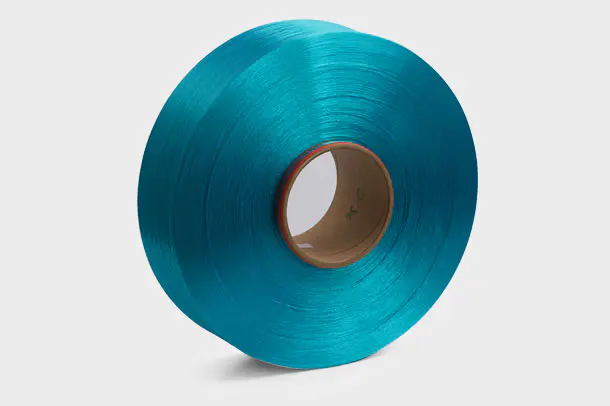 Polyester FDY Yarn with Handling and Storage GuidelinesThis fully drawn yarn includes specific storage and handling instructions covering temperature, humidity, and packaging, helping you maintain its strength and surface properties during processing.View Product →
Tenacity measures the force a yarn withstands before breaking, while elongation measures how much it stretches first; both numbers must match your weaving or knitting process and the final application.
A woven upholstery fabric needs tenacity above 4.0 cN/dtex because the warp faces constant abrasion, while a lightweight lining runs well at 3.5 cN/dtex. Elongation below 20 percent usually signals a stiff filament that may break on high-speed looms, and elongation above 40 percent creates handling problems in warping and let-off.
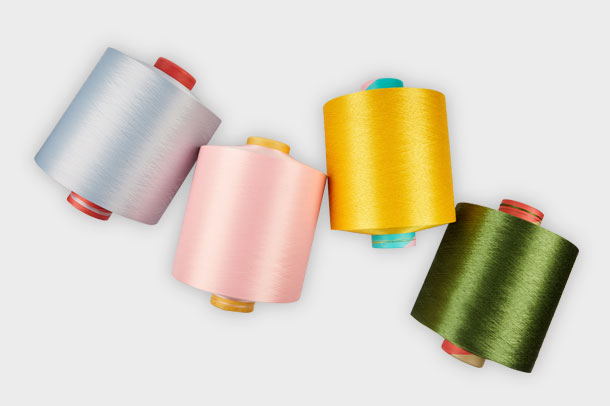
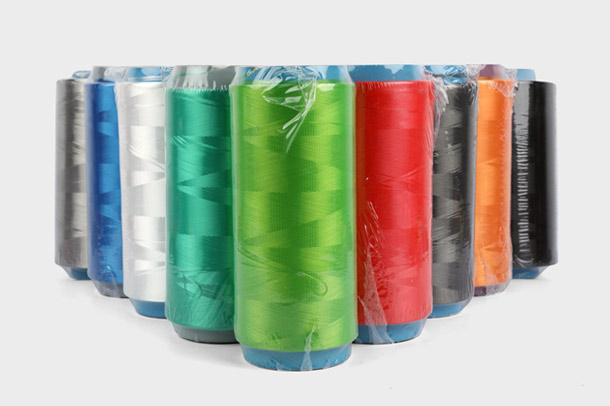
If your final product is colored, the dyeing route - dope-dyed or piece-dyed - changes colorfastness, water consumption, shade control, and minimum order size before you sign anything.
Colorant is mixed into the polymer melt before spinning, so the color becomes part of the filament itself.
Raw or white yarn is spun first and dyed in a separate step after weaving or knitting.
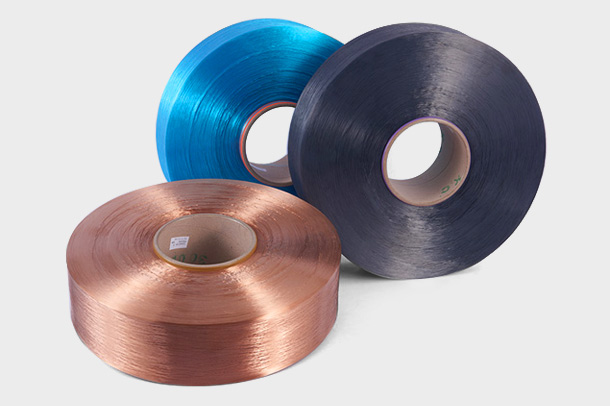
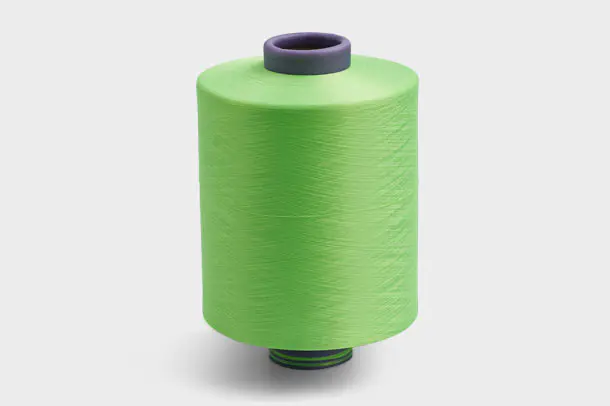 Polyester DTY Yarn from Supplier with Advanced EquipmentSupplied in precision-wound packages with controlled winding geometry, this draw-textured yarn comes from a producer using German and domestic equipment with ISO9000 quality management, supporting consistent knitting and weaving.View Product →
Polyester yarn is commonly graded AA, A, or B, and the grade sets the defect level, the price, and the safe end-use for each lot.
| Grade | Characteristic | Recommended use |
| AA | Lowest defect rate; tight denier and tenacity tolerances | Apparel, high-speed weaving, warp knitting, dyed fabrics |
| A | Minor variations acceptable | Standard weaving, knitting, home textiles |
| B | Visible defects; higher splice counts | Strapping, low-visibility interior uses, secondary backing |
A supplier's production infrastructure is a more reliable predictor of consistent quality than any marketing brochure or price list.
An integrated manufacturer controls polymer quality, spinning speed, drawing conditions, and testing in-house, whereas a trading house controls none of them. Zhejiang Hengyuan Chemical Fiber Group Co., Ltd. operates a color factory, dedicated equipment lines, and a manufacturing complex in Xiaoshan, Hangzhou, with the production and quality control steps documented on its manufacturing pages. The company also runs its own research and development center to improve process stability and product performance.
When you shortlist candidates, compare how openly each one documents its plant, its test methods, and its defect policy. Buy from a manufacturer who can show you the production floor, not only a price list.
POY is a semi-drawn intermediate used for further processing; FDY is fully drawn and smooth, ideal for weaving and warp knitting; DTY is textured with crimp and bulk, suited to knit fabrics and stretch applications. Choose according to your machines and final fabric hand.
Match denier to fabric weight. Light clothing and linings typically use 20D to 75D, standard apparel runs from 75D to 150D, and upholstery, carpet, and blanket yarns range from 300D upward. Ask the supplier to recommend a denier based on your fabric construction and loom or knitting machine settings.
Dope-dyed yarn delivers better colorfastness, consistent shade, and a lower environmental load, but it requires higher minimums and less flexible color changes. Use dope-dyed for long-running product programs and piece-dyed for short runs or trend-led colors.
Request a certificate of analysis, confirm the grade (AA, A, or B), inspect a pre-shipment sample, and compare test results across three lots. Review the supplier's manufacturing and R&D capabilities, then run a paid trial on your own machines before placing a large volume order.

Zhejiang Hengyuan Chemical Fiber Group Co.,Ltd. is a professional China polyester filament yarns manufacturers and polyester color yarn suppliers, Established in 2006 ,located in YaQianTown Xiaoshan Hangzhou – One of the Center of polyester yarn Industry in China.

Products
Contact info
Copyright © Zhejiang Hengyuan Chemical Fiber Group Co.,Ltd. All rights reserved