Add: NYaqian Road No128 Yaqian Town Xiaoshan Hangzhou Zhe Jiang China.
Tel: 0086-0571-82602080
Fax: 0086-0571- 82758132
E-mail: [email protected]
Article Directory
In the high-precision world of synthetic fiber manufacturing, the term "Intermingling" refers to a critical process where compressed air creates periodic nodes along the filament. For engineers and B2B procurement specialists, selecting the right intermingling degree in polyester yarn dty (Drawn Textured Yarn) is essential for determining the final hand-feel, durability, and processing efficiency of the fabric. Zhejiang Hengyuan Chemical Fiber Group Co., Ltd., established in 2006 in Xiaoshan, Hangzhou—the heart of China's polyester industry—operates a 120,000 square meter facility dedicated to this technical mastery. With a capacity of 150,000 tons of polyester yarn yearly, our brand "Hengyun" specializes in specialized polyester dty for upholstery and apparel, ranging from 30D to 600D. Understanding the nuances of Non-Intermingled (NIM), Slight-Intermingled (SIM), and High-Intermingled (HIM) is the first step in optimizing textile production.
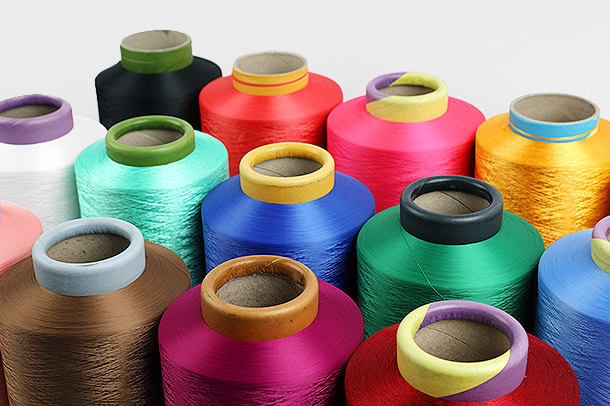
Intermingling occurs when the yarn passes through an air jet nozzle, causing the individual filaments to entangle and form "knots" or "nodes." These nodes replace traditional twisting methods, providing the yarn with enough structural integrity to withstand the high-speed stresses of weaving or knitting. In 2024, the International Organization for Standardization updated several textile testing metrics, emphasizing that node stability and frequency are primary indicators of dope dyed polyester dty yarn quality for high-end applications. The impact of intermingling on dty fabric texture is profound, as the frequency of these air-jet nodes dictates whether a fabric is smooth, elastic, or textured.
While all three types originate from the same raw material, their mechanical properties differ based on the air pressure applied during the texturing process. NIM (Non-Intermingled) has almost no nodes, resulting in a silk-like smoothness, whereas HIM (High-Intermingled) features over 100 nodes per meter, creating a rugged and stable yarn suitable for heavy-duty high tenacity polyester dty for knitting. SIM (Slight-Intermingled) serves as the middle ground, offering a balance of soft texture and manageable processing stability.
| DTY Type | Nodes Per Meter (Approx.) | Fabric Texture Characteristic | Processing Benefit |
| NIM (Non-Intermingled) | 0 - 10 | Highly smooth, glossy, and soft. | Excellent for silk-imitation fabrics. |
| SIM (Slight-Intermingled) | 40 - 60 | Uniform, soft but stable. | Reduces filament breakage during knitting. |
| HIM (High-Intermingled) | 100 - 120+ | Grainy, textured, and stiff. | Ideal for warp weaving without sizing. |
The choice between NIM, SIM, and HIM directly dictates the "hand-feel" of the final textile. In the production of wholesale dty yarn for blankets and carpets, HIM is often preferred because the high node count prevents the yarn from fluffing too much during intense weaving, resulting in a more durable and defined pile. Conversely, for high-fashion garments, NIM or SIM is used to achieve a fluid drape. According to 2025 market insights from the European Man-Made Fibres Association (CIRFS), the demand for high-precision intermingled yarns in the automotive upholstery sector has increased by 12% due to the need for fabrics that resist abrasion and pill formation.
Source: CIRFS: European Man-Made Fibres Market Trends and Statistics 2024-2025
High-intermingled yarn (HIM) provides significantly more friction resistance during the warp-knitting process than NIM, which often requires an additional "sizing" or twisting step to prevent the filaments from splitting under tension.
| Feature | NIM Fabric | HIM Fabric |
| Pilling Resistance | Lower (loose filaments) | Higher (tightly bound nodes) |
| Elasticity | Higher (filament can stretch freely) | Lower (nodes restrict elongation) |
| Visual Uniformity | Flat and clear. | Granular or "crepe" effect. |
Zhejiang Hengyuan Chemical Fiber Group Co., Ltd. leverages its 150 million USD asset base and a team of 1,000 staff to produce polyester yarn dty that meets the "Green Environmental and Trust Company of China" standards. Our branch companies, Winnertex Group and Hangzhou Henghang, utilize our total capacity of 150,000 tons to provide both raw-white and dope dyed polyester dty yarn. By controlling the air-jet texturing parameters with high-tech Hangzhou-certified equipment, we ensure that every meter of SIM or HIM yarn provides consistent node density for 50 million meters of fabric annually. Whether for upholstery cloth, blankets, or technical textiles, our "Hengyun" brand stands for stable quality and industrial innovation.
Choosing between NIM, SIM, and HIM is a balance of aesthetic desire and mechanical necessity. While NIM offers the ultimate softness, HIM provides the structural integrity required for high-speed industrial looms. By understanding the impact of intermingling on dty fabric texture, B2B buyers can better specify their requirements for specialized polyester dty for upholstery or knitting projects. As a "Top 100 Industry Company in Xiaoshan," Hengyuan is ready to support your production with high-precision polyester yarn dty tailored to your exclusive requirements.

Zhejiang Hengyuan Chemical Fiber Group Co.,Ltd. is a professional China polyester filament yarns manufacturers and polyester color yarn suppliers, Established in 2006 ,located in YaQianTown Xiaoshan Hangzhou – One of the Center of polyester yarn Industry in China.

Products
Contact info
Copyright © Zhejiang Hengyuan Chemical Fiber Group Co.,Ltd. All rights reserved