Add: NYaqian Road No128 Yaqian Town Xiaoshan Hangzhou Zhe Jiang China.
Tel: 0086-0571-82602080
Fax: 0086-0571- 82758132
E-mail: [email protected]
Article Directory
In the global textile supply chain, the classification of synthetic fibers is paramount for downstream production efficiency. For engineers and textile manufacturers, understanding the nuances of polyester yarn dty grading is essential to ensure final product consistency. Zhejiang Hengyuan Chemical Fiber Group Co., Ltd., established in 2006, operates at the heart of China's polyester industry in Xiaoshan, Hangzhou. With a total capacity of 150 thousand tons of polyester yarn dty and various high-tech fabrics, our group—including branch companies like Winnertex and Henghang—strictly adheres to international quality benchmarks. This guide provides a technical analysis of DTY AA grade vs A grade standards, examining the polyester yarn manufacturing process and the metrics that define "Top 100 Industry" quality.
The distinction between AA grade and A grade is primarily found in the stability of physical parameters during high-speed texturing. AA grade polyester DTY specifications require near-zero variation in tenacity and elongation at break. While A grade yarn is suitable for many applications, it may exhibit slight fluctuations in "crimp contraction," which can lead to visible defects in high-density weaving. Polyester yarn DTY tensile strength is a core decider; AA grade ensures that the yarn can withstand the mechanical stress of modern circular knitting machines without breakage. Furthermore, the benefits of using AA grade polyester yarn include a significant reduction in machine downtime, as the yarn lacks the microscopic "neps" or slubs that often appear in lower grades.
| Quality Metric | AA Grade (Superior) | A Grade (Standard) |
| Tenacity CV (%) | < 1.5% | 1.5% - 2.5% |
| Broken Filaments | Zero per 100km | ≤ 1 per 100km |
| Elongation CV (%) | < 3.0% | 3.0% - 5.0% |
| Application Focus | High-end apparel and medical textiles | General upholstery and blankets |
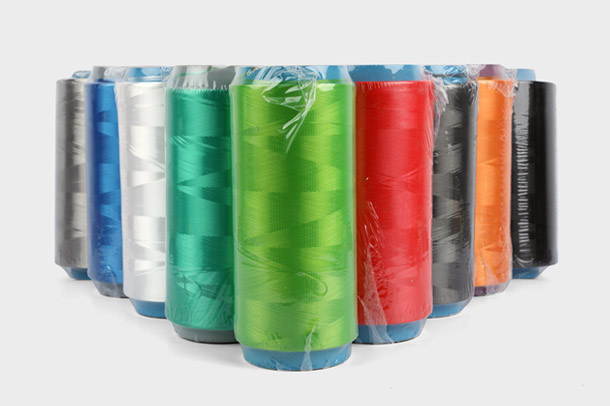
Dyeing consistency is the ultimate test for polyester yarn dty. How to test polyester DTY quality usually involves a "Munsell Color Test" or a trial dyeing of knit socks to identify "barré" effects. Dyeing uniformity in AA grade DTY is strictly controlled to ensure that dope-dyed colors, ranging from 30D to 600D, remain vibrant and streak-free across different batches. While A grade DTY yarn properties allow for minor color deviations, AA grade is mandatory for upholstery cloth and luxury blankets where visual perfection is required. When comparing DTY vs FDY polyester yarn for dyeing, the textured surface of DTY provides a matte finish, but only AA grade ensures that the dope-dyed polyester DTY for upholstery will not show shade variations between the center and the edge of a fabric roll.
| Feature | AA Grade Performance | A Grade Performance |
| Dyeing Grade | 4.5 - 5.0 (Grey Scale) | 4.0 (Grey Scale) |
| Barré Effect Risk | Negligible | Slightly elevated in sensitive colors |
| Crimp Uniformity | Excellent (Uniform bulkiness) | Good (Slight bulk variation) |
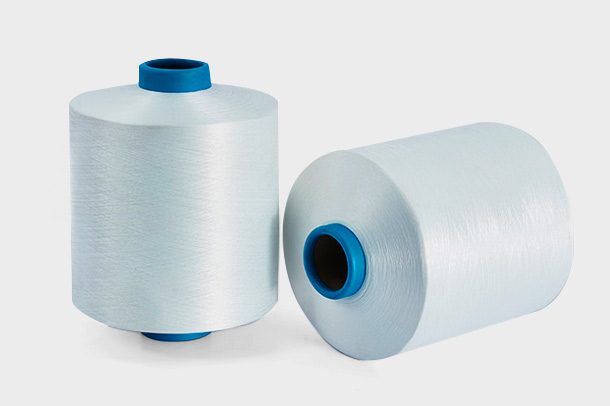
Beyond the fiber itself, the best polyester DTY for knitting must be wound perfectly. AA grade bobbins are characterized by uniform tension and the presence of a "transfer tail" of specific length to facilitate continuous knitting. DTY yarn bobbin weight and dimensions must be identical to ensure that creel tension remains constant. In contrast, A grade bobbins might have minor surface irregularities or shorter transfer tails, which can lead to "shiners" in the fabric. At Zhejiang Hengyuan, our high tenacity polyester DTY applications prioritize the structural integrity of the bobbin, ensuring that our recycled polyester DTY yarn sustainability efforts are matched by mechanical excellence, earning us the title of "Green Environmental and Trust Company of China."
In the polyester yarn dty industry, the gap between AA and A grade is the difference between a high-yield production run and one plagued by defects. While A grade is a cost-effective solution for general textiles, AA grade polyester DTY specifications are non-negotiable for high-end fashion and industrial applications. As a "Top 100 Industry Company in Xiaoshan," Zhejiang Hengyuan Chemical Fiber Group Co., Ltd. is committed to maintaining these rigorous standards, providing constant and stable quality across our 150,000-ton annual capacity to serve the global textile market.
AA grade is the highest quality with near-perfect dyeing uniformity, zero broken filaments, and precise mechanical properties. A grade is standard quality with slightly higher tolerances for physical variations.
Upholstery fabrics cover large surfaces. Any minor variation in the polyester yarn dty will result in "barré" or stripes on the fabric, which is unacceptable for high-end furniture.
Factories use Uster testers for evenness, tenacity testers for strength, and sample dyeing machines to check for color consistency and crimp contraction.
Yes. The high polyester yarn DTY tensile strength and lack of neps in AA grade prevent yarn breakage, allowing knitting machines to run at maximum RPM with fewer stops.
It depends on the color and fabric structure. Darker or heathered colors may hide minor A grade DTY yarn properties, but for solid, light-colored fabrics, AA grade is strongly recommended to ensure shade matching.

Zhejiang Hengyuan Chemical Fiber Group Co.,Ltd. is a professional China polyester filament yarns manufacturers and polyester color yarn suppliers, Established in 2006 ,located in YaQianTown Xiaoshan Hangzhou – One of the Center of polyester yarn Industry in China.

Products
Contact info
Copyright © Zhejiang Hengyuan Chemical Fiber Group Co.,Ltd. All rights reserved