Add: NYaqian Road No128 Yaqian Town Xiaoshan Hangzhou Zhe Jiang China.
Tel: 0086-0571-82602080
Fax: 0086-0571- 82758132
E-mail: [email protected]
Article Directory
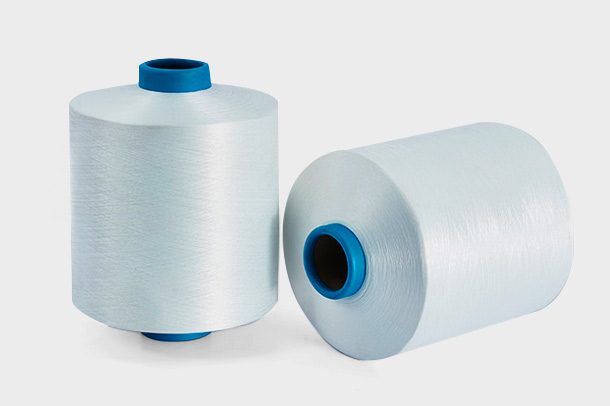
When textile manufacturers evaluate fiber options, polyester filament yarn consistently ranks as the benchmark for performance consistency. Unlike staple fibers, filament yarn is composed of continuous strands — extruded in one unbroken length — which gives it structural advantages that short-fiber alternatives cannot replicate at scale.
Polyester filament yarn strength derives directly from its molecular orientation. During the melt-spinning process, polymer chains align longitudinally under draw tension — a mechanical action that increases crystallinity and raises tenacity to levels unachievable in staple constructions.
Standard partially oriented yarn (POY) delivers tenacity of 2.5–3.5 g/d. Fully drawn yarn (FDY) reaches 4.5–5.5 g/d. High-tenacity industrial grades exceed 9.0 g/d, making them viable for tire cord, seatbelts, and geotextiles where failure is not an option.
Key fact: A single 150-denier polyester filament yarn strand withstands approximately 675 grams of tensile load before failure — equivalent to supporting a full bottle of wine from a thread thinner than a human hair.
Breaking elongation typically falls between 20–35%, providing enough elasticity to absorb shock without permanent deformation. This combination of high tenacity and controlled elongation makes filament yarn the preferred choice for performance fabrics, technical textiles, and structural composites.
Uniformity in filament yarn is measured by denier variation (CV%), filament count consistency, and surface evenness. A yarn with CV% below 1.0 is considered mill-grade uniform — meaning downstream processes like weaving and knitting run without tension spikes, warp breaks, or fabric defects.
Uniformity also affects loom efficiency. Mills running 100% filament yarn report end-break rates under 0.3 per 1,000 meters, versus 1.2–2.5 for equivalent spun yarn counts — a difference that directly impacts output and labor cost.
Polyester filament yarn dyeability relies on disperse dyes applied under high-pressure, high-temperature (HPHT) conditions — typically 130°C for standard grades. The compact molecular structure of polyester resists water-based dye penetration at ambient conditions, requiring thermal energy to open polymer chains temporarily.
Yarn is scoured to remove spin finish oils and surface contaminants that would block uniform dye penetration.
Disperse dye bath reaches 130°C under pressure. Polymer chains expand, allowing dye molecules to diffuse into the fiber matrix.
Controlled cooling locks dye molecules inside the polymer structure. Wash-fastness ratings of 4–5 (ISO 105-C06) are standard.
A sodium hydrosulfite bath removes surface dye residues, improving color depth and light-fastness to ratings of 5–7 (ISO 105-B02).
Cationic-dyeable polyester (CDP) variants accept basic dyes at lower temperatures (100–110°C), enabling two-tone effects when woven alongside standard polyester — a popular technique in sportswear and fashion textiles.
Polyester filament yarn for weaving performs exceptionally across rapier, air-jet, and water-jet loom platforms. Its smooth surface generates low friction against heddles and reed wires, reducing mechanical wear and enabling high pick insertion speeds — often 800–1,200 picks per minute on modern air-jet systems.
| Yarn Type | Loom Compatibility | Typical Fabric End-Use | Surface Character |
| FDY (Fully Drawn Yarn) | Air-jet, Rapier, Water-jet | Lining, shirting, technical | Smooth, high luster |
| DTY (Draw Textured Yarn) | Rapier, Projectile | Sportswear, outerwear, upholstery | Soft, low-to-mid luster |
| POY (Partially Oriented Yarn) | Downstream texturing only | Intermediate — converted to DTY/FDY | Semi-dull, flat |
| ATY (Air Textured Yarn) | Rapier | Home textiles, canvas, bag fabric | Bulky, matte, cotton-like |
The polyester filament yarn production process begins with PET (polyethylene terephthalate) chips, which are dried to moisture content below 30 ppm to prevent hydrolytic degradation during melt processing.
Dried chips enter an extruder where temperatures between 280–295°C melt the polymer. The melt is metered through a spinneret — a plate with precision-drilled holes (0.2–0.5mm diameter) — where individual filaments form as they exit into a cooling air stream. A spin finish is applied to reduce static and improve handling before the yarn is wound onto packages.
FDY lines incorporate an inline drawing stage (godets at 3,500–5,500 m/min) that orients molecular chains immediately after extrusion. POY lines wind at lower speeds (2,500–3,500 m/min) without full drawing, producing a semi-oriented intermediate for downstream texturing.
The polyester filament yarn vs spun yarn decision is fundamentally a trade-off between performance precision and tactile naturalness. Neither is universally superior — the correct choice depends on end-use requirements, processing capabilities, and cost targets.
Polyester filament yarn wins where consistency, strength, and luster are non-negotiable. Spun yarn wins where soft hand-feel, moisture management through fiber gaps, and natural-look aesthetics take priority. In blended fabrics — such as filament warp with spun weft — both properties can be combined in a single construction.
Linings, sportswear, technical textiles, high-speed weaving, precision dyeing, industrial applications
Casual apparel, toweling, denim-look fabrics, applications requiring breathability and soft drape

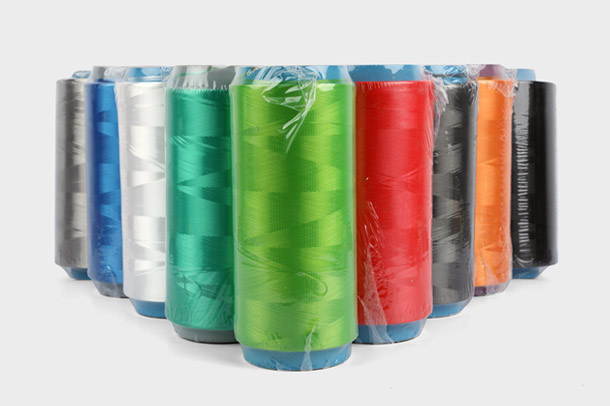
Zhejiang Hengyuan Chemical Fiber Group Co.,Ltd. is a professional China polyester filament yarns manufacturers and polyester color yarn suppliers, Established in 2006 ,located in YaQianTown Xiaoshan Hangzhou – One of the Center of polyester yarn Industry in China.

Products
Contact info
Copyright © Zhejiang Hengyuan Chemical Fiber Group Co.,Ltd. All rights reserved