Add: NYaqian Road No128 Yaqian Town Xiaoshan Hangzhou Zhe Jiang China.
Tel: 0086-0571-82602080
Fax: 0086-0571- 82758132
E-mail: [email protected]
Article Directory
In the high-end home textile market, the aesthetic longevity of a white blanket yarn is a primary benchmark for quality. Achieving a lasting "raw-white" brilliance while mitigating the mechanical degradation known as pilling requires a deep understanding of polyester fiber polymer science. As a leading manufacturer located in the heart of China's polyester industry, Zhejiang Hengyuan Chemical Fiber Group Co., Ltd. (established in 2006) specializes in the production of FDY, POY, and DTY yarns. With an annual capacity of 150,000 tons and a reputation as a "Top 100 Industry Company in Xiaoshan," our Hengyun brand ensures that the inherent molecular structure of our yarn is optimized for both optical clarity and abrasion resistance.
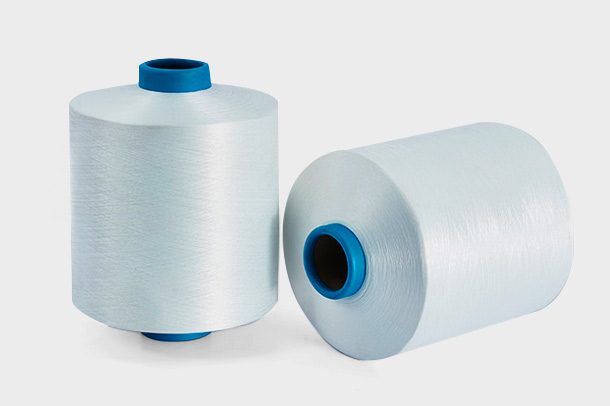
The "whiteness" of chunky white polyester yarn for blankets is not merely a surface treatment but a result of titanium dioxide ($TiO_2$) loading and optical brightening agents (OBAs) integrated during the polymerization or spinning process. Maintaining this brightness involves protecting the polymer chain from UV-induced yellowing and oxidative stress. While super soft white yarn for baby blankets focuses on a delicate hand-feel, industrial-grade bulk white dty yarn for textile manufacturing must balance softness with chemical stability to resist yellowing from environmental pollutants.
| Maintenance Aspect | Standard Raw-White Yarn | High-Tech Hengyun Dope-Dyed/OBA White |
| UV Resistance | Moderate; prone to long-term yellowing | Enhanced; additives stabilize polymer chains |
| Chemical Stability | Susceptible to alkaline oxidation | High; designed for upholstery and carpets |
| Brightness Retention | Surface-level; fades with heavy washing | Structural; integrated into the fiber core |
Pilling occurs when loose fibers migrate to the fabric surface and entangle into small spheres due to friction. To prevent this in white polyester yarn for crochet blankets, engineers focus on increasing fiber-to-fiber friction and yarn tenacity. Utilizing low pilling white yarn for home textiles involves high-twist configurations or specialized Draw Textured Yarn (DTY) processes that lock the filaments in place. Compared to standard low-tenacity fibers, high-tenacity FDY (Fully Drawn Yarn) provides a smoother surface that significantly reduces the mechanical "hooking" that leads to pilling.
The structural integrity of the yarn dictates how it responds to the abrasive forces encountered during daily use in blankets or upholstery cloth.
| Yarn Type | Surface Characteristics | Pilling Risk Profile |
| POY (Partially Oriented) | Amorphous, high elongation | Moderate; typically a precursor for DTY |
| DTY (Draw Textured) | Crimped, bulky, soft tactile | Controlled via "intermingling" and twist density |
| FDY (Fully Drawn) | Smooth, high orientation, sleek | Lowest; limited loose filaments to form pilling |
To preserve the integrity of white blanket yarn, the cleaning and maintenance environment must be strictly controlled. As a "Green Environmental and Trust Company of China," Zhejiang Hengyuan emphasizes the use of pH-neutral detergents and controlled thermal settings during the textile finishing and consumer washing stages.
Our group brand, Hengyun, benefits from a 150,000-square-meter building area equipped with advanced texturing and spinning machinery. By managing the entire process from 30D to 600D yarns, we are able to implement "High Tech of Hangzhou" standards in every batch. Whether for upholstery, blankets, or carpets, our commitment to constant and stable quality ensures that our low pilling white yarn for home textiles meets the rigorous demands of global export markets.
This datasheet outlines the physical and mechanical properties of the polyester DTY produced by Zhejiang Hengyuan Chemical Fiber Group Co., Ltd. These parameters are critical for achieving a low pilling white yarn for home textiles with superior hand-feel and structural integrity in 50 million m/yr fabric production environments.
The tenacity and elongation values of our bulk white dty yarn for textile manufacturing are strictly controlled to prevent breakage during high-speed knitting and weaving. The intermingling nodes (knots per meter) are calibrated to ensure fiber cohesion without compromising the "super soft" tactile requirements.
| Technical Metric | Standard / Method | Performance Value (Typical) |
| Tenacity (Breaking Strength) | ISO 2062 / ASTM D2256 | ≥ 3.2 cN/dtex |
| Elongation at Break | ISO 2062 | 22% ± 3% |
| Intermingling (NIM/SIM/HIM) | Manual Count / Water Pressure | 60 - 100 Knots/Meter (Customizable) |
| Oil Content (OPU) | Soxhlet Extraction | 1.5% - 2.5% (Optimal for weaving) |
For white blanket yarn, the "L" value (lightness) and "b" value (yellowness) are paramount. Our Winnertex Group Limited branch utilizes high-grade Titanium Dioxide ($TiO_2$) to achieve consistent semi-dull and bright finishes that resist the oxidative stresses common in industrial storage.
Controlled shrinkage is the key to preventing "puckering" when white polyester yarn for crochet blankets is combined with other materials or subjected to thermal finishing.
| Shrinkage Variable | Standard Condition | Hengyun Performance Value |
| Boiling Water Shrinkage (BWS) | 100°C for 15 mins | ≤ 6.5% |
| Hot Air Shrinkage (HAS) | 180°C for 2 mins | ≤ 8.0% |
| Crimp Contraction (CC) | Texture Stability Test | 25% - 35% (High Bulkiness) |
With total assets of 150 million USD and 6 branch companies, we provide a stable supply chain for chunky white polyester yarn for blankets. Our 120,000 square meter facility allows for high-volume storage and precision batch-coding, ensuring that the white blanket yarn you receive maintains the same high-tech Hangzhou standards from the first ton to the thousandth.

Zhejiang Hengyuan Chemical Fiber Group Co.,Ltd. is a professional China polyester filament yarns manufacturers and polyester color yarn suppliers, Established in 2006 ,located in YaQianTown Xiaoshan Hangzhou – One of the Center of polyester yarn Industry in China.

Products
Contact info
Copyright © Zhejiang Hengyuan Chemical Fiber Group Co.,Ltd. All rights reserved