Add: NYaqian Road No128 Yaqian Town Xiaoshan Hangzhou Zhe Jiang China.
Tel: 0086-0571-82602080
Fax: 0086-0571- 82758132
E-mail: [email protected]
Article Directory
Not many textile materials can sit on a warehouse shelf for a decade and still run through a warper without a single breakage. Fully drawn yarn can. Polyester FDY is one of the most stable yarn forms in commercial use, and the honest answer to how long fully drawn yarn lasts is: for as long as you protect it from light, heat, and moisture. In practice, that means 20 years or more of usable storage life, followed by a service life of anywhere from five to fifteen years depending on the end product.
Fully drawn yarn (FDY) is a continuous multifilament polyester yarn that is stretched to its final molecular orientation during spinning. The drawing process aligns the polymer chains, producing a yarn with low elongation, high tenacity, and a smooth, uniform cross-section. That structural precision is exactly what makes the yarn so stable over time.
So before you decide to write off old FDY stock, it helps to understand why it ages so slowly, what can actually damage it, and how to tell whether a batch is still safe to use.
Polyester fully drawn yarn does not rot, it is not eaten by moths, and it does not absorb enough moisture to support mildew. Three characteristics explain why.
First, polyester is hydrophobic. With a moisture regain of roughly 0.4%, FDY stays almost dry even in humid conditions. Without water inside the fibre, the chemical reactions that break down natural polymers simply do not take place at room temperature.
Second, the drawing step locks the polymer chains into a highly oriented, semi-crystalline structure. That structure is denser and less permeable than the undrawn or partially oriented state, which means moisture, oxygen, and chemicals penetrate much more slowly. In effect, FDY is already in its most stable physical form.
Third, FDY contains no protein or carbohydrate that insects can digest. Clothes moths feed on keratin fibres such as wool, and carpet beetles avoid synthetic filaments. Pests may nest around stored yarn packages, but they damage the packaging rather than the yarn itself.
It is useful to separate two ways of answering the question: storage life and in-use life.
Storage life is the time a yarn remains processable before it is woven, knitted, or warped. For FDY kept in original packaging, out of direct light, and in a cool, dry room, there is no practical expiration date. Mills routinely use stock that is several years old, and the yarn runs the same as a fresh batch when the room stays below about 35 °C and 65% relative humidity.
In-use life is the period that finished FDY products remain functional. Typical ranges depend on the application, and the main limiting factor in each case is listed below.
| Application type | Typical service life | Main limiting factor |
|---|---|---|
| Apparel (linings, blouses, sportswear) | 5-10 years | Washing abrasion and pilling |
| Home textiles (curtains, upholstery) | 10-15+ years | Cumulative light exposure |
| Industrial goods (webbing, tarpaulins) | 5-15 years | Outdoor UV and mechanical stress |
| Unprocessed yarn in storage | 20+ years | Storage conditions, not yarn age |
FDY is durable, but it is not indestructible. Five stressors cause most premature failures.
Sunlight breaks the polymer chains in polyester. A fully drawn yarn exposed to direct outdoor sun for several seasons will lose a noticeable share of its original tenacity and develop surface chalking and fading. Indoors, filtered daylight does little harm. That is why FDY grades intended for awnings, tarpaulins, and outdoor furniture are often produced with UV stabilizers or solution-dyed pigments.
At normal warehouse temperatures, FDY is chemically inert. Problems appear only when packages sit near heaters, under unventilated roofs, or in tropical climates. Sustained heat accelerates oxidation and yellowing, and long periods of high humidity combined with heat cause gradual hydrolysis of the polymer. Keep storage below about 35 °C and 65% relative humidity, and these reactions slow to a negligible level.
Once FDY becomes a fabric, mechanical wear dominates. Repeated washing, folding, and foot traffic cause filament fatigue, surface fuzzing, and eventually broken filaments. Strong alkaline solutions attack polyester directly, so chlorine bleach and harsh detergents should be avoided. Normal neutral detergents and slightly acidic conditions are safe.
| Stressor | What it does | How to limit the effect |
|---|---|---|
| UV light | Breaks polymer chains; fades colour | Store away from sunlight; use UV-stabilised grades outdoors |
| Heat | Causes oxidation and yellowing | Keep storage below 35 °C; avoid placing near heaters |
| Humidity | Causes slow hydrolysis over years | Keep packages sealed; store below 65% RH |
| Abrasion | Fuzzes the surface; breaks filaments | Protect fabrics; use gentle washing cycles |
| Strong alkali | Dulls or dissolves the fibre surface | Use neutral detergents; avoid bleach |
FDY does not age alone in a textile warehouse. It is usually stored alongside DTY and POY, and the three polyester filament forms are not interchangeable when it comes to shelf life.
POY, or partially oriented yarn, is an intermediate product designed to be draw-textured into DTY or drawn into FDY. It is only semi-oriented when it leaves the spinning line, and it continues to crystallize over time. If it is stored too long, POY loses the drawability that texturizing machines depend on. In practice, POY should be processed within three to six months of production. That short window is not a defect; it simply reflects the fact that POY is a feed stock, not a finished yarn. Our polyester POY series is therefore scheduled for fast conversion whenever possible.
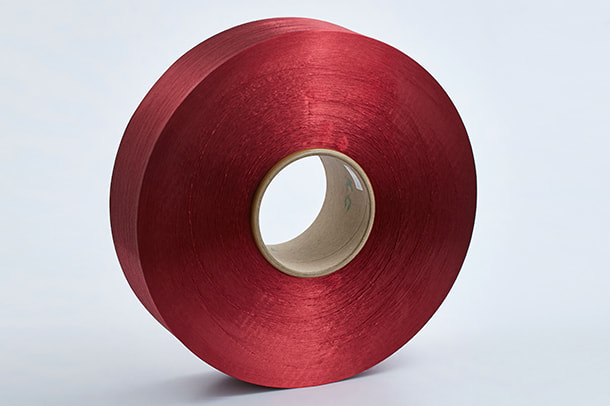 China Wholesale Polyester POY Yarns Manufacturers, SuppliersZhejiang Hengyuan Chemical Fiber Group Co.,Ltd is China polyester POY Yarns manufacturers and polyester POY Yarn suppliers, factory offer...View Product →
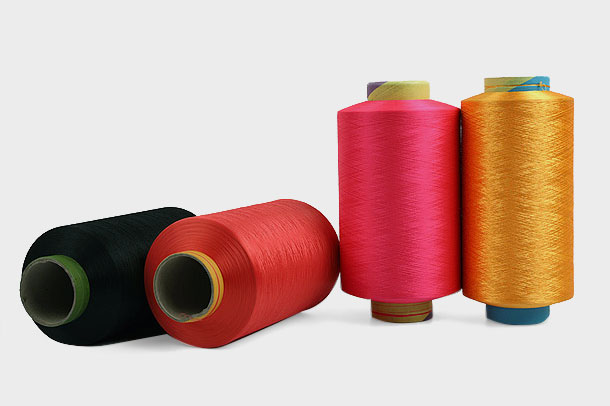
DTY, or draw-textured yarn, has the same PET chemistry as FDY, so its resistance to moisture, mildew, and pests is identical. The texturing process adds crimp and bulk, which makes the yarn softer and more comfortable for knitted apparel, but it does not reduce long-term durability. In storage, DTY lasts as long as FDY; in products, it fails in the same way through abrasion and UV rather than through chemical ageing. The only practical difference is that a textured surface collects more dust, so DTY packages deserve extra protection such as sealed bags.
FDY sits at the stable end of this range because it is already a finished product. Its orientation is fixed, its cross-section is uniform, and there is no intermediate structure waiting to change. If you are choosing between forms for a long-life application, our polyester DTY series gives you the softer handle, while FDY gives you the lower elongation and greater dimensional stability.
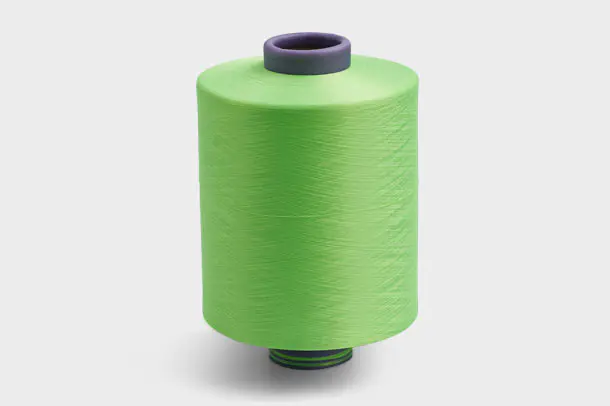 Wholesale Polyester DTY Yarns Suppliers, China DTY CompanyZhejiang Hengyuan Chemical Fiber Group Co.,Ltd is China polyester DTY yarns suppliers and polyester DTY company, you can find wholesale p...View Product →
| Property | POY | FDY | DTY |
|---|---|---|---|
| Draw state | Partially oriented | Fully drawn | Drawn and textured |
| Usable shelf life before processing | 3-6 months | 20+ years | 20+ years |
| Main processing route | Draw-texturing | Weaving, warp knitting | Knitting, apparel |
| Primary durability feature | Not a finished form | Low stretch, high tenacity | Bulk with same chemistry |
Keeping FDY for decades is not a matter of special equipment. It is a matter of following a few consistent rules.
None of these rules is complicated, but together they decide whether a fabric lasts five years or fifteen. The same discipline applies before the yarn ever reaches a warehouse. That is why we keep our process conditions stable and inspect every batch during production; quality is easier to protect than to repair. We maintain this discipline across our manufacturing facilities, from spinning to final packaging.
No amount of careful storage can make weak or uneven yarn perform well. The lifespan of FDY is set at the moment it is produced, by the chip quality, the spinning temperature, the draw ratio, and the uniformity of denier and cross-section. A batch with consistent tenacity, controlled elongation, and clean filament surfaces is the only realistic starting point for a 20-year storage life.
Buyers who ask how long fully drawn yarn lasts are usually asking whether they can trust the material in front of them. The answer depends on the supplier's process control. Reputable manufacturers test each production lot for physical indicators such as tenacity, elongation, denier, and shrinkage. You can read about the test methods and typical thresholds in our guide to tenacity and elongation quality control, which explains what the numbers mean on a mill floor.
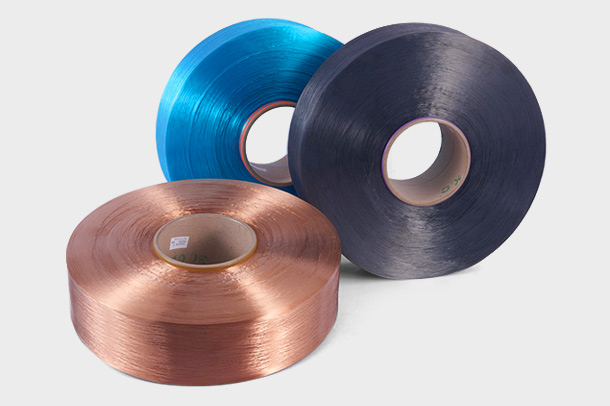
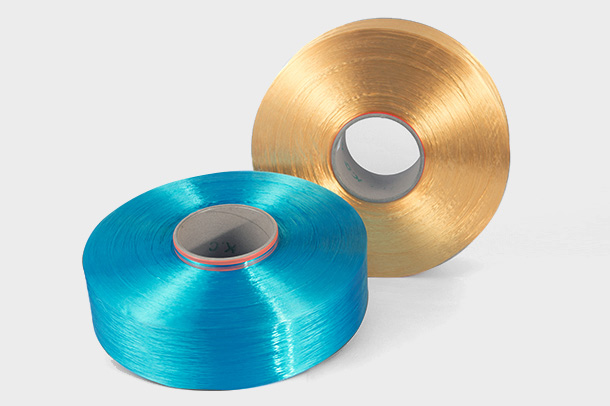
For products that demand the best balance of strength, dimensional stability, and long storage life, our polyester FDY series is manufactured with exactly those requirements in mind. It is draw-wound to tight denier tolerance, tested for elongation consistency, and packed to resist moisture and light during transit and storage.
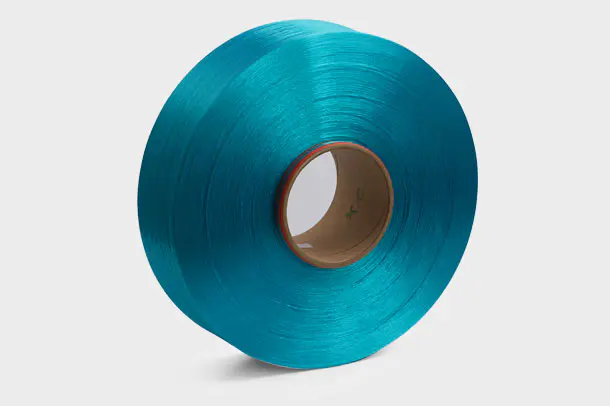 China Wholesale Polyester FDY Yarns Manufacturers, FactoryAs a China polyester FDY Yarns manufacturers and polyester FDY factory, Zhejiang Hengyuan Chemical Fiber Group Co.,Ltd. provide wholesale...View Product →
Fully drawn yarn is the most forgiving polyester filament form to store and one of the most predictable to use. Keep it dry, dark, and cool, and it will outlast nearly every product made from it. The decisions that matter are the early ones: choose a consistent supplier, check the physical test data, and store the yarn as if you plan to use it in a decade. Do those three things, and the answer to how long FDY lasts changes from a worry into an advantage.

Zhejiang Hengyuan Chemical Fiber Group Co.,Ltd. is a professional China polyester filament yarns manufacturers and polyester color yarn suppliers, Established in 2006 ,located in YaQianTown Xiaoshan Hangzhou – One of the Center of polyester yarn Industry in China.

Products
Contact info
Copyright © Zhejiang Hengyuan Chemical Fiber Group Co.,Ltd. All rights reserved