Add: NYaqian Road No128 Yaqian Town Xiaoshan Hangzhou Zhe Jiang China.
Tel: 0086-0571-82602080
Fax: 0086-0571- 82758132
E-mail: [email protected]
Article Directory
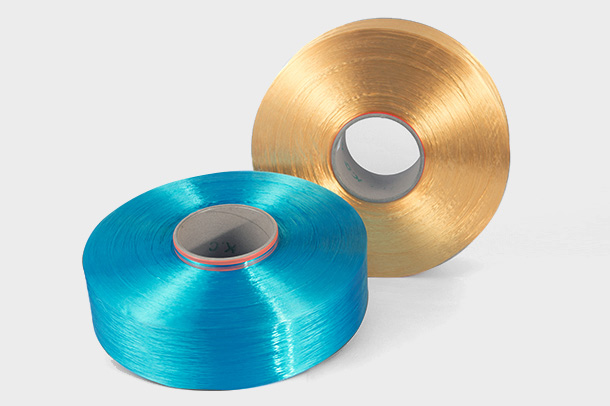
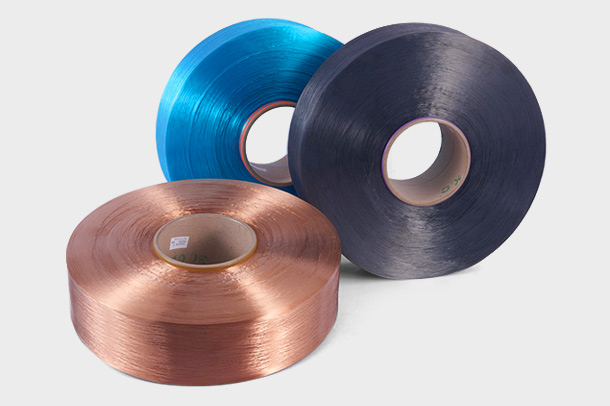
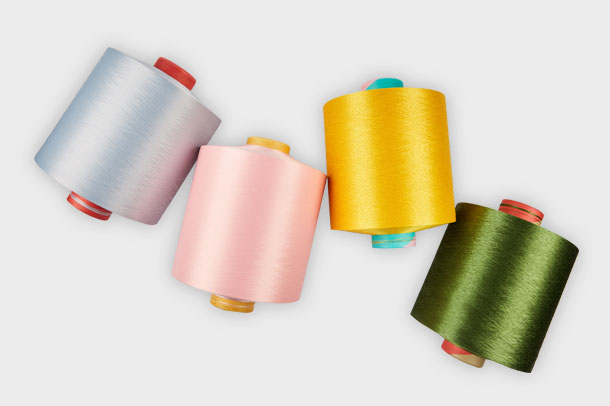
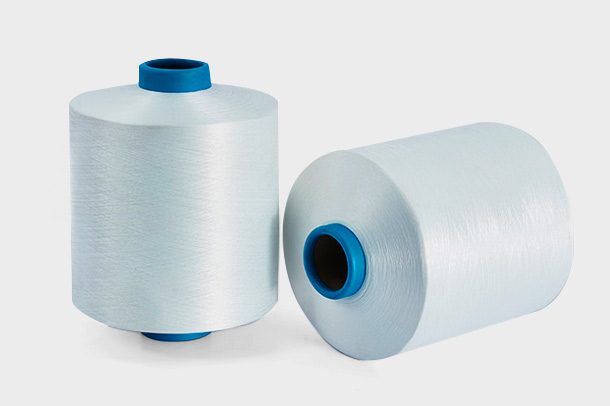
Manufacturing precision is what turns raw polyester chips into Fully Drawn Yarn with the strength, uniformity, and dyeing consistency that textile mills depend on. Unlike partially oriented yarn, FDY goes through a complete drawing stage during production, stretching and aligning its molecular chains into a stable, highly oriented structure. Every stage of that process, from polymer drying through final winding, leaves a measurable mark on how the finished yarn performs on the loom, in the dye bath, and in the finished fabric.
Fully drawn yarn moves through a tightly controlled sequence of mechanical and thermal stages, starting with raw polyester chips and ending with a finished package ready for weaving or knitting. Each stage builds directly on the one before it, and a deviation early in the process, such as uneven drying or inconsistent melt temperature, is difficult or impossible to correct later without reworking the entire batch.
Polyester chips are dried to a controlled moisture level before melting, preventing degradation and filament breakage further down the line.
Chips are heated and pushed through spinnerets under controlled temperature and pressure to form continuous molten filaments.
Filaments solidify under controlled cooling, which shapes their early fiber orientation and surface quality before any stretching occurs.
Filaments are stretched between rollers, aligning molecular chains and building the tensile strength that defines fully drawn yarn.
Thermal treatment locks the drawn structure in place, reducing shrinkage and stabilizing the yarn for weaving, knitting, and dyeing.
Finished yarn is wound under controlled tension to prevent tangling and quality variation before it reaches downstream processing.
Tensile strength index across POY and two grades of fully drawn yarn
Consistent yarn only comes from consistent testing. Mills check finished FDY yarn against four core measures before it ships, and any batch that misses these targets gets flagged before it reaches a customer's loom or knitting machine, preventing costly downstream production problems that are far more expensive to fix after fabric has already been woven.
Shrinkage rate after processing, POY versus standard and heat-set FDY
Every gain in fabric quality traces back to a specific manufacturing step. The molecular orientation created during drawing improves tensile strength and abrasion resistance directly, while heat setting locks that structure in place so it survives weaving, knitting, dyeing, and finishing without deforming or shrinking unpredictably. The result is a smoother surface, more uniform texture, and cleaner overall appearance than yarn that skips or shortcuts any of these steps, which also means fewer breakages and fewer production interruptions once the yarn reaches a textile mill.
Modeled molecular orientation building through each manufacturing stage
Fully drawn yarn is defined by a molecular structure that has already reached its stable, oriented state at the end of production, requiring no further drawing before it can be woven, knitted, or dyed.
Consistent manufacturing quality is what makes FDY suitable across such a wide range of finished products, from fashion garments to industrial reinforcement fabrics.
Fully drawn yarn versus partially oriented yarn across four property dimensions
FDY goes through a complete drawing stage during production, fully orienting its molecular structure, while POY stops short of that stage and requires further drawing before use.
Heat setting locks the oriented structure created during drawing in place, which reduces shrinkage and keeps the yarn dimensionally stable through weaving, knitting, and dyeing.
Polyester, or PET, is the most common raw material, chosen for its strength, dimensional stability, abrasion resistance, and ease of dyeing.
Precise control at every stage of producing Fully Drawn Yarn directly determines fabric strength, shrinkage behavior, surface appearance, and how consistently the fabric takes dye across a production run.

Zhejiang Hengyuan Chemical Fiber Group Co.,Ltd. is a professional China polyester filament yarns manufacturers and polyester color yarn suppliers, Established in 2006 ,located in YaQianTown Xiaoshan Hangzhou – One of the Center of polyester yarn Industry in China.

Products
Contact info
Copyright © Zhejiang Hengyuan Chemical Fiber Group Co.,Ltd. All rights reserved