Add: NYaqian Road No128 Yaqian Town Xiaoshan Hangzhou Zhe Jiang China.
Tel: 0086-0571-82602080
Fax: 0086-0571- 82758132
E-mail: [email protected]
Article Directory
Most yarn buyers still start a purchase with the same three questions: price, denier, and delivery time. But in the last two years, a fourth question has moved to the front of the conversation: what kind of technology is behind the yarn? The future of polyester filament yarn technology is not a single dramatic breakthrough. It is a combination of measurable shifts — faster and more stable spinning processes, wider use of recycled and mass-colored polymers, and the gradual migration of functional properties from premium niches into mainstream textile supply chains. For buyers, that means how a yarn is made now matters almost as much as the yarn itself, because process quality decides color consistency, dye uptake, tenacity, and long-term supply stability.
The direction of change is easier to see when the industry's largest pressures are named. Sustainability, energy productivity, and performance specification are not separate trends. They meet in the same spinning plant and in the same yarn specification.
Sustainability is no longer optional. Brand owners and retailers are setting recycled-content targets, and European regulation is pushing textile producers toward lower water and energy footprints. This is driving demand for recycled polyester filament, especially FDY and DTY, and for dope-dyed yarns that replace exhaust dyeing with color added directly into the polymer melt.
Energy productivity is becoming a competitive weapon. Spinning at higher speeds, texturing with lower energy per kilogram, and reducing waste through inline monitoring keep costs in check. Suppliers who modernize their lines are better positioned when energy prices fluctuate.
| Trend | What changes in production | What to check as a buyer |
|---|---|---|
| Recycled feedstock | rPET chips from bottle and post-industrial waste replace virgin chips | Verify recycled content, lot traceability, and retained tenacity |
| Dope-dyeing | Colorant is added before spinning, not after | Confirm color fastness and shade consistency across batches |
| Inline process control | Sensors monitor tension, temperature, and winding | Ask for process data or quality-control reports |
| Functional additives | Antibacterial, flame-retardant, and moisture-wicking masterbatches are blended at extrusion | Clarify which test standard applies, such as AATCC or ISO methods |
Polyester filament yarn technology still revolves around three product states: partially oriented yarn (POY), fully drawn yarn (FDY), and drawn textured yarn (DTY). The sequence looks familiar, but the equipment is changing. Higher spinning speeds, finer denier control, and automated quality feedback are turning what used to be an art into a data-driven process.
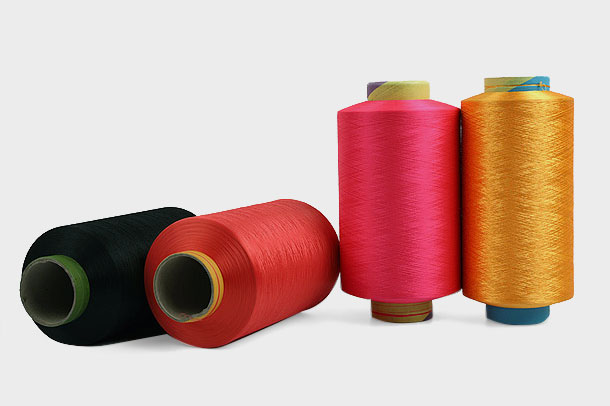
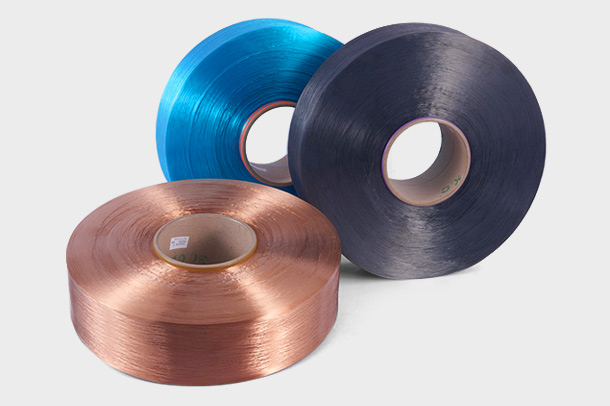
POY quality determines almost everything that happens downstream. In modern spinning, take-up speeds have increased while denier uniformity has improved. That matters because a POY lot with uneven orientation creates broken filaments, poor drawability, and unpredictable dye uptake in the finished yarn. Buyers who source from a supplier with consistent spinning conditions — for example, our polyester POY yarn series — reduce the risk of those problems before the yarn reaches the texturing machine.
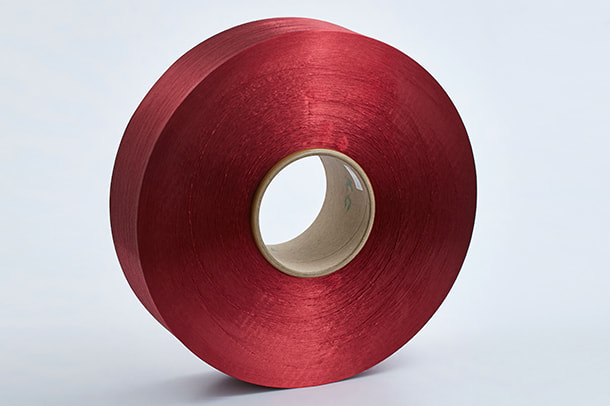 China Wholesale Polyester POY Yarns Manufacturers, SuppliersZhejiang Hengyuan Chemical Fiber Group Co.,Ltd is China polyester POY Yarns manufacturers and polyester POY Yarn suppliers, factory offer...View Product →
The draw-texturing step is where DTY gains its bulk, crimp, and stretch-recovery balance. Recent improvements focus on controlling tension and heater temperature across each spindle, which directly reduces dyeing differences between packages. The result is a yarn with fewer barre problems and more predictable performance in knitting and weaving. A detailed view of where DTY technology is heading can be found in current trends and innovations in DTY yarn production.
The most visible long-term shift is the merging of performance and environmental goals. A yarn is no longer expected to be simply strong and cheap. It is expected to be strong, light, dimensionally stable, colored without wastewater, and in many cases functional.
Functional polyester yarns once belonged to specialist niches. Now their use is spreading across medical textiles, sportswear, automotive interiors, and home furnishings. Antibacterial and moisture-management yarns are among those with the clearest standards, frequently tested against AATCC metrics. Flame-retardant and antistatic variants are following the same path. For converters, the question is no longer whether such properties are technically possible, but whether a supplier can deliver them consistently on an industrial scale.
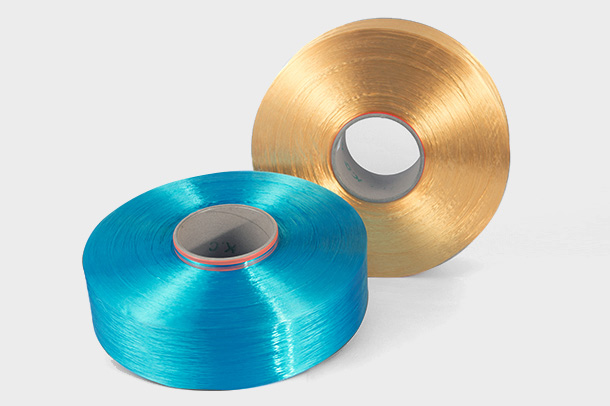
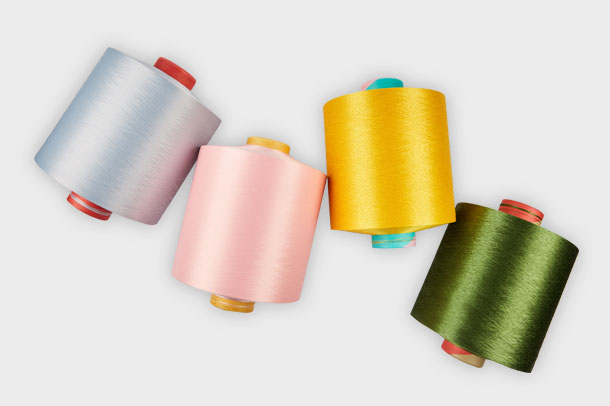
FDY is commonly used in high-speed weaving and warp knitting, where strength and uniformity are critical. The most significant environmental step for FDY is dope dyeing: the colorant is added into the polymer melt so that no water is used for dyeing and shade differences are minimized across long production runs. Combined with recycled polymer sources, this makes polyester FDY yarn options attractive for brands that need both performance and a clearer sustainability story.
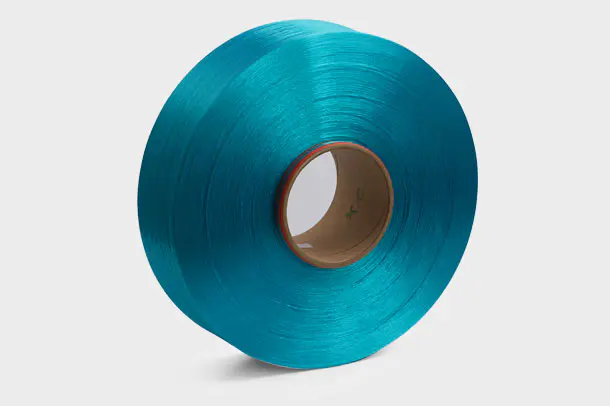 China Wholesale Polyester FDY Yarns Manufacturers, FactoryAs a China polyester FDY Yarns manufacturers and polyester FDY factory, Zhejiang Hengyuan Chemical Fiber Group Co.,Ltd. provide wholesale...View Product →
Technology change is rarely self-generated; it is pulled by the products that consume the yarn. Polyester filament is increasingly specified by end-use: carpets, rugs, blankets, upholstery, and technical fabrics. Each application demands a different balance of denier, tenacity, crimp, and color behavior.
Carpet and rug yarns are moving toward heavier, more durable constructions with stain resistance and moisture resistance built into the fiber. Colorfastness is a central requirement because carpets are exposed to sunlight, cleaning agents, and foot traffic. These demands are reflected in the polyester carpet and rug yarn range, which is engineered for flooring applications rather than general apparel use. Blanket yarns, in the same home-textile group, prioritize softness, bulk, and pilling resistance, and are increasingly produced in dope-dyed or recycled variants.
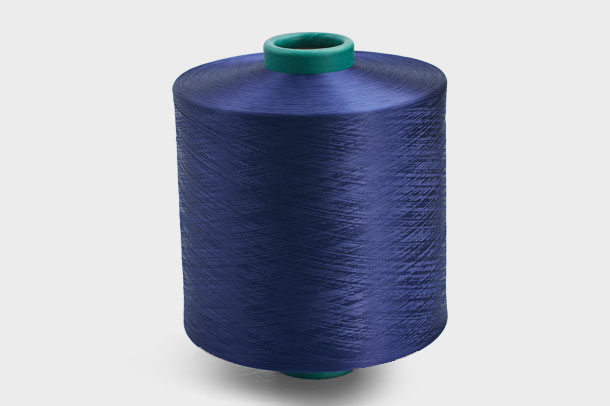 Carpet Yarns Manufacturers, Wholesale Rug Mat Yarn SuppliersAs a leading China carpet yarns manufacturers and rug mat yarns suppliers, Hengyuan Chemical Fiber Group Co.,ltd provide wholesale polyes...View Product →
In automotive seating, the elasticity and abrasion resistance of polyester filament matter more than in any apparel fabric. High-tenacity FDY and specially textured DTY are also entering protective workwear, luggage fabrics, and conveyor media. These fields raise the bar for quality control because failure in a long industrial roll is far more expensive than failure in a garment batch.
Buyers who want to benefit from these technology trends should evaluate suppliers against a broader set of criteria than price per kilogram. Because the industry is converging on process control, recycled content, and functional performance, the supplier's technical infrastructure matters.
Start by checking whether the manufacturer controls the full production chain. A supplier with integrated polyester filament yarn manufacturing can react faster to specification changes and maintain more consistent between-batch quality than a trader who resells different mills' output. Then ask about engineering support. A true indicator of a future-ready supplier is a dedicated research and development center that works on denier optimization, color development, and new functional variants rather than simply repeating existing recipes.
Polyester filament yarn technology will keep moving toward higher speed, finer control, and lower environmental impact. Suppliers who invest in those directions will deliver not only better yarn today but fewer disruptions tomorrow.

Zhejiang Hengyuan Chemical Fiber Group Co.,Ltd. is a professional China polyester filament yarns manufacturers and polyester color yarn suppliers, Established in 2006 ,located in YaQianTown Xiaoshan Hangzhou – One of the Center of polyester yarn Industry in China.

Products
Contact info
Copyright © Zhejiang Hengyuan Chemical Fiber Group Co.,Ltd. All rights reserved