Add: NYaqian Road No128 Yaqian Town Xiaoshan Hangzhou Zhe Jiang China.
Tel: 0086-0571-82602080
Fax: 0086-0571- 82758132
E-mail: [email protected]
Article Directory
In the technical textile market, the value proposition of a **functional yarn** lies entirely in its measurable performance. For engineers and B2B specifiers, relying solely on qualitative descriptions is insufficient. Rigorous, standardized testing is required to scientifically quantify attributes like cooling, wicking, and bacterial reduction. This technical validation ensures that the final fabric meets the demands of high-performance applications, driven by precise metrics such as those used in AATCC testing for moisture management yarn.
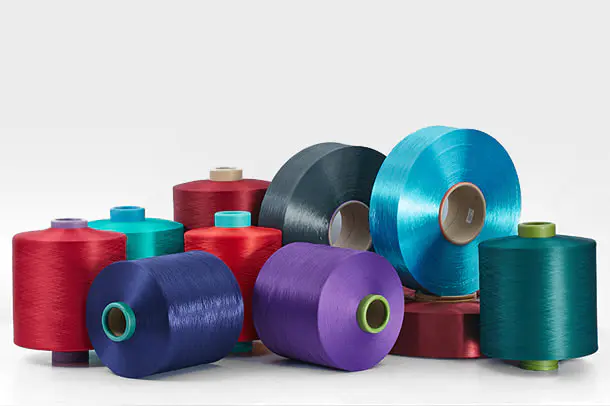
Moisture management in a **functional yarn** is a dynamic process involving absorption, transportation, and evaporation. Accurate evaluation requires standardized methods.
The Maximum Moisture Evaporation Rate (MVER) is a critical performance indicator. While there is no single universal "standard," high-performance sports and outdoor textiles typically require an MVER that demonstrably exceeds that of conventional polyester or cotton to justify the use of a specialized **functional yarn**. This is the key outcome verified by AATCC testing for moisture management yarn.
| Test Method | Measured Parameter | Required Performance Level (High Grade) |
|---|---|---|
| AATCC 197 | Wicking Speed & Distance | Score Level 5 (Rapid and continuous wicking) |
| ASTM E96 / JIS L 1099 | Water Vapor Transmission Rate (WVTR) | > 10,000 g/m²/24h (High Breathability) |
Thermal regulating yarns, which include cooling and warming properties, require specific methodologies for performance validation.
For cooling yarns, the standard evaluation involves measuring the contact Q-max value (instantaneous cooling sensation). A cooling functional yarn is generally expected to achieve a Q-max value of 0.15 W/cm² or higher, which signifies a noticeable cooling effect upon touch. This provides a direct comparison for Evaluating cooling performance of functional yarn.
Antibacterial and antifungal properties are critical for medical, hygiene, and activewear textiles, relying on verifiable quantitative standards.
To pass, a **functional yarn** typically needs to achieve a bacterial reduction of at least 95% to 99% compared to the control sample. For high-performance antimicrobial claims, a log reduction of 3.0 (which equates to 99.9% killing efficiency) is often mandated by technical specifications, proving the yarn's sustained effectiveness.
A true Technical comparison of functional yarn performance must consider not just the initial function, but its durability across the entire lifecycle.
Any claim regarding cooling or wicking in a **functional yarn** must be substantiated after repeated wash cycles. For instance, Evaluating cooling performance of functional yarn often requires the Q-max value to be maintained above the benchmark (e.g., 0.15 W/cm²) even after 50 washes, ensuring the functional component is permanently embedded or strongly bonded, as external applications degrade rapidly.
Zhejiang Hengyuan Chemical Fiber Group Co., Ltd., established in 2006, is a major player in the polyester yarn industry, located in Xiaoshan, Hangzhou. With a capacity of 150 thousand tons of polyester yarn and 50 million m/yr of various fabrics, our group specializes in polyester yarn (FDY, POY, DTY) from 30D to 600D, in both raw-white and dope-dyed colors. Our commitment to constant and stable quality, combined with our technical strength, allows us to meet precise Antimicrobial efficacy standards for textile yarn and provide yarns optimized for the required moisture and thermal performance. We introduce advanced technology to control the polymer and fiber structure at the spinning stage, ensuring that our **functional yarn** products can achieve and maintain the strict Quantifiable metrics for thermal regulating yarn and pass rigorous AATCC testing for moisture management yarn protocols. We adhere to core quality and environmental certifications, reinforcing our position as a High-Tech enterprise dedicated to meeting the complex technical specifications of the global market.
The key metric is the Q-max value (W/cm²), which measures the instantaneous heat flow away from the skin. A Q-max value of 0.15 W/cm² or higher is typically considered the benchmark for a noticeable cooling sensation.
AATCC Test Method 197, which measures wicking speed and distance, is one of the most critical standards, along with the assessment of Water Vapor Transmission Rate (WVTR) to quantify breathability.
Thermal regulating yarns are often quantified by their latent heat storage capacity (J/g) if they contain Phase Change Materials (PCMs), which is a metric entirely absent in conventional yarns.
Durability (tested after repeated wash cycles, often 50x) is crucial because it verifies that the functional additive (e.g., wicking agent or antimicrobial compound) is permanently embedded or securely bonded to the fiber and will not degrade after normal consumer use.
For strong antimicrobial claims verified by AATCC 100, a log reduction of 3.0 or greater (equating to 99.9% bacterial reduction) is typically required to ensure high-level hygiene and protection.

Zhejiang Hengyuan Chemical Fiber Group Co.,Ltd. is a professional China polyester filament yarns manufacturers and polyester color yarn suppliers, Established in 2006 ,located in YaQianTown Xiaoshan Hangzhou – One of the Center of polyester yarn Industry in China.

Products
Contact info
Copyright © Zhejiang Hengyuan Chemical Fiber Group Co.,Ltd. All rights reserved