Add: NYaqian Road No128 Yaqian Town Xiaoshan Hangzhou Zhe Jiang China.
Tel: 0086-0571-82602080
Fax: 0086-0571- 82758132
E-mail: [email protected]
Article Directory
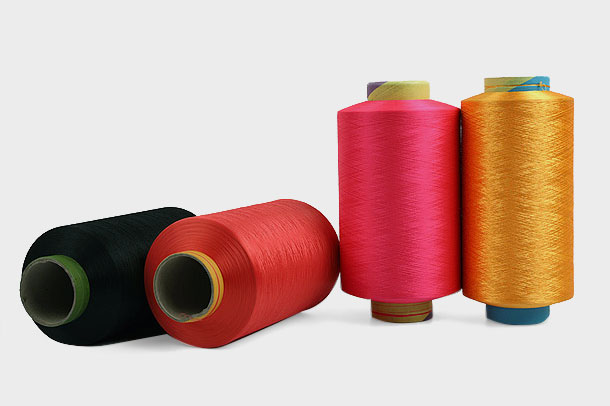
Smooth and glossy or soft and stretchy — the choice between Fully Drawn Yarn and DTY yarn shapes everything about how a finished fabric looks, feels, and performs, long before it ever reaches weaving or knitting.
Both yarns start from the same polymer melt-spinning process, but what happens after spinning is what sets them apart. Fully Drawn Yarn is stretched and oriented at high speed into a straight, fully oriented filament. DTY yarn goes a step further, adding a false-twist texturing process that introduces crimp, bulk, and stretch the straight FDY structure never has.
| Application | FDY Yarn | DTY Yarn |
| Structured apparel & linings | Preferred | Limited fit |
| Sportswear & stretch fabrics | Limited fit | Preferred |
| Home textiles & decorative fabric | Good fit | Good fit |
| Technical & high-strength textiles | Preferred | Limited fit |
The manufacturing step that separates these yarns is a single texturing process — but it changes everything about how the finished fabric drapes, stretches, and feels.
FDY holds the edge on tensile strength and dimensional stability, which is why it shows up in structured fabrics and technical textiles that need to hold their shape. DTY trades some of that strength for elasticity and recovery, making it the go-to choice wherever a fabric needs to stretch and bounce back — sportswear, knitwear, and comfort-driven casual apparel.
Choosing on price alone is the most common misstep — a cheaper yarn that doesn't meet fabric performance requirements ends up costing more once quality issues surface downstream. Ignoring the end use is a close second: a fashion fabric that needs a smooth, elegant finish calls for FDY, while a stretch garment built on FDY alone will disappoint. Filament uniformity and strength consistency matter just as much as the yarn type itself.
Yes. Blending is common when a fabric needs both the structure of FDY and the stretch or texture that DTY provides.
DTY is generally preferred for sportswear because its elasticity and recovery performance suit the stretch and movement these fabrics require.
Very little. FDY is designed for low elongation and dimensional stability, not elasticity, which is why DTY is chosen when stretch is a priority.
Cost varies by supplier and specification, but the added texturing step in DTY production can affect pricing compared with straight FDY.
Whether a project calls for the smooth stability of Fully Drawn Yarn or the stretch and softness of DTY, matching yarn structure to fabric end use is what determines whether the finished textile performs the way it's supposed to.

Zhejiang Hengyuan Chemical Fiber Group Co.,Ltd. is a professional China polyester filament yarns manufacturers and polyester color yarn suppliers, Established in 2006 ,located in YaQianTown Xiaoshan Hangzhou – One of the Center of polyester yarn Industry in China.

Products
Contact info
Copyright © Zhejiang Hengyuan Chemical Fiber Group Co.,Ltd. All rights reserved