Add: NYaqian Road No128 Yaqian Town Xiaoshan Hangzhou Zhe Jiang China.
Tel: 0086-0571-82602080
Fax: 0086-0571- 82758132
E-mail: [email protected]
Article Directory
In the competitive landscape of high-performance textiles, the synergy between advanced machinery and premium raw materials is the cornerstone of industrial success. Zhejiang Hengyuan Chemical Fiber Group Co., Ltd., established in 2006 and located in the heart of China's polyester industry, has spent nearly two decades mastering this synergy. With a total capacity of 150 thousand tons of FDY YARNS, POY, and DTY, we specialize in high-precision filaments ranging from 30D to 600D. Our group brand, Hengyun, is synonymous with "intelligence creation" and stable quality, supporting the rigorous demands of high-speed German warp knitting technology.
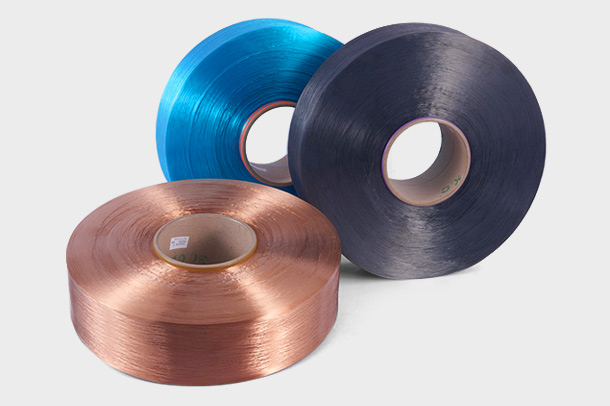
German-made warp knitting machines operate at exceptional speeds, often exceeding 2,500 rpm. This velocity exerts immense centripetal force and friction on the yarn. Standard filaments often fail under these conditions, leading to frequent machine downtime. The application of high tenacity polyester FDY is critical here, as it provides the necessary breaking strength and low elongation required to maintain consistent loop formation at maximum mechanical velocity.
While ordinary yarns might suffer from frequent breakage due to uneven tension, high-tenacity variants ensure a continuous run, significantly reducing the "stop-start" cycle that plagues textile factories.
| Performance Metric | Standard Polyester Yarn | High Tenacity Polyester FDY |
| Breaking Tenacity | 3.5 - 4.2 cN/dtex | > 6.5 cN/dtex |
| Elongation Rate | High/Variable (25-35%) | Low/Controlled (18-22%) |
| Machine Efficiency | 75% - 80% | 92% - 98% |
The interaction between the yarn and the knitting needles at high speeds generates significant heat. Utilizing semi dull polyester FDY 75/36 provides a balanced surface friction coefficient. The controlled titanium dioxide (TiO2) content in semi-dull yarns offers enough lubrication to prevent needle wear while maintaining the desired aesthetic for upholstery and blanket fabrics. For manufacturers, choosing a dope dyed FDY yarn supplier further enhances efficiency by eliminating the need for post-weaving dyeing processes, which can often weaken the structural integrity of the knit.
Technical breakthroughs in 2024 have introduced new spinning oils that further reduce the friction coefficient by an additional 15%, specifically designed for the ultra-fine needles of the latest German machine models.
Source: OEKO-TEX Standard 100 - 2025 Technical Requirements for Synthetic Filaments
In warp knitting, thousands of ends are fed simultaneously. Even a slight deviation in denier can cause "streaks" or uneven shading in the fabric. A 75 denier polyester FDY for knitting must possess ultra-uniform thickness and consistent intermingling (measured in knots per meter). Poor intermingling leads to yarn splitting at the guide bar, whereas precise intermingling ensures the yarn travels as a cohesive unit through the machine's complex eyelets.
Unlike DTY, which has high bulk and crimp, FDY (Fully Drawn Yarn) is characterized by its straightness and high orientation. This geometric stability is what allows German machines to reach their rated speeds without the "vibration noise" caused by irregular yarn mass.
| Yarn Characteristic | Low-Grade Import Yarn | Hengyun Premium FDY YARNS |
| Uster CV% (Uniformity) | > 1.8% | < 1.0% |
| Intermingling Points | Inconsistent (30-50/m) | Stable (60-80/m for Knitting) |
| Heat Shrinkage (180°C) | High (> 10%) | Controlled (< 7%) |
From an engineering and procurement perspective, the higher initial cost of wholesale raw white FDY yarn is offset by the reduction in waste and power consumption. Market statistics from 2024 show that factories utilizing high-spec FDY reduced their waste rates from 4% to under 1.2%. At Zhejiang Hengyuan, we leverage our 150 million USD asset base and 1000-strong staff to ensure that every bobbin meets these high-tech standards, contributing to our status as a "Top 100 Industry Company in Xiaoshan."
As weaving speeds continue to increase toward the 2026 targets set by machine manufacturers, the reliance on high-performance FDY YARNS will only grow. By choosing a partner like Zhejiang Hengyuan, who integrates R&D with large-scale production, textile companies can ensure their expensive German machinery operates at peak ROI. Our commitment to green environment and trust ensures that your supply chain is not only efficient but also sustainable for the global stage.

Zhejiang Hengyuan Chemical Fiber Group Co.,Ltd. is a professional China polyester filament yarns manufacturers and polyester color yarn suppliers, Established in 2006 ,located in YaQianTown Xiaoshan Hangzhou – One of the Center of polyester yarn Industry in China.

Products
Contact info
Copyright © Zhejiang Hengyuan Chemical Fiber Group Co.,Ltd. All rights reserved