Add: NYaqian Road No128 Yaqian Town Xiaoshan Hangzhou Zhe Jiang China.
Tel: 0086-0571-82602080
Fax: 0086-0571- 82758132
E-mail: [email protected]
Article Directory
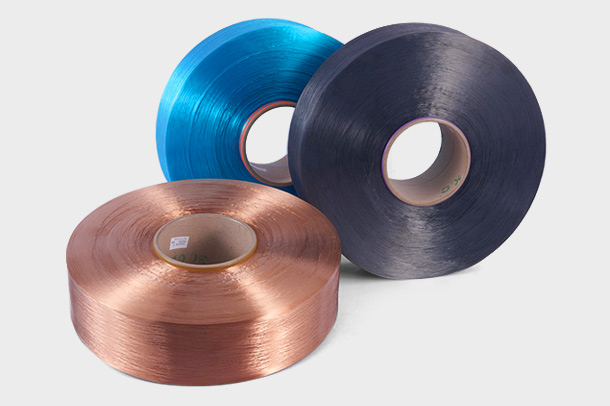
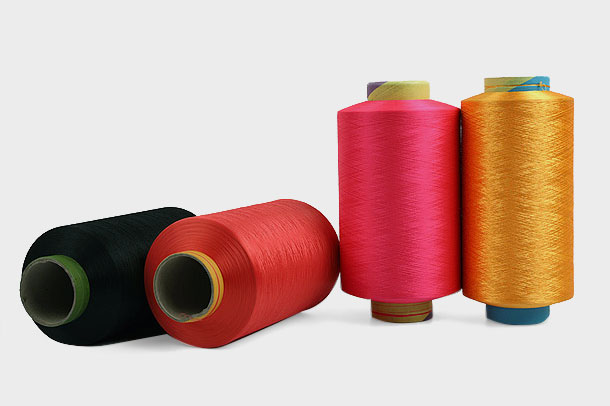
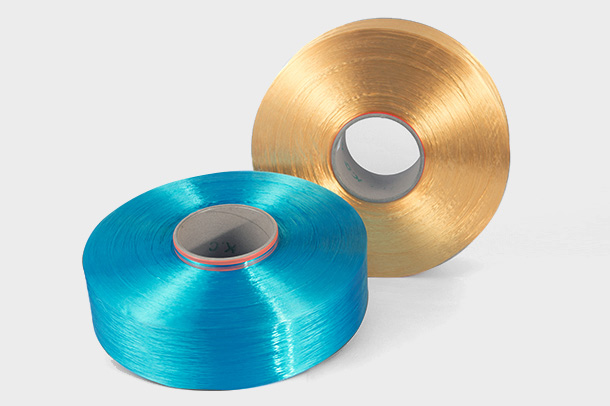
You have two fully drawn yarns on the table, and at first glance they look almost identical. Both are continuous multifilament yarns, both are wound on similar bobbins, and both can run on the same looms and knitting machines. Yet the polyester FDY and the nylon FDY in front of you will behave very differently in the dye bath, in the finished fabric, and after months of use.
Here is the conclusion up front: polyester FDY is the dimensionally stable, colorfast and cost-efficient choice for most woven and knitted applications, while nylon FDY is the tougher, more elastic choice for products that must survive repeated stretching, rubbing and impact. If your priority is shape retention, UV resistance and predictable cost, polyester FDY generally wins. If your product has to flex constantly without losing strength, nylon FDY justifies its higher price.
FDY stands for fully drawn yarn, also described as fully oriented yarn. During melt spinning, the polymer is extruded through spinnerets and drawn in the same continuous process, orienting the molecular chains before the yarn is wound onto the package. The result is a filament with relatively low elongation, high dimensional stability and a smooth, consistent cross-section, ready for weaving and knitting without additional draw-texturing.
The same process can be applied to different polymers, and that is exactly where the comparison begins. Polyethylene terephthalate, or PET, is the base polymer of polyester FDY. It is produced from purified terephthalic acid and monoethylene glycol, and it is the most widely consumed synthetic fiber polymer in the world. Polyamide, commonly known as nylon, is the base of nylon FDY, with PA6 and PA66 as the two dominant commercial grades.
Polyester FDY is typically supplied in semi-dull, bright and trilobal lusters, with deniers ranging from 30D to 600D and filament counts from 12F to 288F. The yarn has a stiff, crisp hand, low moisture absorption and excellent resistance to sunlight. For a fuller overview of how it is made and where it is used, our guide to polyester FDY yarn properties, production and applications covers the technical details in depth.
Nylon FDY, meanwhile, is prized for its outstanding abrasion resistance, high elastic recovery and a softer, more supple hand. It absorbs roughly ten times more moisture than polyester, which changes its dyeing behavior, its static performance and its dimensional response to humidity.
The table below compares typical commercial grades. Actual values vary with denier, filament count and supplier formulations, but the relative differences between the two yarn families remain consistent.
| Property | Polyester FDY | Nylon FDY |
|---|---|---|
| Tenacity (cN/dtex) | 3.5 - 4.5 | 4.0 - 5.5 (PA6); up to 6.5 (PA66 high-tenacity) |
| Elongation at break (%) | 20 - 35 | 25 - 45 |
| Initial modulus | High; stiff, crisp fabric hand | Lower; soft, supple hand |
| Moisture regain (%) | 0.3 - 0.4 | 3.5 - 4.5 (PA6); 4.0 - 5.0 (PA66) |
| Abrasion resistance | Good | Excellent; the best among common synthetic fibers |
| UV resistance | Good; slow strength loss under prolonged sunlight | Poor to moderate; yellows and loses tenacity with extended exposure |
| Melting point (°C) | 255 - 260 | 215 - 220 (PA6); 255 - 260 (PA66) |
| Density (g/cm³) | 1.38 | 1.14 |
| Typical dye class | Disperse dyes | Acid dyes |
| Relative yarn cost | Lower | 1.5 to 2 times higher in most markets |
Standard polyester FDY and nylon FDY are both strong yarns, but they express strength differently. Nylon FDY typically shows slightly higher tenacity, and it stretches noticeably further before breaking. Polyester FDY reaches its breaking point at about 20 to 35 percent elongation, while nylon FDY can extend to 40 percent or more. In a finished fabric, that difference shows up as resilience: a nylon fabric absorbs impacts and recovers its shape, while a polyester fabric resists stretching in the first place and holds its dimensions.
This is why nylon FDY is preferred for hosiery, swimwear and stretch-laminated outerwear, and why polyester FDY dominates woven taffetas, linings and ribbon, where dimensional stability matters more than stretch.
Polyester FDY has a moisture regain of about 0.3 to 0.4 percent, meaning it essentially does not absorb water. The fabric dries quickly, resists shrinking and builds static in dry conditions. It is dyed with disperse dyes, which require high temperature and pressure but produce excellent wash and light fastness. Dope-dyed polyester FDY, where colorant is added before spinning, offers even higher color consistency.
Nylon FDY has a moisture regain around 4 percent. It feels less clammy against the skin, generates less static and accepts acid dyes at lower temperatures, which gives dyers a wider practical color range. But that same moisture absorption brings trade-offs: nylon fabrics are more sensitive to dimensional change when wet, and they hold onto moisture longer in washing.
This is the category where polyester FDY separates itself clearly from nylon. Polyester resists sunlight degradation and maintains its tenacity after extended outdoor exposure, which is why it is the default choice for car seat fabrics, awnings, outdoor furniture and window blinds. Nylon, in contrast, degrades under prolonged UV exposure: it yellows, becomes brittle and loses strength. Unless a nylon yarn contains UV stabilizers, it is a poor choice for outdoor or high-sunlight applications.
Polyester also softens and melts at a higher temperature than PA6 nylon. This gives polyester FDY an advantage in heat-setting, ironing and applications where the fabric may contact warm surfaces.
Nylon FDY holds the strongest card in this category. Among all common textile fibers, nylon has the highest abrasion resistance, and its elastic recovery allows repeated deformation without permanent damage. A nylon webbing strap or luggage fabric can tolerate dragging, rubbing and flexing that would eventually fray polyester.
Polyester FDY is by no means fragile. Its abrasion resistance is good, and its lower elongation means less surface deformation under load. But when the application involves constant friction and stretching, nylon remains the safer technical choice.
The application list follows directly from the properties described above.
Choose polyester FDY for:
Choose nylon FDY for:
The property-driven selection logic is explained in more depth in our article on the difference between nylon and polyester yarn.
Price is where most sourcing conversations start. Nylon FDY typically costs 1.5 to 2 times more than polyester FDY at equivalent denier, depending on crude oil and feedstock markets. Nylon polymer is lighter, however, so a kilogram of nylon yarn produces more meters of fabric than the same kilogram of polyester. When calculating unit cost, compare cost per meter of finished fabric rather than price per kilogram.
Polyester FDY benefits from a highly integrated raw material chain, which keeps its price more stable and its supply predictable. Nylon feedstock is more volatile, and delivery times can be longer when specialty grades are involved. For large textile programs, reliability of supply can be as important as the yarn price itself.
From a quality control standpoint, watch these items when evaluating suppliers:
These checks matter because FDY yarn is usually sold in large lot sizes. A latent quality problem can surface only after tens of thousands of meters are already woven.
The decision framework can be reduced to three questions. First, which performance requirement dominates your product: dimensional stability and UV resistance, or abrasion resistance and elastic recovery? Second, how much can the final product absorb in raw material cost? Third, does your dye house have the equipment and experience for disperse dyes or acid dyes? Answering these questions will point to the right polymer.
For most general textile applications, polyester FDY offers the best balance of performance, color fastness and cost. Nylon FDY should be specified where the requirement is clearly mechanical: heavy abrasion, constant stretching, or impact resistance. When the application sits in between, blends and co-mingled yarns combine the stability of polyester with the toughness of nylon.
As a manufacturer of polyester filament yarns, we produce polyester FDY yarn in a complete denier range, polyester DTY yarn for textured applications, and polyester POY yarn as a semi-drawn raw material. Our manufacturing facility handles melt spinning, drawing and quality testing in-house, which means the tenacity, elongation and dye uptake parameters discussed in this article are controlled at the production stage rather than inspected only after the fact. If you are evaluating FDY supply options, send us your specification and let the data speak.
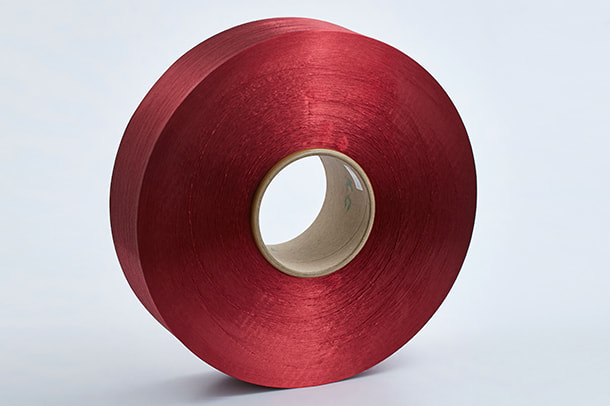 China Wholesale Polyester POY Yarns Manufacturers, SuppliersZhejiang Hengyuan Chemical Fiber Group Co.,Ltd is China polyester POY Yarns manufacturers and polyester POY Yarn suppliers, factory offer...View Product →
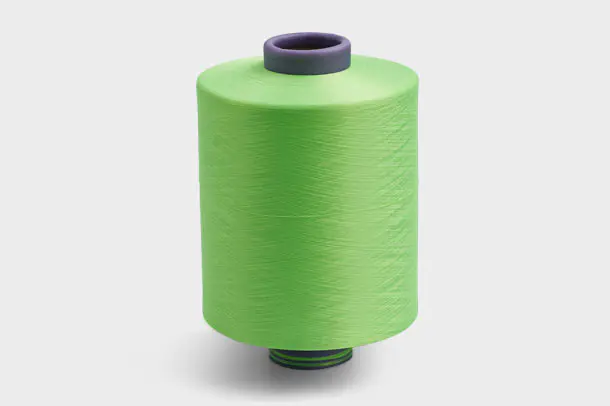 Wholesale Polyester DTY Yarns Suppliers, China DTY CompanyZhejiang Hengyuan Chemical Fiber Group Co.,Ltd is China polyester DTY yarns suppliers and polyester DTY company, you can find wholesale p...View Product →
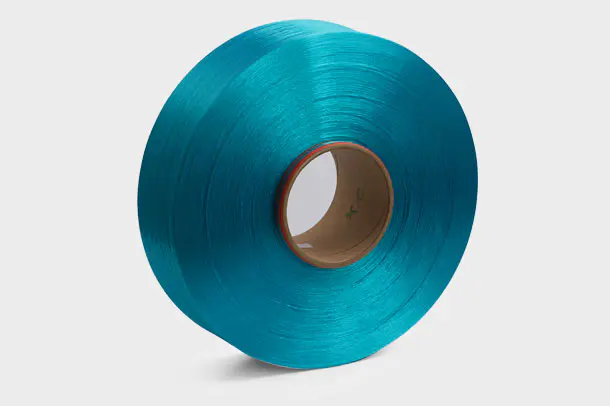 China Wholesale Polyester FDY Yarns Manufacturers, FactoryAs a China polyester FDY Yarns manufacturers and polyester FDY factory, Zhejiang Hengyuan Chemical Fiber Group Co.,Ltd. provide wholesale...View Product →
Zhejiang Hengyuan Chemical Fiber Group Co.,Ltd. is a professional China polyester filament yarns manufacturers and polyester color yarn suppliers, Established in 2006 ,located in YaQianTown Xiaoshan Hangzhou – One of the Center of polyester yarn Industry in China.

Products
Contact info
Copyright © Zhejiang Hengyuan Chemical Fiber Group Co.,Ltd. All rights reserved