Add: NYaqian Road No128 Yaqian Town Xiaoshan Hangzhou Zhe Jiang China.
Tel: 0086-0571-82602080
Fax: 0086-0571- 82758132
E-mail: [email protected]
Article Directory
In the textile industry, selecting the optimal fiber for a white blanket yarn requires a sophisticated understanding of polymer science and mechanical finishing. For B2B wholesalers and manufacturers, "softness" is not merely a tactile sensation but a measurable result of fiber diameter, pile structure, and thermal retention. Zhejiang Hengyuan Chemical Fiber Group Co., Ltd., established in 2006, operates at the heart of China's polyester industry, producing over 150,000 tons of high-performance yarn annually. Our engineering focus ensures that whether used in upholstery or high-end blankets, the yarn meets the highest benchmarks for consistency and durability.
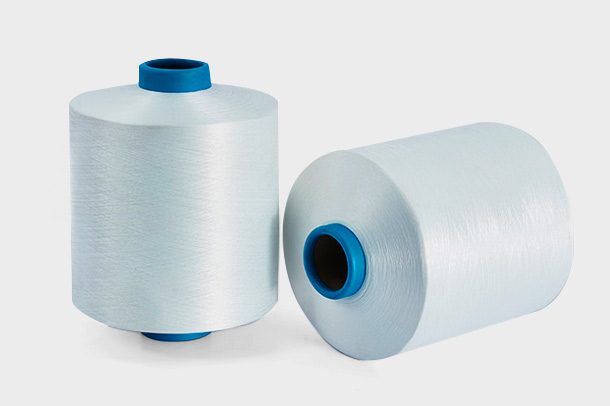
The perception of softness in blankets is determined by the "hand-feel" or "handle," which is influenced by the flexibility of individual fibers. Polyester, specifically when processed as DTY (Drawn Textured Yarn) or FDY (Fully Drawn Yarn), allows for a controlled denier that can mimic or exceed natural fibers in smoothness. According to the 2024 Global Textile Fiber Market Report, synthetic fibers now account for over 60% of the world's blanket production due to their superior ability to maintain a consistent white hue without the yellowing associated with organic proteins.
Chenille construction involves placing short lengths of yarn, called the "pile," between two "core yarns" and then twisting the yarn together. When sourcing wholesale white polyester chenille yarn for blankets, engineers look for high pile density and core stability. This structure creates a voluminous, velvet-like surface that provides ultimate softness without the weight or prickle factor associated with low-micron wool.
While wool offers natural warmth and cotton provides breathability, polyester chenille has emerged as the industrial leader for modern blankets. Chenille provides a higher loft-to-weight ratio, ensuring a plush feel that remains resilient under mechanical compression. In contrast, cotton often loses its "loft" after several wash cycles, becoming denser and less tactilely pleasing.
Maintenance is a critical concern for white textiles. Utilizing washable white blanket yarn maintenance tips—such as low-temperature agitation and the avoidance of chlorine bleaches—is essential for preserving the fiber's integrity. Synthetic blankets offer significantly better dimensional stability than wool, which is prone to felting and shrinkage if not handled with extreme care.
| Performance Factor | Polyester Chenille | Natural Cotton | Merino Wool |
| Tactile Softness | Extreme; velvet-like pile. | High when new; decreases over time. | Variable; can be "scratchy" to sensitive skin. |
| Color Purity (White) | Stable raw-white or dope-dyed. | Prone to yellowing/staining. | Natural creamy-white; difficult to bleach. |
| Laundering Ease | High; machine washable/fast drying. | Moderate; prone to heavy wrinkling. | Low; often requires dry cleaning. |
The intended use of the white blanket yarn dictates the necessary yarn count and twist. High-tech manufacturing now allows for "intelligent" yarns that adapt to ambient temperatures, a trend emphasized by the 2025 Smart Textiles Standardization initiative.
Source: ISO/TC 38: Technical Committee for Textiles Standards 2025
In the home decor sector, super bulky white blanket yarn for arm knitting has gained traction. This specific yarn type requires a high DTY (Drawn Textured Yarn) count, often reaching 600D or higher, to provide the structural "puff" needed for large-scale knits. The engineering challenge is maintaining fiber cohesion so that the bulky yarn does not shed or pill during use.
When producing soft white blanket yarn for baby products, chemical purity is non-negotiable. As a "GREEN ENVIRONMENTAL AND TRUST COMPANY OF CHINA," Hengyuan ensures that its polyester yarns are free from harmful residues. Polyester is naturally hypoallergenic, making it a safer alternative to wool for infants who may have undiagnosed lanolin allergies or sensitive respiratory systems.
The primary deterrent for white blankets is the fear of permanent soiling. However, modern chemical fiber engineering has addressed this through cross-sectional modification of the yarn filaments.
The stain resistant white blanket yarn properties found in high-end polyester products are achieved through dope-dyeing or specialized silane-based coatings. Unlike natural fibers that have porous surfaces, engineered polyester filaments are relatively non-absorbent, allowing spills to be lifted from the pile before they penetrate the fiber core. This is a decisive advantage for upholstery cloth and high-use blankets.
Zhejiang Hengyuan Chemical Fiber Group Co., Ltd. oversees a massive 150,000 square meter facility dedicated to the art and science of polyester. With total assets of 150 million USD and a staff of 1,000, we specialize in everything from 30D to 600D yarns. Our "Hengyun" brand represents a commitment to constant and stable quality, supported by our state-of-the-art branch companies like Winnertex Group Limited. We are not just suppliers; we are "HIGH TECH OF HANGZHOU" awardees dedicated to the future of fabrics.
When comparing Chenille, Cotton, and Wool for the ultimate white blanket yarn, polyester chenille stands out for its balance of tactile softness, maintenance ease, and economic viability. By sourcing wholesale white polyester chenille yarn for blankets, B2B partners can ensure a product that remains white, soft, and durable for years. Hengyuan Group continues to stick to the managing conception of quality and social responsibility to provide better service to our global clientele.

Zhejiang Hengyuan Chemical Fiber Group Co.,Ltd. is a professional China polyester filament yarns manufacturers and polyester color yarn suppliers, Established in 2006 ,located in YaQianTown Xiaoshan Hangzhou – One of the Center of polyester yarn Industry in China.

Products
Contact info
Copyright © Zhejiang Hengyuan Chemical Fiber Group Co.,Ltd. All rights reserved